



Planning a Backyard Wedding? Here’s An Easy Step-By-Step Guide
How to Plan a Backyard Wedding That Looks and Feels Expensive (Without the Price Tag)
There is something incredibly special about a backyard wedding done well.
Not the kind where folding tables are covered in plastic tablecloths and the ceremony happens next to a riding lawn mower. I mean the kind where string lights drape over a candlelit dinner, florals spill out of vintage vessels, and guests keep whispering to each other — “I can’t believe this is someone’s backyard.”
That version exists. And it is more achievable than most people think.
After being in the wedding industry for years and watching couples pull off stunning, intimate celebrations in their own outdoor spaces, I can tell you this with confidence: a backyard wedding can look and feel just as elevated as any venue — sometimes more so — when it is planned thoughtfully and intentionally.
But it is not without its challenges. And before you commit to hosting your wedding at home, there are some honest conversations you need to have with yourself first.
Let’s start there.
Is a Backyard Wedding Actually Right for You?
This is the question that most blog posts skip over, and it is the most important one.
A backyard wedding is not automatically the right choice just because it saves money. It comes with its own set of logistics, responsibilities, and hidden costs that can catch couples off guard if they go in with unrealistic expectations.
Ask yourself these questions honestly before you move forward.
Do you have the right space?
Not every backyard is wedding-ready. Take a hard look at the space and ask:
– Is there enough flat, usable ground for a ceremony and reception?
– Can it comfortably accommodate your guest count?
– Is there natural shade or shelter if the weather turns?
– Is there enough parking nearby for your guests?
– Are there neighbors close enough that noise could be an issue?
A general rule of thumb is that you need roughly 6 to 8 square feet per guest for a standing cocktail reception and about 10 to 12 square feet per guest for a seated dinner. Do the math before you fall in love with the idea.
Are you prepared for the responsibility?
When you get married at a venue, the venue handles a lot. Restrooms, electricity, setup infrastructure, permits in some cases, and the baseline of a space that is already event-ready.
In a backyard, all of that becomes your responsibility. That means:
– Renting restroom trailers or portable bathrooms
– Sourcing a generator if your power needs exceed what the home can handle
– Arranging every table, chair, tent, and lighting element yourself
– Handling cleanup after the event
– Potentially navigating noise ordinances and local permit requirements
None of this is impossible. But going in clear-eyed about what you are taking on makes the planning process so much smoother.
Is the homeowner fully on board?
Whether the backyard belongs to you, your parents, or a family friend, the person who owns and lives in that home needs to be genuinely enthusiastic about hosting a wedding there — not just willing to say yes.
A wedding will transform that space for at least a full weekend. There will be vendors coming and going, furniture moved, lawn stress from foot traffic, and a level of disruption that goes beyond a typical backyard party. Make sure everyone involved understands and truly embraces what that looks like.
What is your honest budget?
Here is something people don’t always realize: a backyard wedding is not always dramatically cheaper than a venue wedding. It can be — but only if you plan it well and account for the costs that venues typically absorb.
If you factor in tent rental, restroom trailers, generator rental, lighting, tables, chairs, linens, and all the other infrastructure you need to build from scratch, those costs add up. The savings come when you are strategic about where you spend and where you simplify.
If your honest answer to all of these questions is positive, then a backyard wedding might be exactly the right choice for you. Let’s talk about how to make it look stunning.

Step One: Start With a Clear Vision
Before you rent a single chair or buy a single candle, get clear on the feeling you want your wedding to have.
Not just the aesthetic — the feeling.
Do you want it to feel like an intimate dinner party that happens to be a wedding? An enchanted garden celebration? A romantic candlelit evening under the stars? A relaxed summer gathering with wildflowers and bare feet in the grass?
Your vision drives every decision that comes after it. When you know how you want guests to feel when they walk in, choosing between options becomes so much easier.
Pull inspiration images. Create a Pinterest board. But then step back from the images and ask — what is the common thread? Usually it comes down to a mood, a color palette, and a level of formality. Define those three things early and use them as your filter throughout the entire planning process.

Step Two: Assess and Prepare the Space
Once your vision is clear, it is time to look at the backyard with fresh, critical eyes.
Walk the space at different times of day. Notice where the sun is during the hours of your wedding. Notice where it is shadiest and where it is brightest. Look at what is beautiful and what needs to be hidden or improved.
Then make a list in two categories: things to fix and things to feature.
Things you might need to fix:
– Patchy or uneven lawn areas
– Overgrown landscaping
– Old or weathered fencing
– Cluttered corners or storage areas that will be visible
– Poor drainage areas that could become muddy
Things you might want to feature:
– Mature trees that could anchor a ceremony space
– A beautiful garden or flower bed
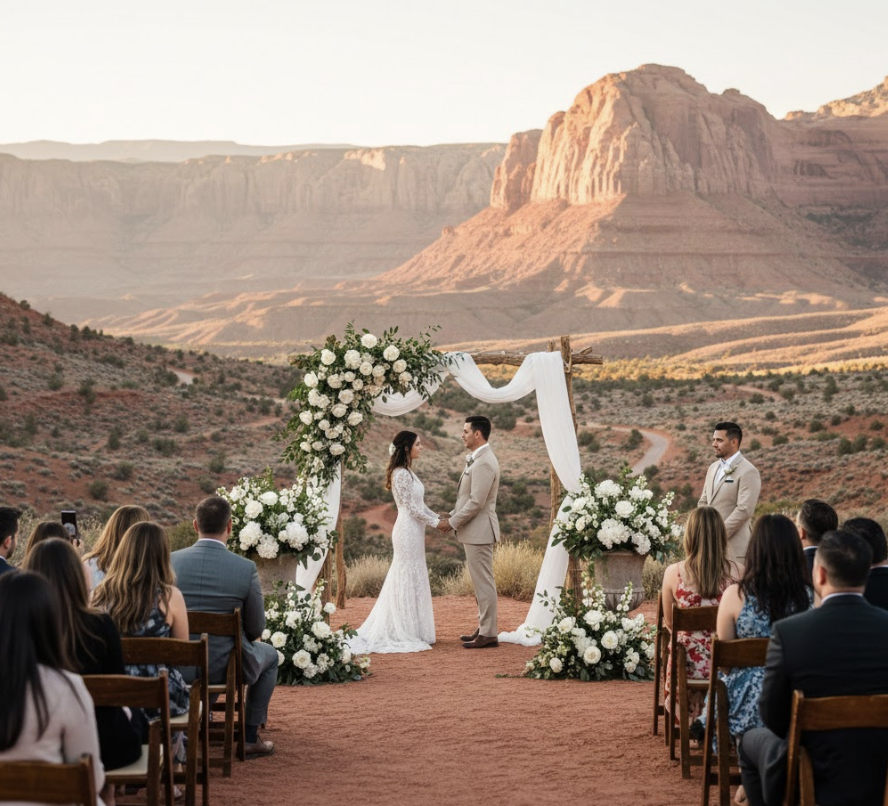
– A natural slope that creates a natural stage for a ceremony
– A patio or hardscape area that could serve as a dance floor
Give yourself enough lead time to make lawn improvements if needed. Seeding or sodding a lawn takes time to establish. Landscaping updates made at least six to eight weeks before the wedding will look natural and settled rather than freshly planted.

Step Three: Decide on Your Layout
Layout is everything in a backyard wedding. How you arrange the space determines how guests move, how the event flows, and how the space feels.
A typical backyard wedding layout includes:
– A defined ceremony area with seating and an altar or arch
– A cocktail hour space separate from the ceremony area (this allows the space to be flipped for dinner while guests enjoy drinks elsewhere)
– A reception area with dinner tables, a dance floor, and a head table or sweetheart table
– A bar area
– A designated area for the DJ or band
– A food service area that keeps catering activity out of the main guest sightlines
Sketch it out on paper. Walk it out in the actual space. Think about traffic flow — how will guests move from one area to the next? Where will the wedding party enter for the ceremony? Where will catering staff move in and out without disrupting the event?
Getting the layout right before you start renting anything saves you from expensive changes later.
Step Four: Tent or No Tent
This is one of the biggest decisions you will make for a backyard wedding, and it deserves serious thought. I personally love having a tent, but I know not everyone can afford one. However, there are some great questions to ask yourself if you should have one or actually need one.
A tent is not just a rain backup plan. It is a structural anchor for your reception space. It defines the room. It holds your lighting. It creates an enclosed, intimate atmosphere even in an open outdoor setting. And it provides shade during a sunny afternoon reception.
The question is not really whether a tent is nice to have — it almost always is. The question is whether it fits your budget and your vision.
Tent options vary widely:
A basic pole tent is the most affordable option and works well for casual, relaxed aesthetics. A clear span or frame tent gives you more interior flexibility and a cleaner look. A sailcloth tent is the most beautiful option — the translucent fabric glows warmly at night and has a romantic, organic quality that photographs incredibly well.
If your budget allows for one rental splurge, a sailcloth tent is often the one that transforms a backyard wedding from “pretty backyard party” to “stunning outdoor celebration.”
If a tent is not in the budget, plan your event around the natural shelter available — mature trees, a covered patio, or a pergola — and have a genuine rain backup plan in place.
Step Five: Lighting Is Everything
If there is one design element that will make your backyard wedding look expensive above all others, it is lighting.
The right lighting transforms a space completely. It creates warmth. It creates romance. It hides the things you don’t want guests to notice and draws the eye to the things you do. And it photographs beautifully.
Here is how to think about lighting layers for a backyard wedding:
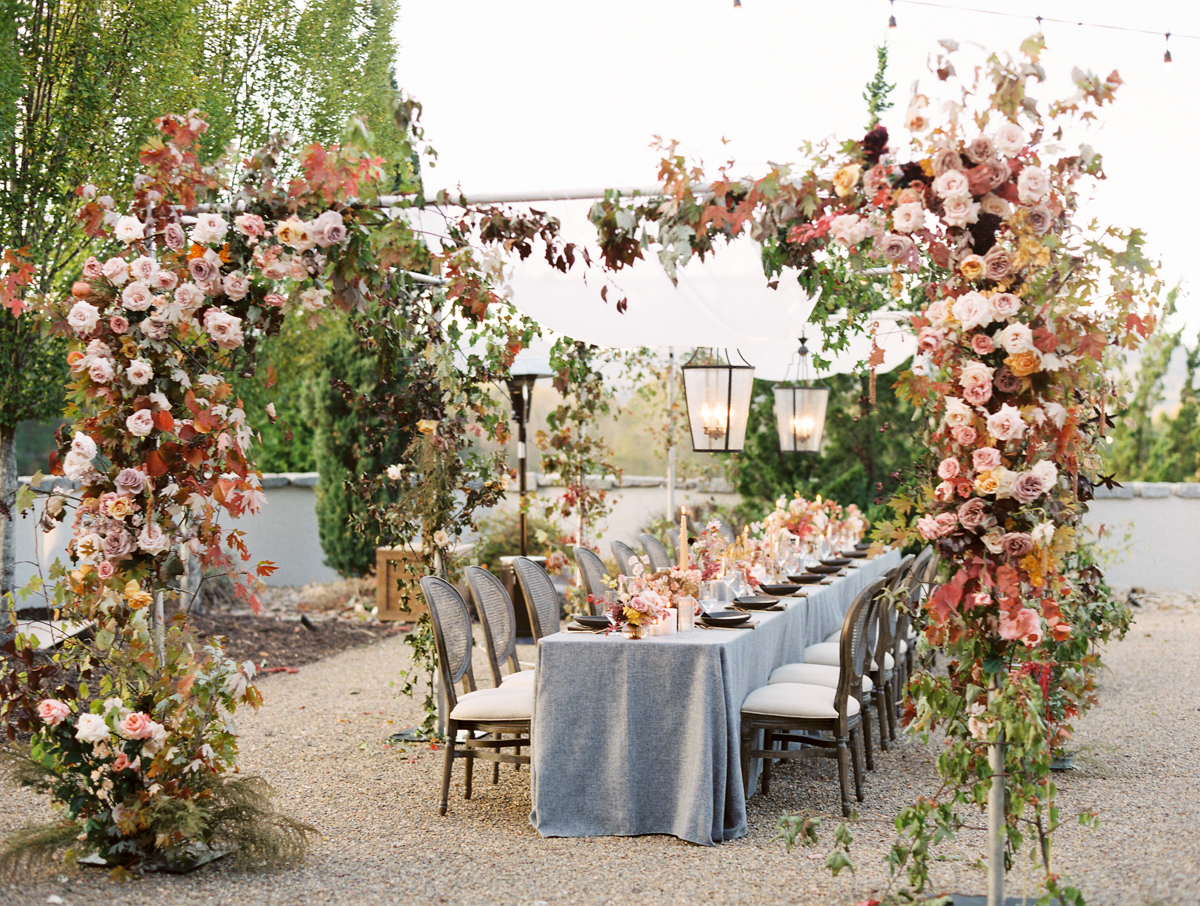
Ambient lighting is your base layer. This is what illuminates the overall space. String lights draped overhead — either in a tent or strung between trees and posts — are the single most effective and cost-efficient ambient lighting choice for a backyard wedding. They create a warm, golden glow that is flattering to everyone and everything.
Accent lighting adds depth and drama. Uplighting placed around the perimeter of the tent or around key trees and landscaping features creates dimension and makes the space feel designed rather than decorated. Uplighting rental is relatively affordable and makes an enormous visual impact.
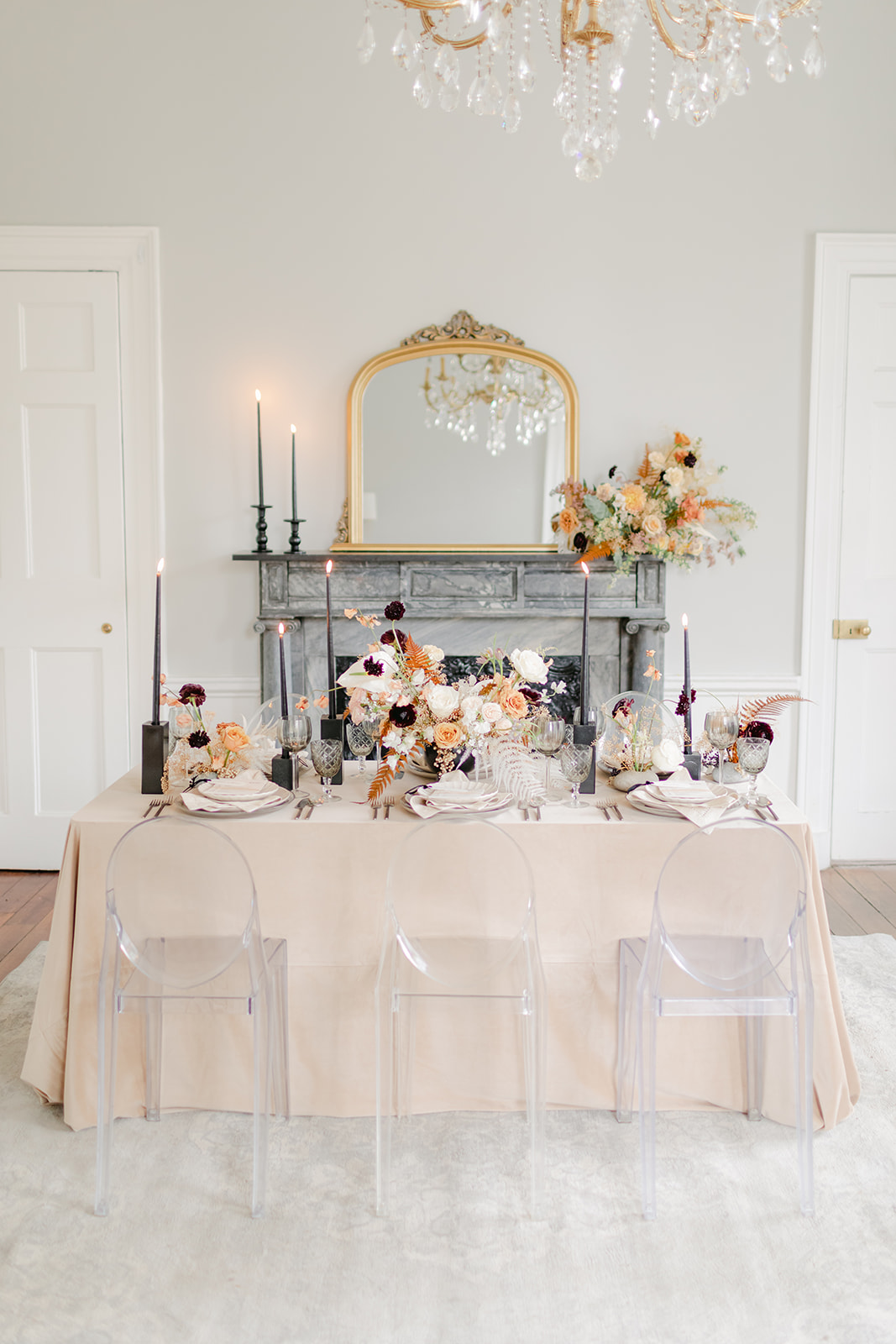
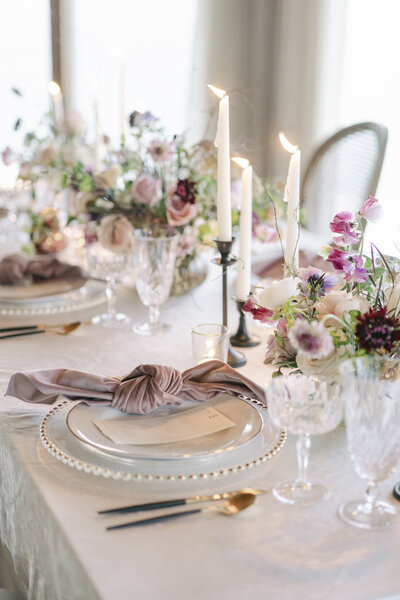
Table lighting brings warmth to the guest level. Taper candles in simple candlestick holders, votives clustered in groups, and pillar candles create an intimacy and warmth at eye level that overhead lighting cannot replicate. Candles are one of the most affordable ways to add a luxury feel to any table.
Pathway lighting guides guests safely and adds charm. Small lanterns, ground stake lights, or even simple luminaries lining the paths between spaces are both practical and beautiful.
When in doubt, use more candles and softer bulbs. Harsh or cool-toned lighting is the fastest way to make a beautiful space feel less special. Warm Edison bulbs and candlelight are your best friends.

Step Six: Rentals — What You Actually Need
Rentals are where most backyard wedding budgets either stay controlled or spiral. Here is a straightforward breakdown of what you genuinely need versus what is optional.
What you will almost certainly need:
– Tables — both round dinner tables and a few rectangular tables for food, bar, and gifts
– Chairs — ceremony chairs and reception chairs (these can be the same chairs moved over, which saves money)
– Linens — tablecloths and napkins
– Place settings — plates, glassware, and flatware if your caterer does not provide them
– A portable bar setup
– Restroom trailer — this is non-negotiable for any wedding over 30 guests
– A generator if your power needs are significant
What can make a big impact without breaking the budget:
– A wooden farm table for the head table — it photographs beautifully and needs minimal decoration
– Simple white or neutral linens — they are timeless, elegant, and let your florals and candles do the work
– Mismatched vintage chairs mixed with standard rentals — this is a design choice that actually looks more elevated than a perfectly matched set
What you can skip or simplify:
– Charger plates — beautiful but not necessary
– Chair covers — often make things look less elegant, not more
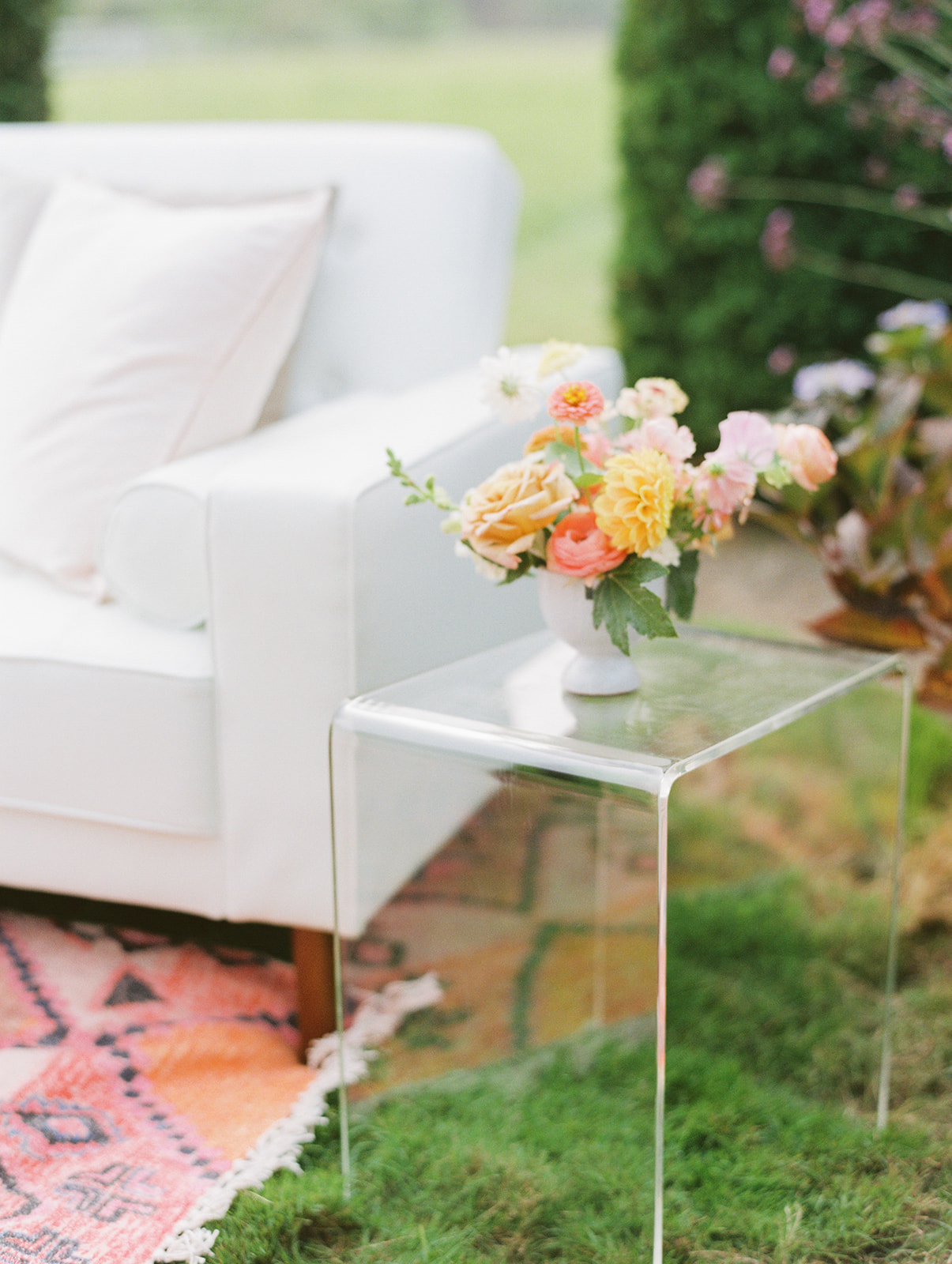
– Excessive lounge furniture — one or two lounge areas are lovely; going overboard gets cluttered quickly


Step Seven: Florals That Look Lush Without the Luxury Price Tag
Florals are one of the areas where couples most commonly overspend without necessarily getting proportional visual impact. Here is how to get a lush, abundant floral look without a florist’s price tag eating your entire budget.
Focus your floral budget on the spaces guests see most. The ceremony altar or arch, the head table, and the cocktail hour space are your highest-impact areas. These are the places that get the most photos and make the strongest first impression.
Use greenery generously. Eucalyptus, ferns, ivy, and other greenery varieties are significantly less expensive than blooms and create a lush, full look when used abundantly. A table runner made almost entirely of greenery with a few blooms tucked in looks absolutely beautiful and costs a fraction of a full floral arrangement.
Choose in-season flowers. Flowers that are in season locally are always less expensive than out-of-season or imported varieties. Ask your florist what is seasonal for your wedding month and build your palette around those options.
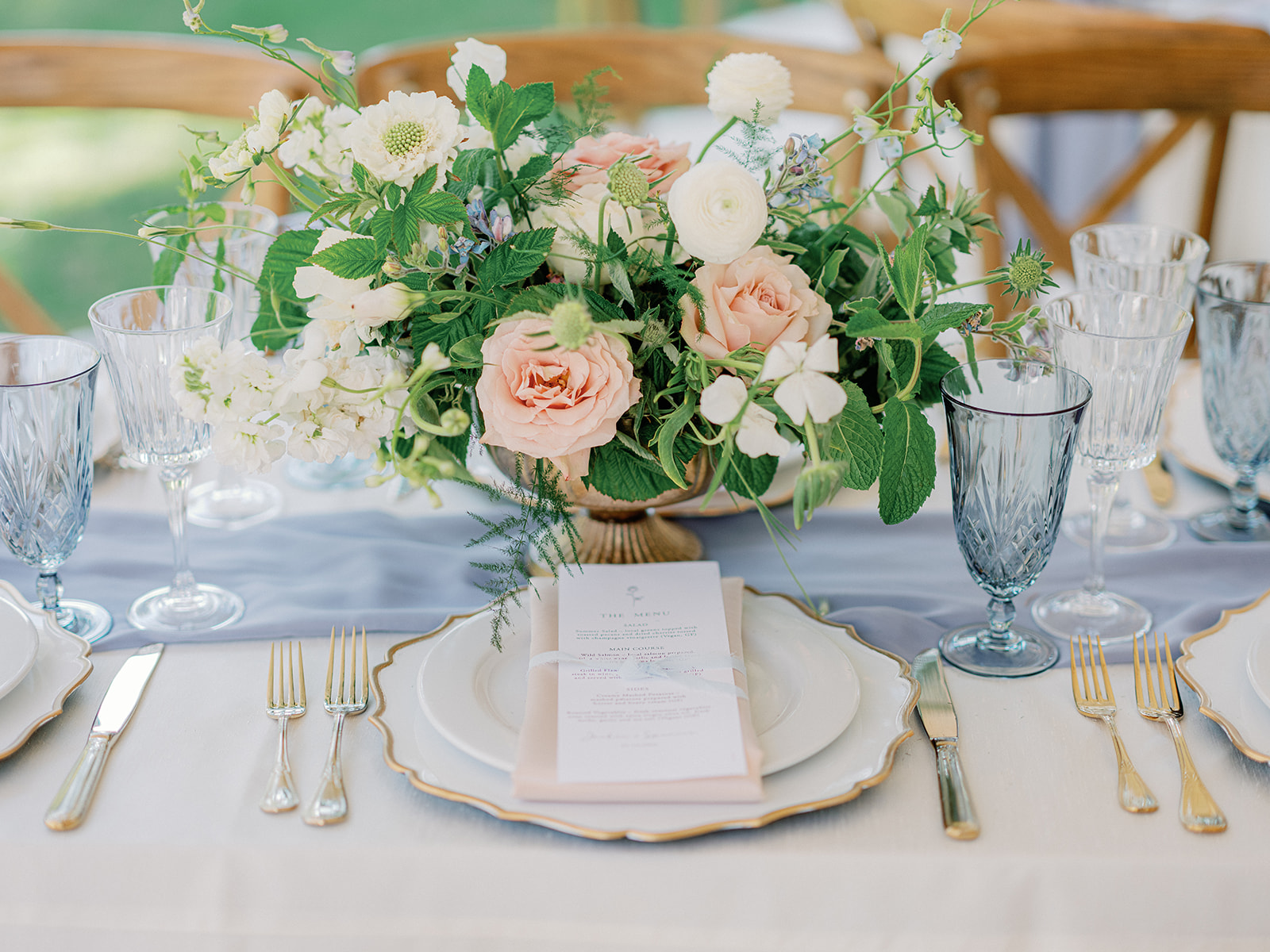
Use vessels you already own or source inexpensively. Simple bud vases, vintage bottles, antique pitchers, and ceramic vessels from thrift stores all make beautiful floral containers and cost almost nothing. A cluster of three mismatched vessels with simple blooms on a dinner table looks more curated and intentional than a single large centerpiece.
Consider grocery store and wholesale flowers. Trader Joe’s, Costco, and local wholesale flower markets offer beautiful blooms at a fraction of florist pricing. If you have someone willing to help with simple arrangements, DIYing some of your florals is very achievable.

Step Eight: The Details That Make It Feel Elevated
The difference between a backyard wedding that looks thrown together and one that looks intentional often comes down to the small details. These are the things that guests may not consciously notice but that collectively create a feeling of care and quality.
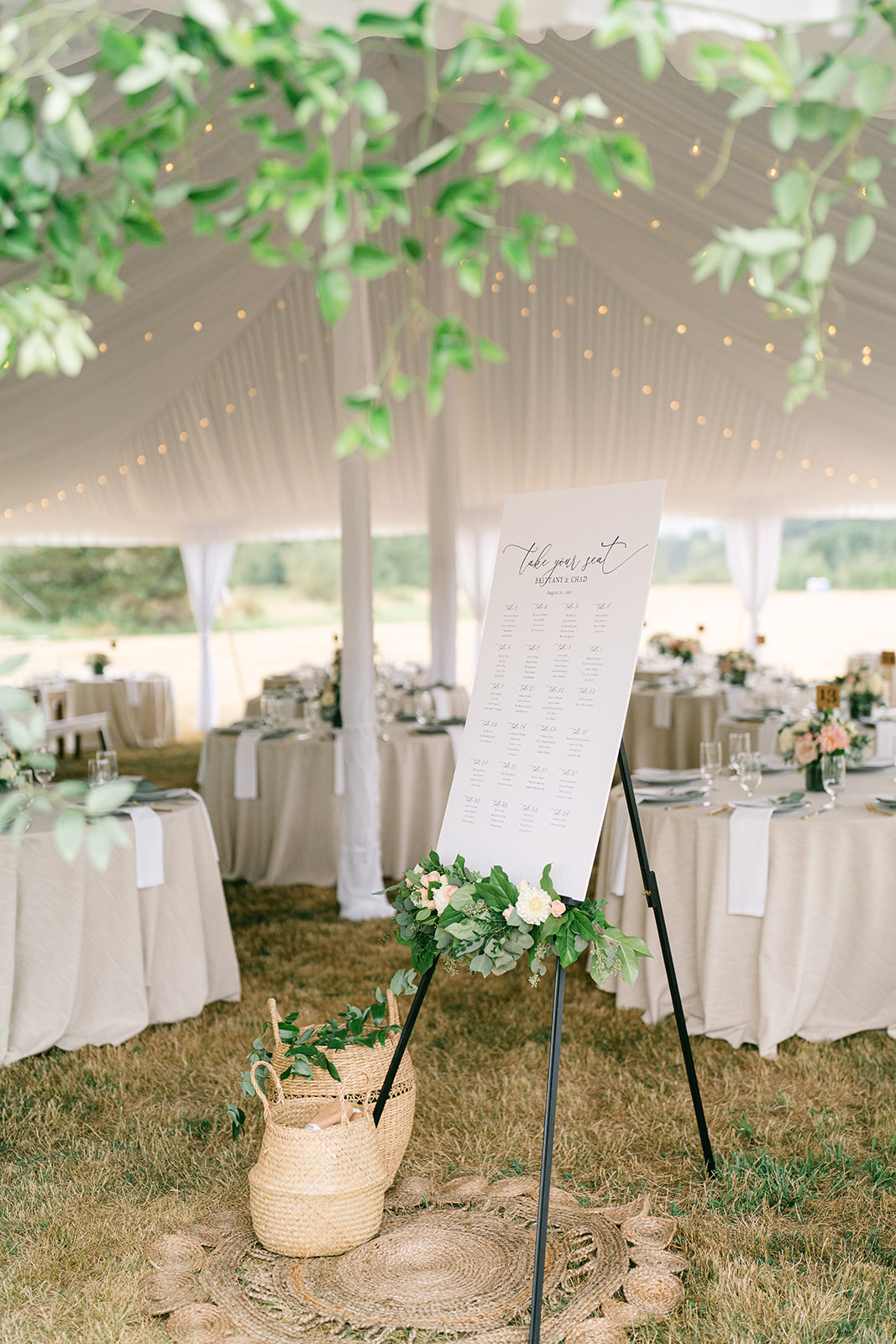
A thoughtful welcome area. A simple table or easel at the entrance with a welcome sign, a seating chart, and a small floral arrangement signals to guests that they have arrived somewhere special. It sets the tone before they even see the rest of the space.
Consistent styling throughout. When your color palette, your vessels, your linens, and your signage all feel like they belong to the same world, the space feels designed. Inconsistency — even with beautiful individual elements — creates visual noise.
Personal touches that tell your story. A display of photos, a meaningful quote on a sign, or a small detail that reflects something specific about your relationship adds a layer of warmth that no venue can replicate. It reminds guests why they are there.
A well-curated soundtrack. The music playing during cocktail hour and dinner has an enormous impact on how the space feels. A thoughtfully curated playlist through a good speaker system can create an atmosphere that feels sophisticated and intentional.
Good food and drink. This is not a place to cut corners. Guests remember two things most vividly after a wedding: how they felt and what they ate. Hire a good caterer or food truck, offer a signature cocktail that reflects your personalities, and make sure there is enough of everything.

Step Nine: Logistics You Cannot Forget
Beyond the beautiful details, there is a layer of practical logistics that will make or break your backyard wedding experience. These are the things that are easy to overlook until they become a problem.
Permits and noise ordinances. Check with your local municipality about whether you need a special event permit. Many residential areas have noise curfews — typically around 10pm — that will affect when your music needs to end. Know the rules before you plan your timeline.
Power and electricity. Make a list of everything that will need power — catering equipment, lighting, DJ equipment, a photo booth, any heating or cooling elements — and calculate whether the home’s electrical system can handle it. When in doubt, rent a generator. A generator rental is far less expensive than a power outage mid-reception.
Parking. Where will your guests park? If street parking is limited, consider arranging a shuttle from a nearby parking lot or coordinating with a neighbor who might allow overflow parking. Clear parking instructions in your invitations prevent confusion and frustrated guests.
Restrooms. Rent a restroom trailer, not portable toilets. The difference in guest experience is significant. Restroom trailers can be styled with a small basket of amenities — hand lotion, mints, feminine products — that makes them feel genuinely comfortable rather than utilitarian.
Weather backup. Have a plan and communicate it clearly to your vendors. Know at what point you will make the call to deploy the backup plan and who is responsible for making that call. Ambiguity on the day of is stressful for everyone.
Day-of coordination. Please, hire a day-of coordinator. Or at minimum, designate a specific person — not a family member who is also a guest — to manage vendor arrivals, timeline, and any issues that come up. You should not be the person answering the caterer’s questions on your wedding day.

Step Ten: Build a Realistic Budget
Here is a rough framework for what a backyard wedding budget might look like. These are estimates and will vary significantly based on your location, guest count, and specific choices.
Tent rental: $5,000 – $10,000 depending on size and style (I opt for white tents personally. As a photographer they photograph nicer than clear ones)
Tables, chairs, and linens: $1k to $3k
Restroom trailer: $1,500+
Generator: $200 to $600
Lighting (string lights, uplighting): $2k to $4k
Florals: $1,500 to $8,000 depending on what types of flowers and how many you want.
Catering (per person): $50 to $150 per guest (this is very common)
Bar service: $20 to $75 per guest
Photographer: $4k to $8k (you can obviously find someone cheaper but you will loose quality and they may not be very experienced so you don’t really know what you will get)
DJ or band: $1,500 to $6,000
Day-of coordinator: $2,000 to $6,000
Miscellaneous details and decor: $1,000 to $2,000
The savings in a backyard wedding come primarily from eliminating the venue fee — which at many locations runs $3,000 to $15,000 or more. When you redirect that money toward the elements that create the most visual and experiential impact, you end up with a wedding that looks and feels just as special, if not more so.
My Final Thoughts
A backyard wedding done well is one of the most beautiful and meaningful ways to celebrate a marriage. There is an intimacy to it — a sense of being held by a space that is familiar and loved — that no event venue can fully replicate.
But the key words are done well.
Go in with clear eyes about what it requires. Plan with intention rather than impulse. Invest in the elements that create the most impact — lighting, florals, food, and a good photographer to capture all of it — and simplify everywhere else.
When you get it right, your guests won’t be thinking about what you spent or what you saved. They will just feel it — the warmth, the beauty, the love in the details.
And that is exactly what a wedding is supposed to feel like.





add a comment
+ COMMENTS