
Château de Tourreau: A Complete Guide to Provence’s Most Celebrated Wedding Venue
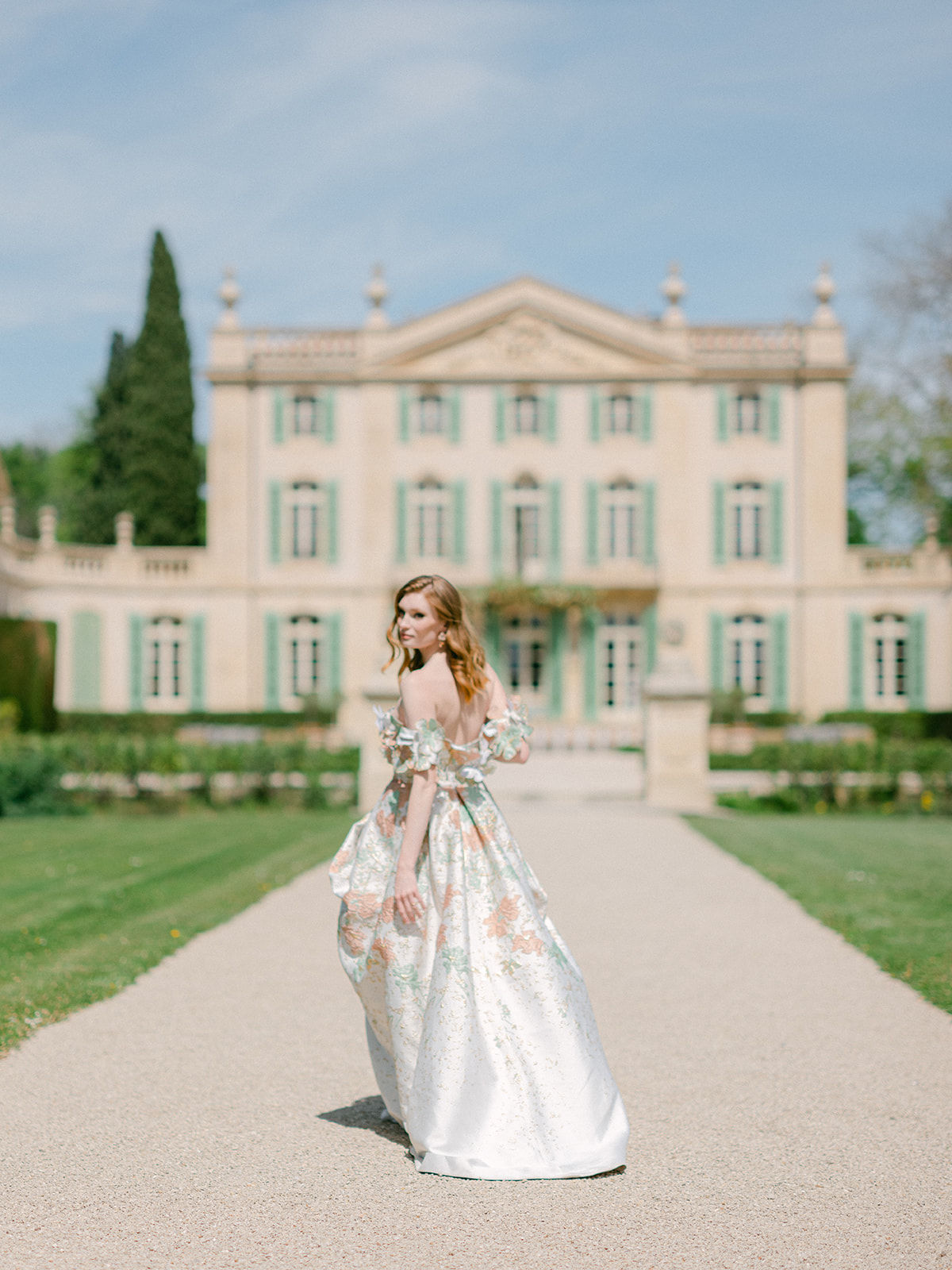
There is a moment that happens at Château de Tourreau that I hear about from nearly every couple and wedding professional who has experienced it. You turn off the road in Sarrians, pass through the gates, and the cypress avenue opens ahead of you.
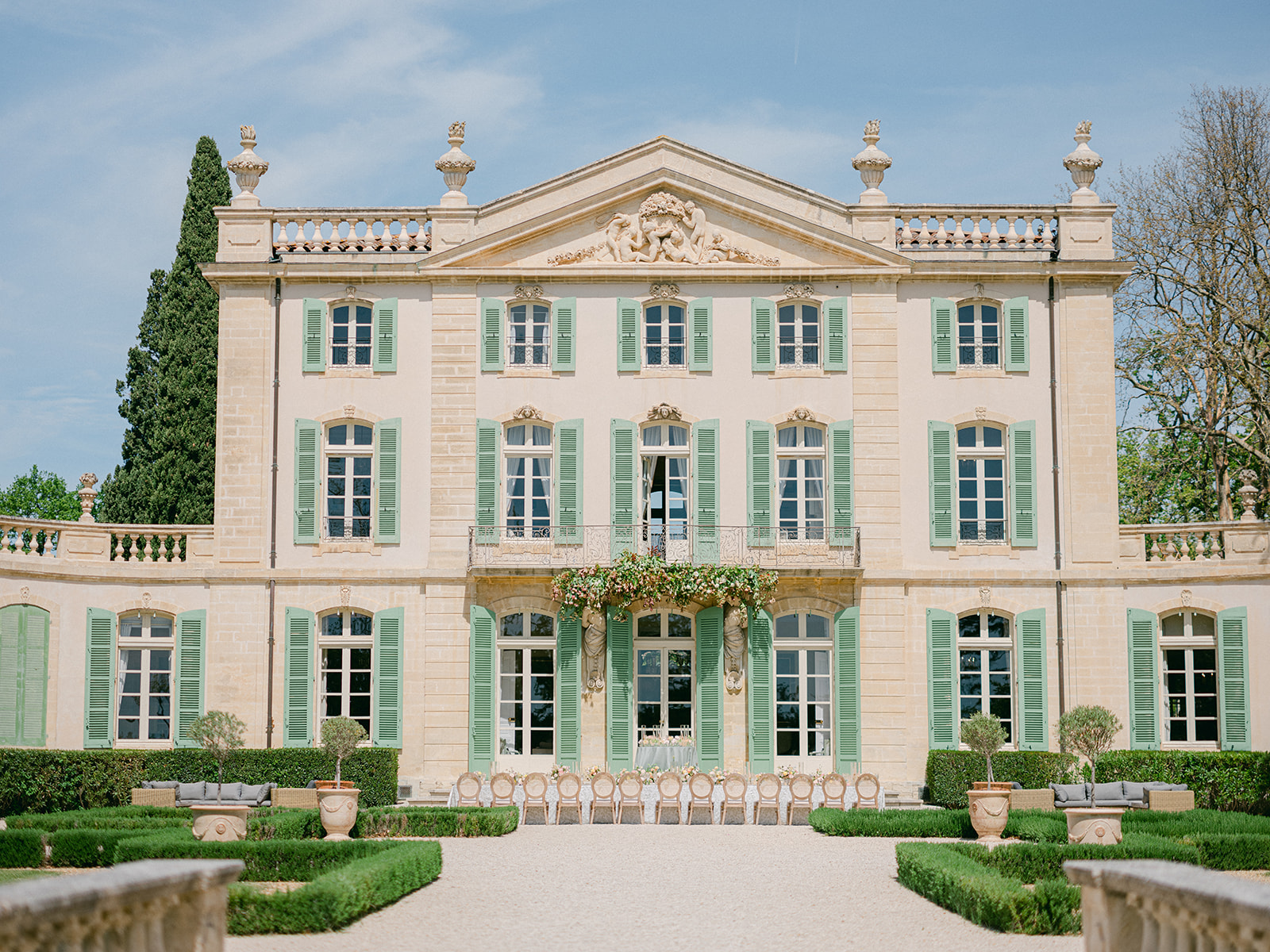
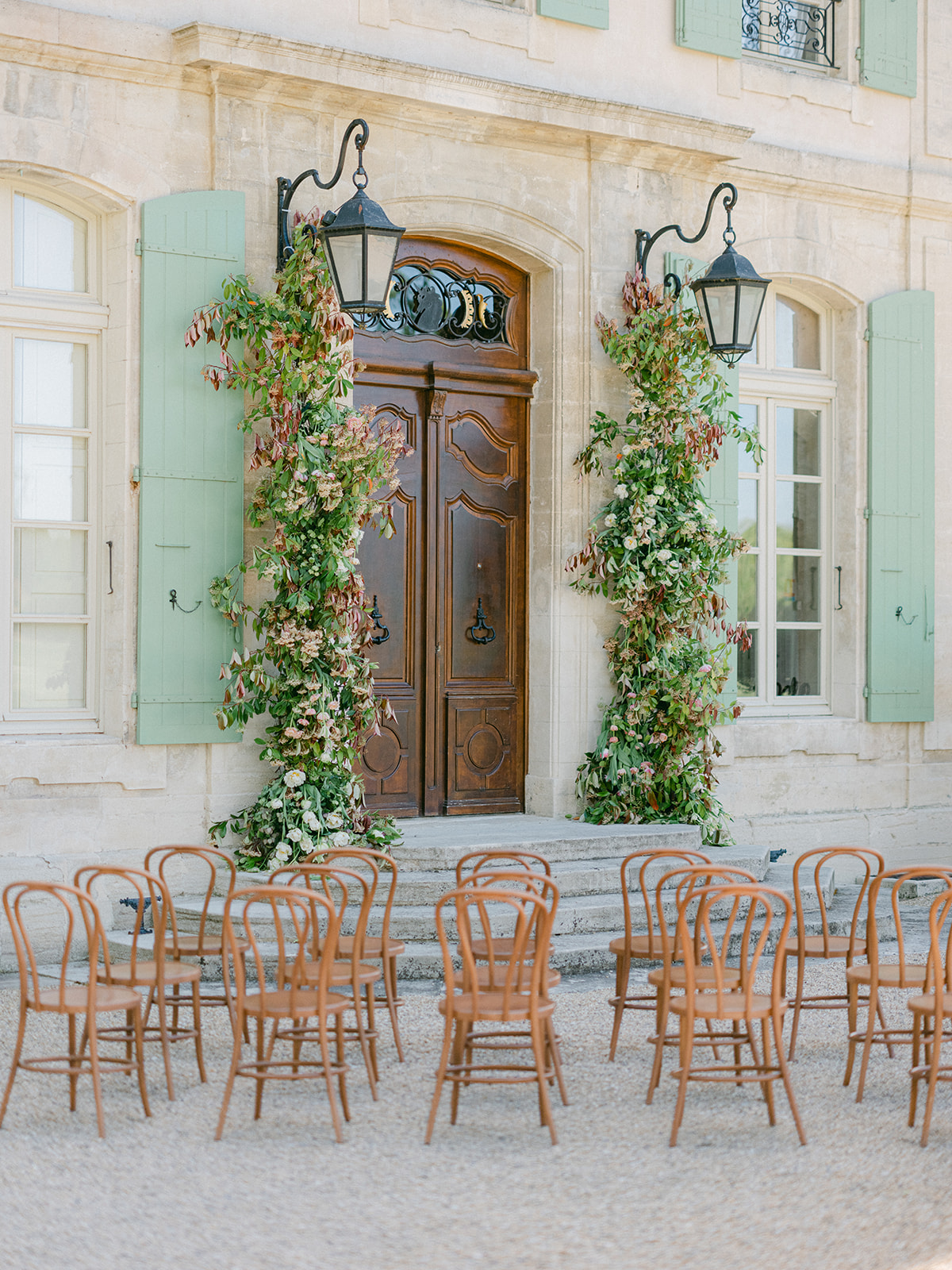
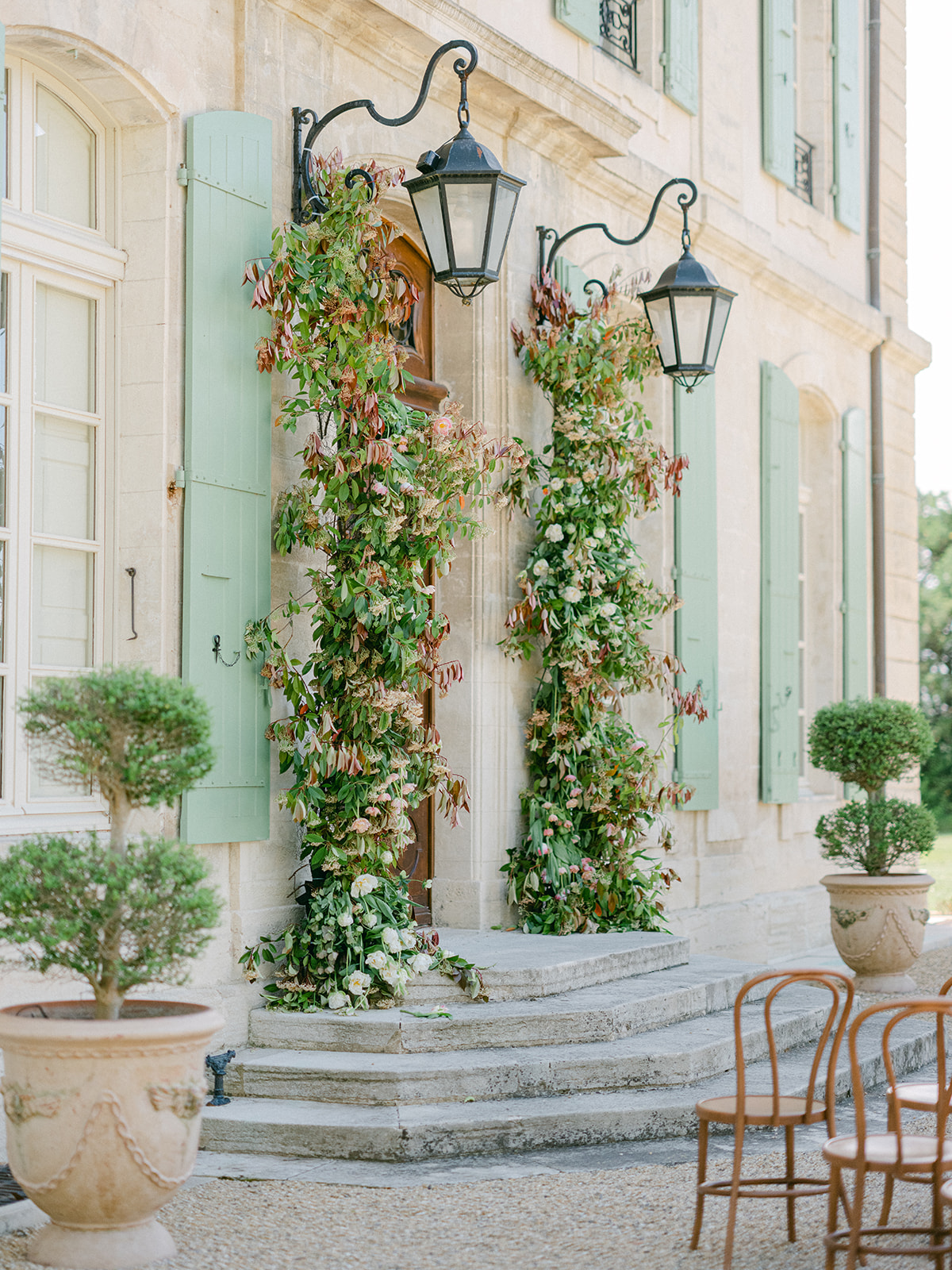
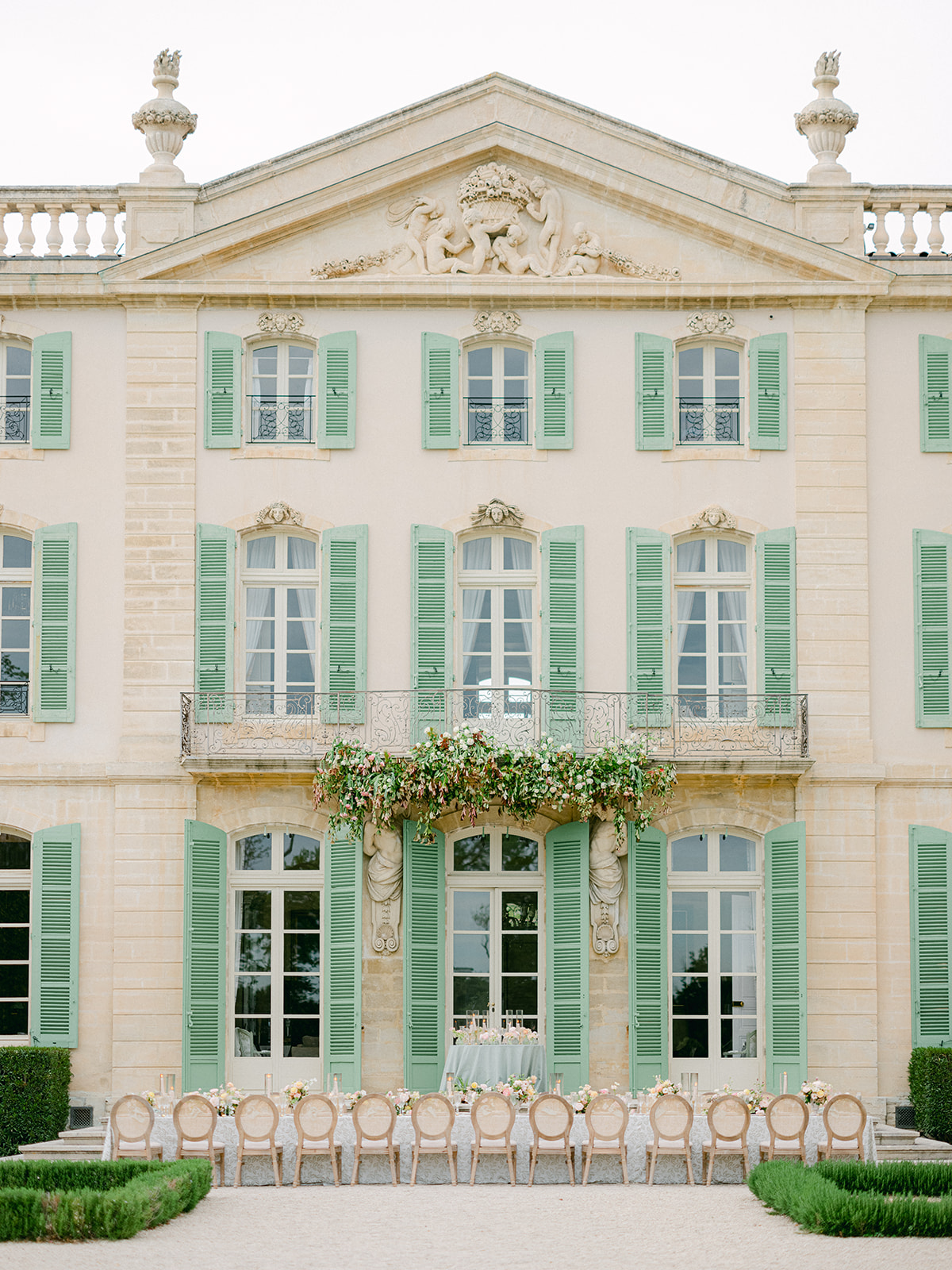
The trees line both sides of the approach like a guard of honor, tall and still and deeply Provençal, and at the end of them the château’s 18th-century facade rises from the landscape in warm stone and sage-green shutters, bas-relief sculptures catching the afternoon light, the proportions exactly right in the way that French buildings of this era sometimes are — as though the architect understood something fundamental about how a building should relate to the land it occupies.
Most people stop at that moment. Some of them cry a little. All of them understand immediately why they came.
Château de Tourreau is not simply one of the best Provence wedding venues. It is one of the most sought-after private estate wedding venues in the world — a fact that becomes immediately comprehensible the moment you arrive, and that the estate’s international reputation and its famous celebrity guests have confirmed over the years. For couples dreaming of a destination wedding in the South of France, Château de Tourreau represents the specific combination of history, landscape, privacy, luxury, and photographic generosity that most venues can offer only in part and this one delivers completely.
This guide covers everything you need to know: the history that shaped this estate over four centuries, every space and ceremony location in detail, the accommodation, the food and the surrounding region, the best seasons from a photographer’s perspective, the practical logistics, and who this venue is genuinely right for.
The History of Château de Tourreau
The land at Sarrians, in the Vaucluse department of Provence, has been in the Tourreau family’s possession since 1612, when the bourgeois Tourreau family of Avignon acquired the plot and began building. The chapel was completed in 1614 — making it over four hundred years old and one of the oldest consecrated private chapels in the South of France. Two generations later, between 1750 and 1770, François Bénézet de Tourreau commissioned the architect Brun to design the main château itself, creating the 18th-century masterpiece whose facade still dominates the estate today.
The family survived the French Revolution — François Paul Bénézet de Tourreau served as a Grey Musketeer in the service of the King of France during that period, a detail that places the family at the heart of one of the most turbulent chapters in European history. The property weathered the upheaval and continued to evolve across subsequent generations and owners: Atlas statues supporting the balcony were added at one point; the fountain in the southern park came later; the sports facilities arrived in the modern era. Each generation improved the estate while respecting what came before, and the result is a property that feels genuinely inhabited and alive rather than preserved as a showpiece.
What this history means for a wedding at Château de Tourreau is something that is difficult to manufacture at purpose-built venues: the sense of being somewhere that has mattered across four centuries. The chapel in which you might exchange your vows has stood since 1614. The plane tree shading the patio has been growing for longer than most countries have had their current borders. The cypress avenue has welcomed arrivals for generations of owners and guests. When you celebrate here, you are not the first people to have celebrated here — and that accumulated sense of occasion is tangible in every corner of the estate.
The Approach and First Impression
I want to describe the arrival at Château de Tourreau in specific terms, because it is one of the most choreographed arrival experiences of any venue I know — and it is entirely natural, entirely undesigned, entirely the product of what this land and this architecture simply are.
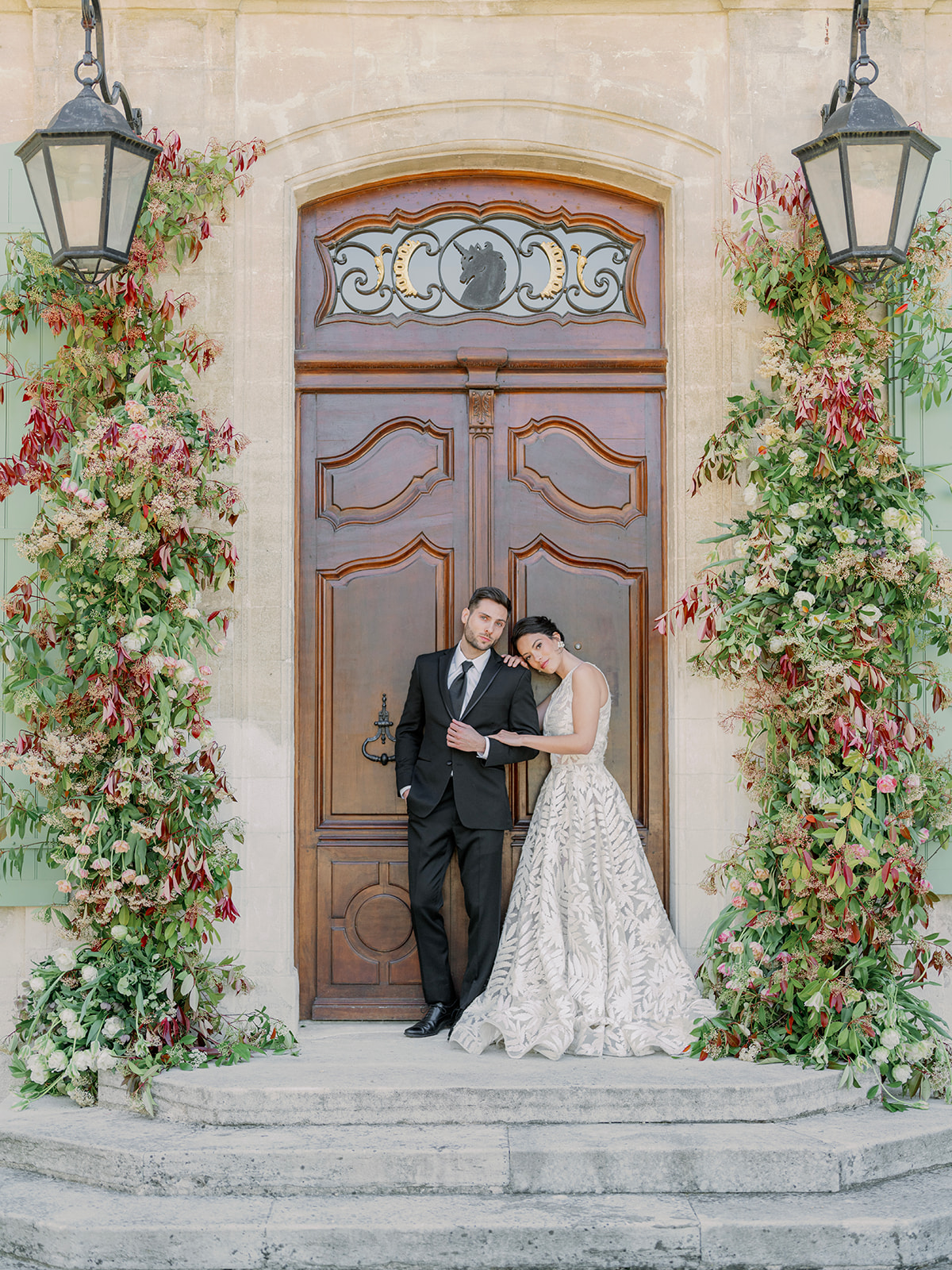
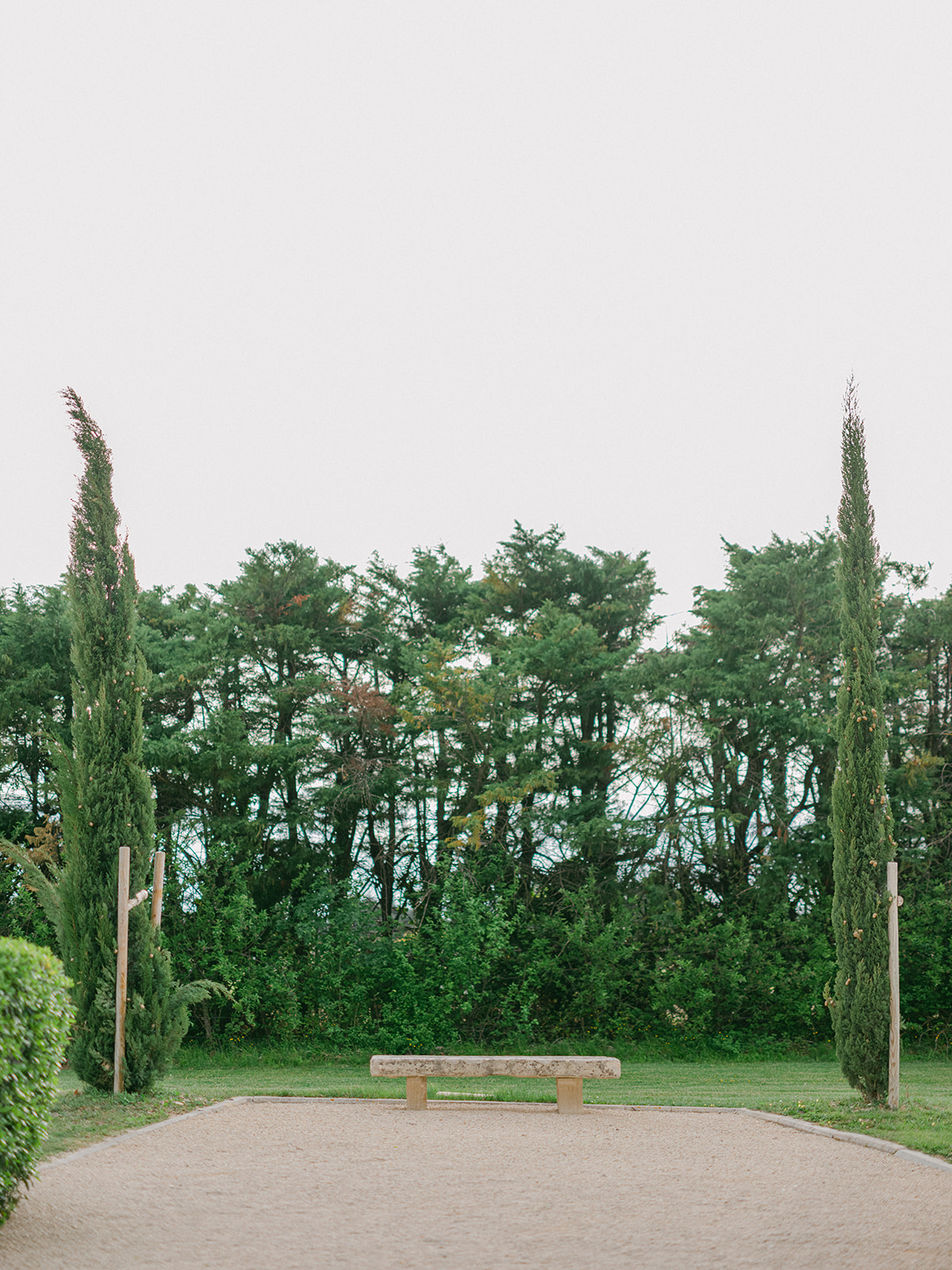
You enter through the north gate beneath the emblematic Tourreau family lions, two stone sentinels that have presided over this entrance for centuries. Ahead of you stretches the cypress avenue — tall, vertical, aromatic, typically Provençal in a way that communicates immediately and physically that you are in the South of France. At the end of this avenue the château resolves out of the trees: warm pastel facade, many windows, the bas-relief sculptures catching the light, sage-green shutters the color of the surrounding landscape.
It is the color of old Provence, the color of a place that has been in the sun for a very long time and has arrived at exactly the right hue.
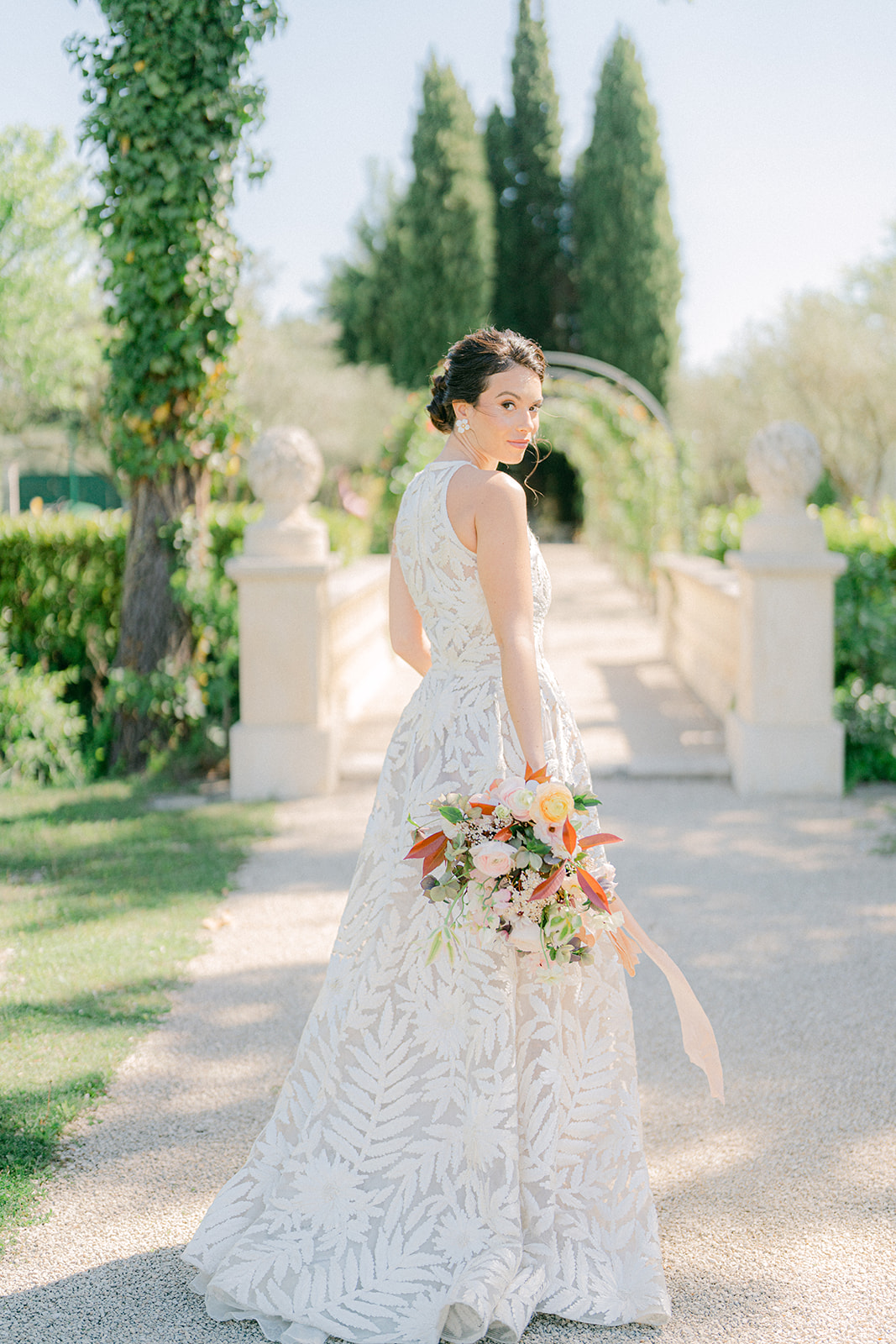
For wedding photographs, this approach is one of the most naturally cinematographic sequences I know. The couple walking toward the camera with the cypress trees receding behind them. The reverse view up the avenue toward the gate. The facade as a ceremony backdrop. These are not photographs that require any compositional intervention — the geometry of the place does the work.
The Estate: Twenty Acres of Photographic Generosity
Château de Tourreau occupies 20 acres — approximately 8 hectares — of Provençal countryside, and the variety of distinct environments within that space is one of the estate’s most important assets for weddings. A photographer can spend an entire weekend at this venue and still find new configurations. Different garden areas, different times of day, different qualities of light: the estate is inexhaustible in a way that more compact venues simply cannot be.
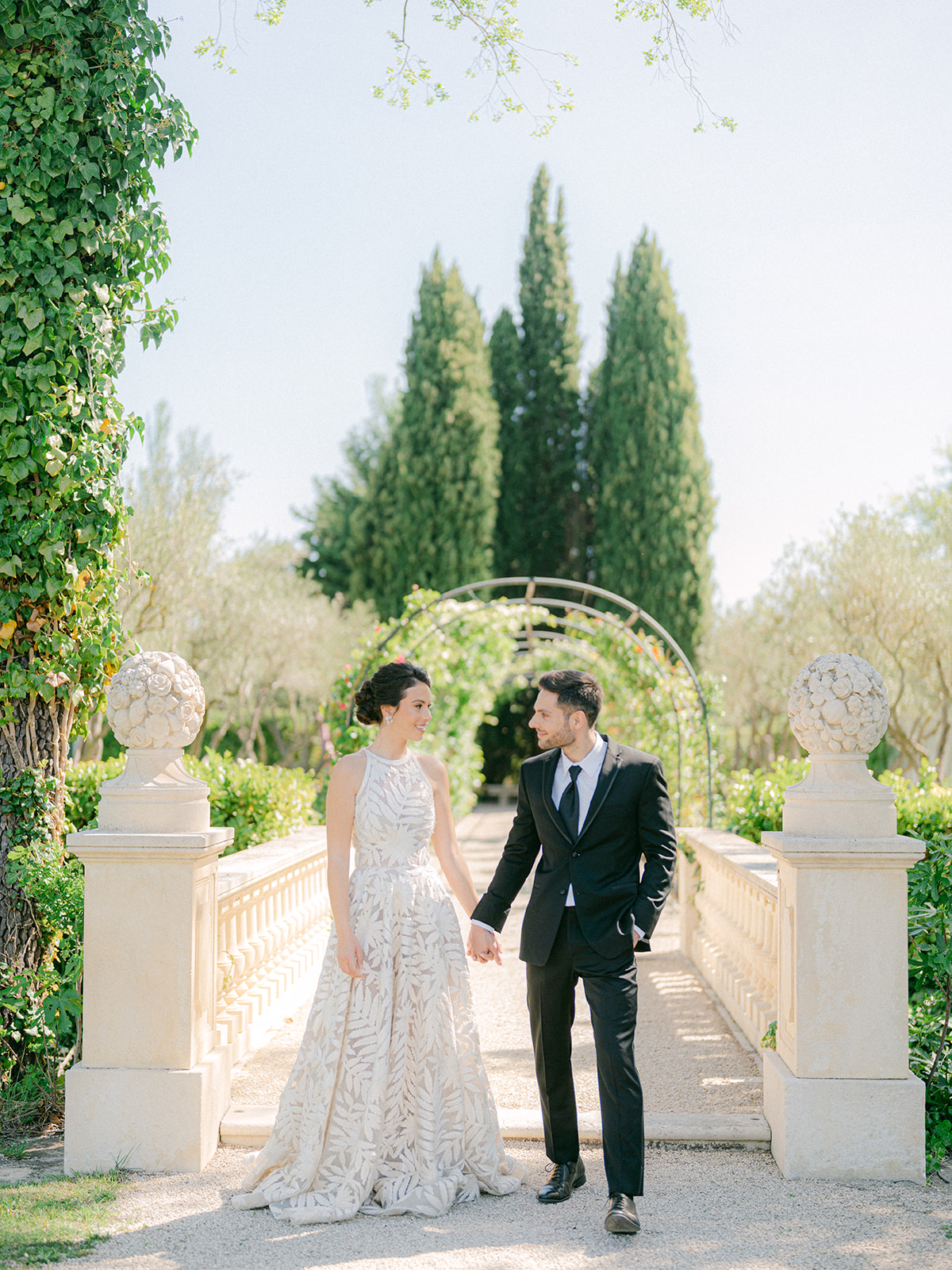
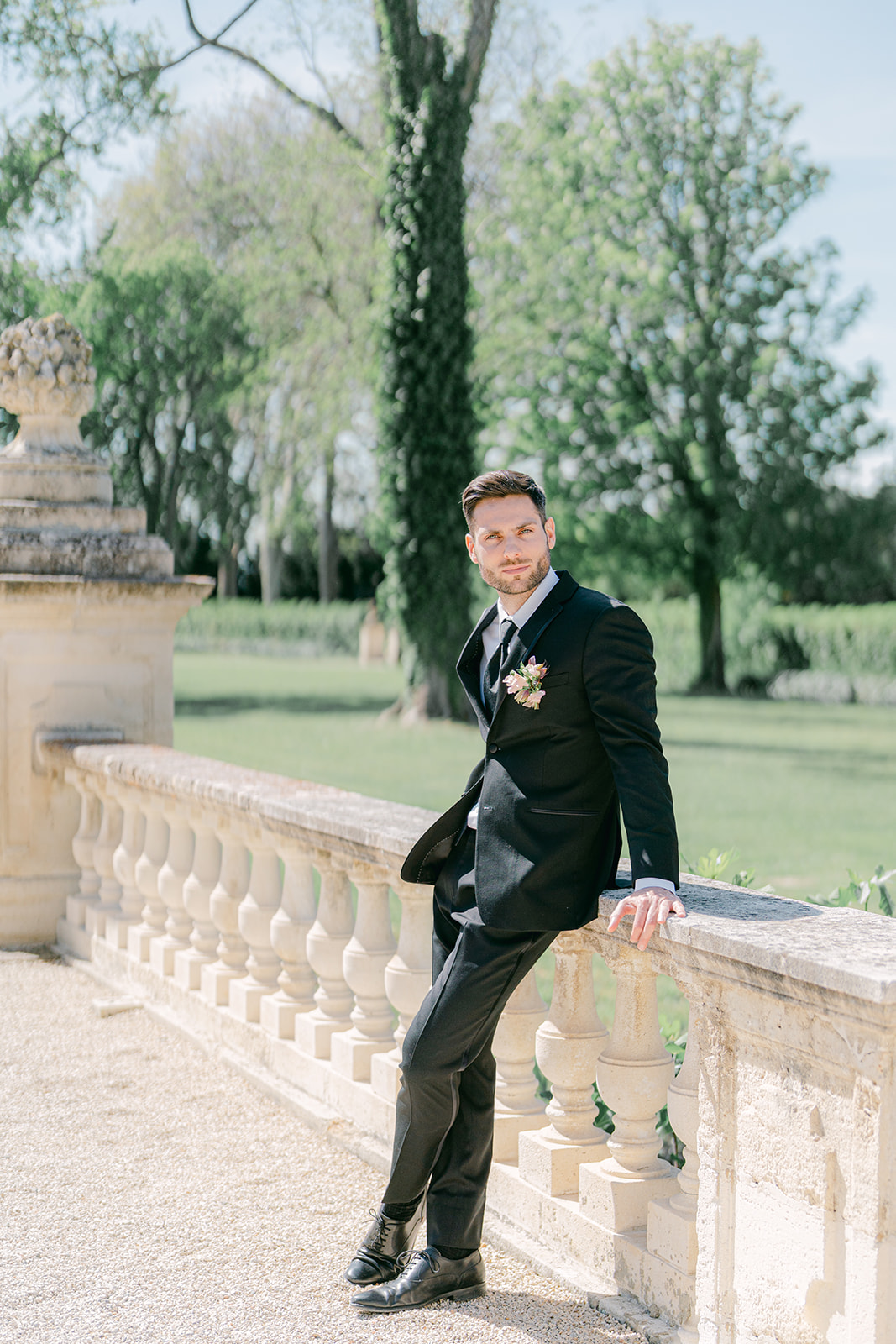
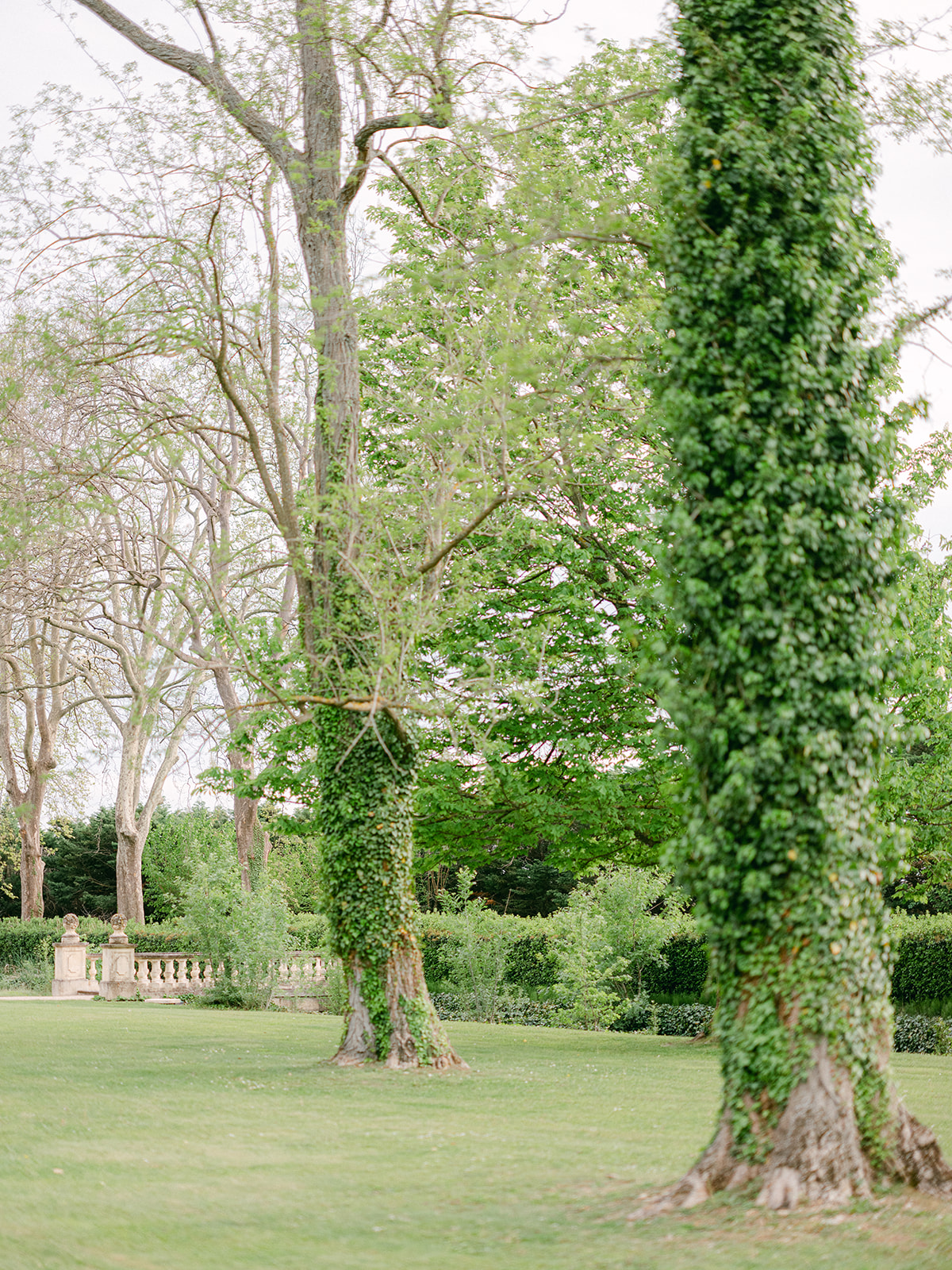
The jardins à la française are the formal gardens of the estate — geometrically designed in the classic French tradition, with the precision and control that this style demands. These spaces provide the architectural, structured backdrop for portraits that feel European in a specific, historically grounded way. The hedges, the gravel paths, the balanced symmetry: photographs taken here look immediately and unmistakably like Provence.
The English gardens on the estate offer a contrasting character — more romantic, more organic, with a fountain at the center and the surrounding landscape framed loosely rather than tightly. Where the French gardens feel composed and formal, the English gardens feel discovered. Both have a role in a wedding day; both produce different and complementary images.
The waterways and koi-filled streams running through the grounds add movement and reflection to the photographic palette. Water does something specific to photographs — it catches light in ways that the eye understands as beautiful before the brain has processed why — and the estate’s water features are numerous enough and positioned well enough to appear naturally in images throughout the day.
The orchards and the 500-square-metre organic vegetable garden add an agricultural, living quality to the estate that purely decorative gardens cannot replicate. These spaces smell of thyme and jasmine and the particular green fragrance of things growing in Mediterranean heat. For photographs, they provide texture and depth — the dappled light under the fruit trees in late afternoon is some of the most beautiful ambient light I know of at any Provence wedding venue.
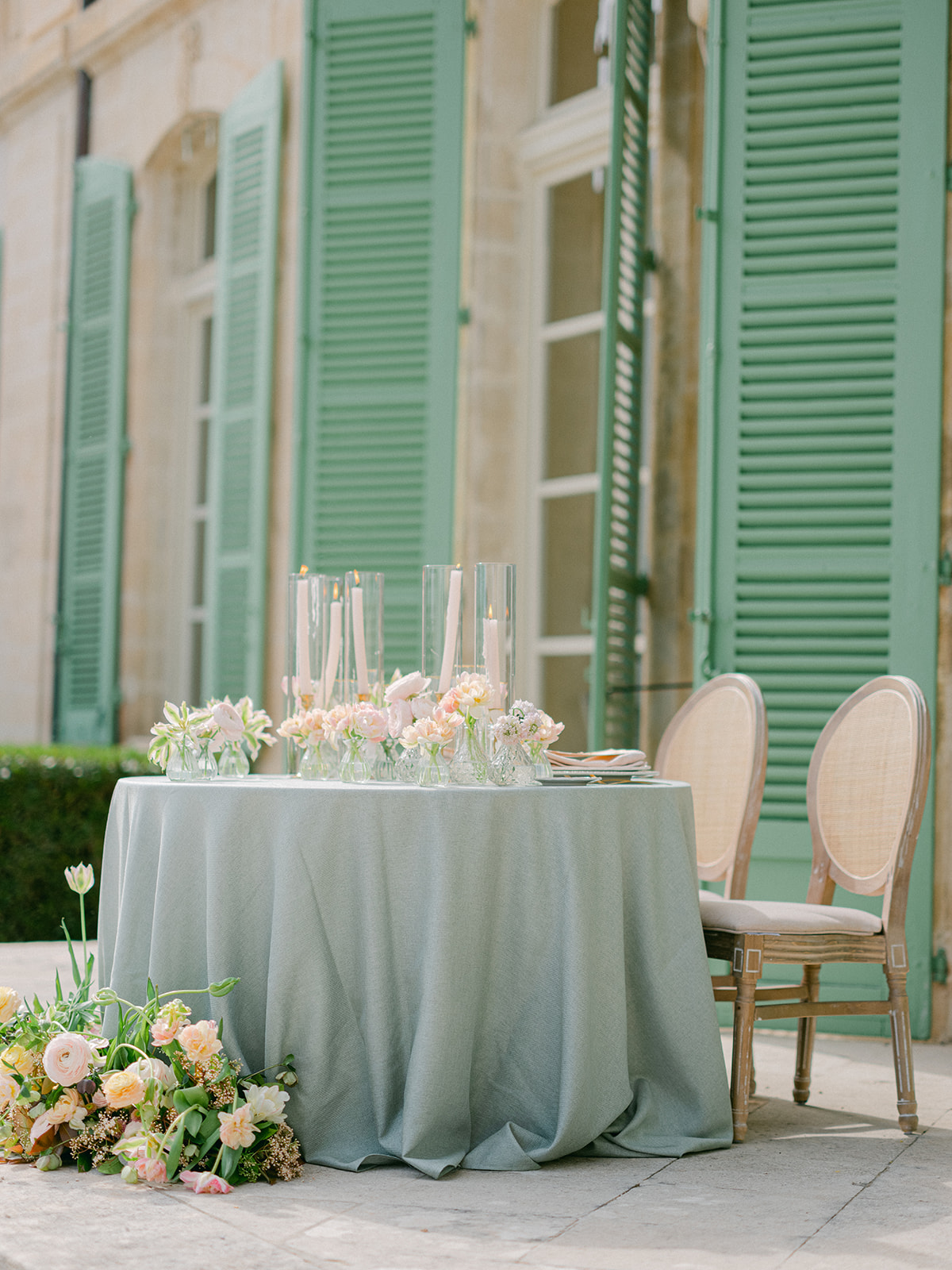
The 130-square-metre patio, shaded by a magnificent ancient plane tree, is the social heart of the estate. This is where lunch follows cocktails, where the afternoon settles into itself, where conversations happen across the sound of the fountains. Jasmine grows nearby. Birds provide an ambient soundtrack. The patio functions as an outdoor room in the most complete sense, and for wedding dinners al fresco, it is one of the most naturally atmospheric settings in the South of France.
The 25-by-10-metre heated infinity pool, with its fully equipped pool house and summer kitchen, is designed for the pool culture that a multi-day Provence wedding weekend demands. Welcome dinners by the pool. A rosé-soaked afternoon between the ceremony rehearsal and the wedding day itself. The farewell brunch the morning after, when guests who stayed on the estate drift poolside in the late morning sun. The pool’s reflective surface catches the Provence sky, and the surrounding landscape — vines, trees, the distant silhouette of Mont Ventoux — provides a backdrop that no landscaper could have improved upon.
The Ceremony Spaces
Château de Tourreau offers several distinct ceremony options, and this flexibility is one of the characteristics that distinguishes it most clearly from venues with a single ceremony space.
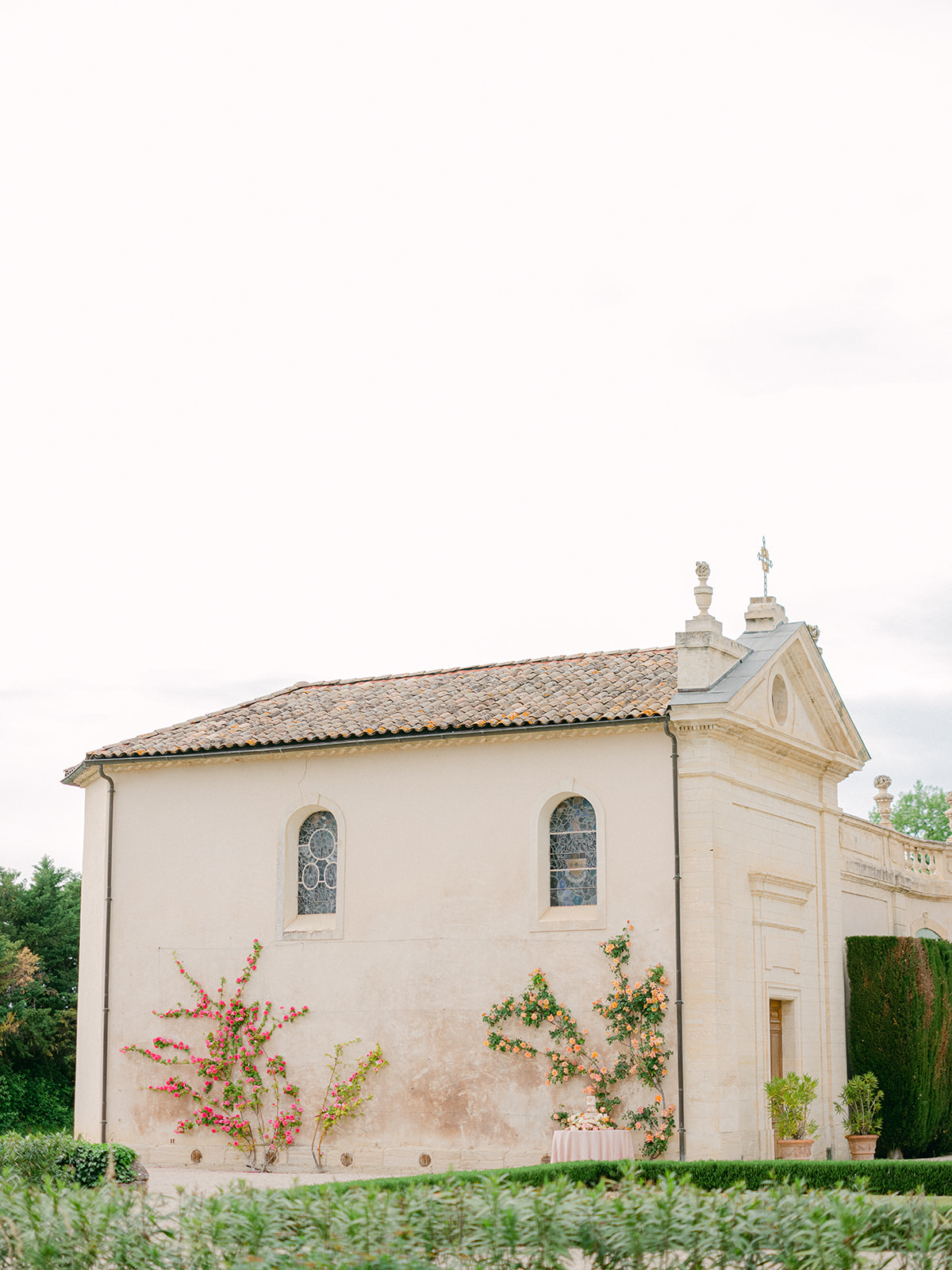
The consecrated chapel dating to 1614 is the most historically significant of these options and, for many couples, the most moving. Seating up to 70 guests, it provides an intimate interior ceremony space that is genuinely four centuries old — walls that have absorbed weddings, prayers, and celebrations across generations of French history.
The chapel’s age is palpable in the way that well-maintained old buildings are: in the quality of the light through the windows, in the texture of the stone, in the proportions of a space designed when building was a craft rather than a construction process. For couples who want a religious or symbolic ceremony in a space with genuine sacred history, there is nothing at this estate — and very few venues anywhere in Provence — that can match what the chapel offers.
The jardins à la française provide the alternative for couples who want an outdoor ceremony with the formal French garden as backdrop. Vows exchanged in this setting place the couple against the geometric precision of the garden hedges and the château facade — immediately, unmistakably Provence, and extraordinarily beautiful from a photographic standpoint.
The fountain garden is a third option — the English garden with its central fountain creating a more romantic, organic outdoor ceremony setting. The sound of the water, the surrounding plantings, the less formal character of this part of the grounds: all of these contribute to a ceremony atmosphere that feels more intimate and more discovered than the grandeur of the formal gardens.
The orchard and olive grove areas are available for smaller, more intimate ceremonies where the agricultural character of the estate — the trees, the fruit, the dappled shade — provides the setting.

The Interior Spaces
The château itself contains six salons and dining rooms spread across two floors, and the variety of character between these spaces is remarkable given the relatively modest footprint of the main building.
The main salon is oriented toward the south, with bay windows that flood the room with the particular quality of Provençal light that painters came here to chase in the 19th century. The furnishings throughout the interior combine Renaissance and Provençal styles — gilded mirrors, Provençal art, ornate wood wall carvings, gold-plated chandeliers. The effect is rich without being heavy, luxurious without being impersonal. These are rooms that look like they have been lived in and loved, because they have been.
The 18th-century dining room is furnished with a beautiful wild cherry table seating fifteen people — intimate by the standards of château dining, perfect for the wedding morning breakfast or the rehearsal dinner of the inner circle. The room’s scale and the quality of its furniture create a dining experience that feels genuinely of the place rather than catered in from outside.
The blackwood salon, with its billiards table, is the estate’s designated late-night room — the space that becomes, as one couple described it, an impromptu dance floor after the main reception has wound down and the guests who don’t want the night to end find their way there. This flexibility of late-night use — no noise restrictions, no curfew pressure — is one of the practical details that separates Château de Tourreau from many otherwise comparable venues.
The Accommodation
Château de Tourreau accommodates up to 29 guests across the main château and the adjoining farm — 15 in the château’s nine suites and 14 in the seven farm rooms arranged around a Roman-style patio shaded by olive trees and jasmine.
The nine château suites are spread across two floors, with views oriented either toward the southern park or the northern approach. All are furnished in the Provençal style with Renaissance touches, equipped with travertine bathrooms, air conditioning — genuinely important in a South of France summer — Hermès amenities, WiFi, and the kind of careful detail that distinguishes a serious luxury property from one that merely uses the word.
The flagship accommodation is the Impériale Suite, which is the room on the estate that I hear couples describe with the most consistent and genuine enthusiasm. A private terrace of 150 square metres — large enough to be a garden of its own — faces the Provençal landscape. A 25-square-metre bathroom includes a jacuzzi. The view toward Mont Ventoux from this terrace, in the early morning or at dusk, is one of those experiences that stays with people long after the wedding weekend has ended. This is where the couple begins the morning of their wedding day, and where they return to after the celebration. Those conditions matter more than couples sometimes realize in the planning stages.
The Prestige and Deluxe suites in the château provide the next tier of accommodation, each with their own character and garden views. The farm suites, arranged around the Roman patio with its olive trees and jasmine, have a more agricultural, Provençal character — slightly less formal than the château rooms, equally beautiful in a different register.
The minimum rental period for weddings is four days and three nights, which is the right structure for how celebrations at an estate of this scale should work. Four days gives the arrival Wednesday evening, a full Thursday for guest settling-in and the rehearsal, the wedding day Friday or Saturday, and a Sunday morning departure at whatever unhurried pace the Provençal morning allows.
For guests beyond the estate’s capacity of 29, the village of Sarrians and the surrounding area offer a range of hotels, chambres d’hôtes, and holiday rentals — the proximity to Avignon and the broader Vaucluse means that excellent accommodation options exist within thirty minutes of the estate.
The Food and Wine
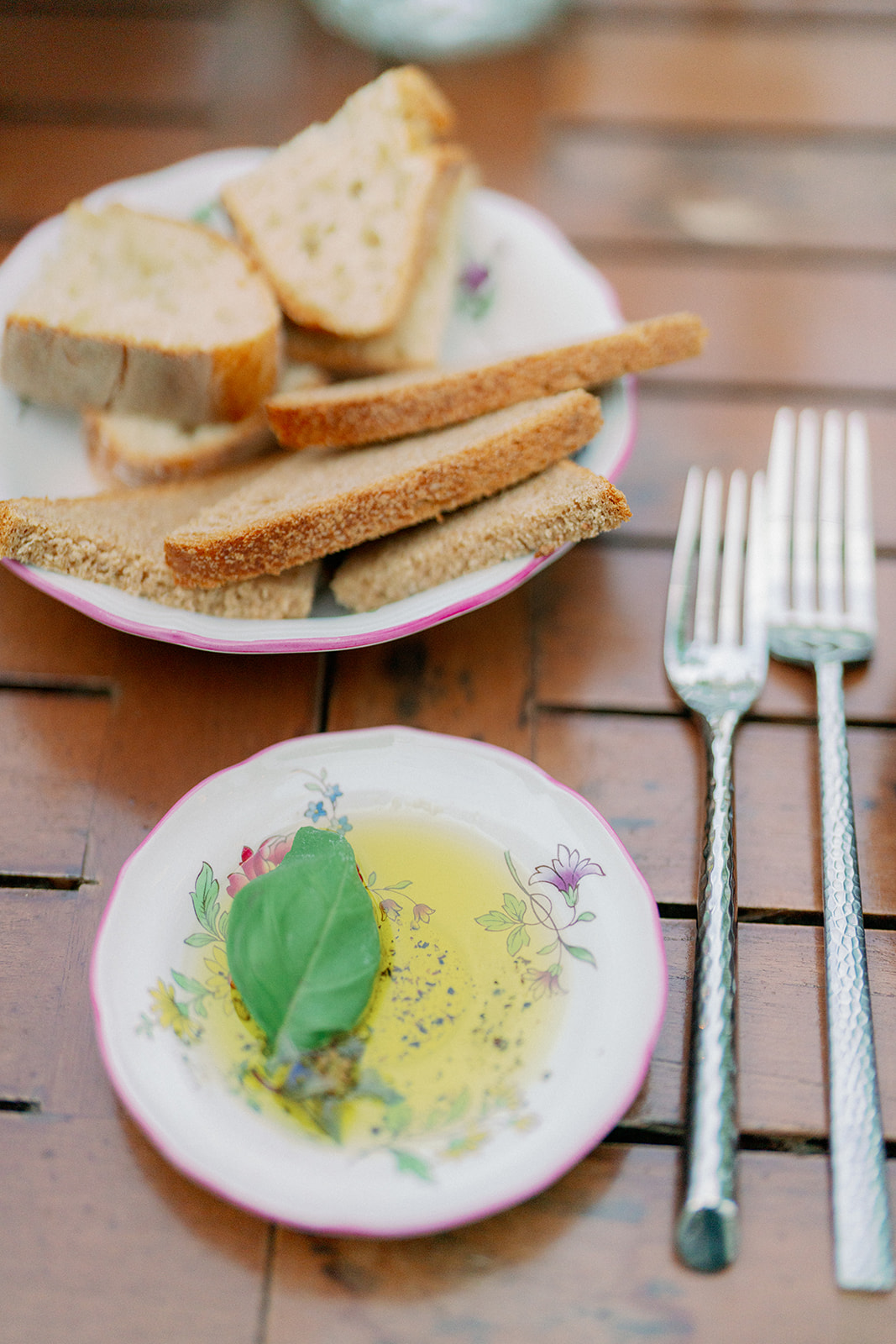
Château de Tourreau does not operate a fixed in-house catering team — instead, it works with a curated list of top-tier preferred chefs and caterers who specialize in seasonal Provençal cuisine and who know the estate’s kitchen infrastructure and outdoor cooking facilities well.
This approach gives couples meaningful flexibility in how they design the culinary experience of their wedding weekend without the chaos of fully self-sourcing every vendor. The preferred caterers share the estate’s aesthetic — seasonal, locally sourced, specifically Provençal — and bring their own team and menu design to the partnership. The estate’s fully equipped indoor kitchen and outdoor summer kitchen, with refrigerator, plancha, and ice maker, give catering teams the professional infrastructure they need to execute at the highest level.
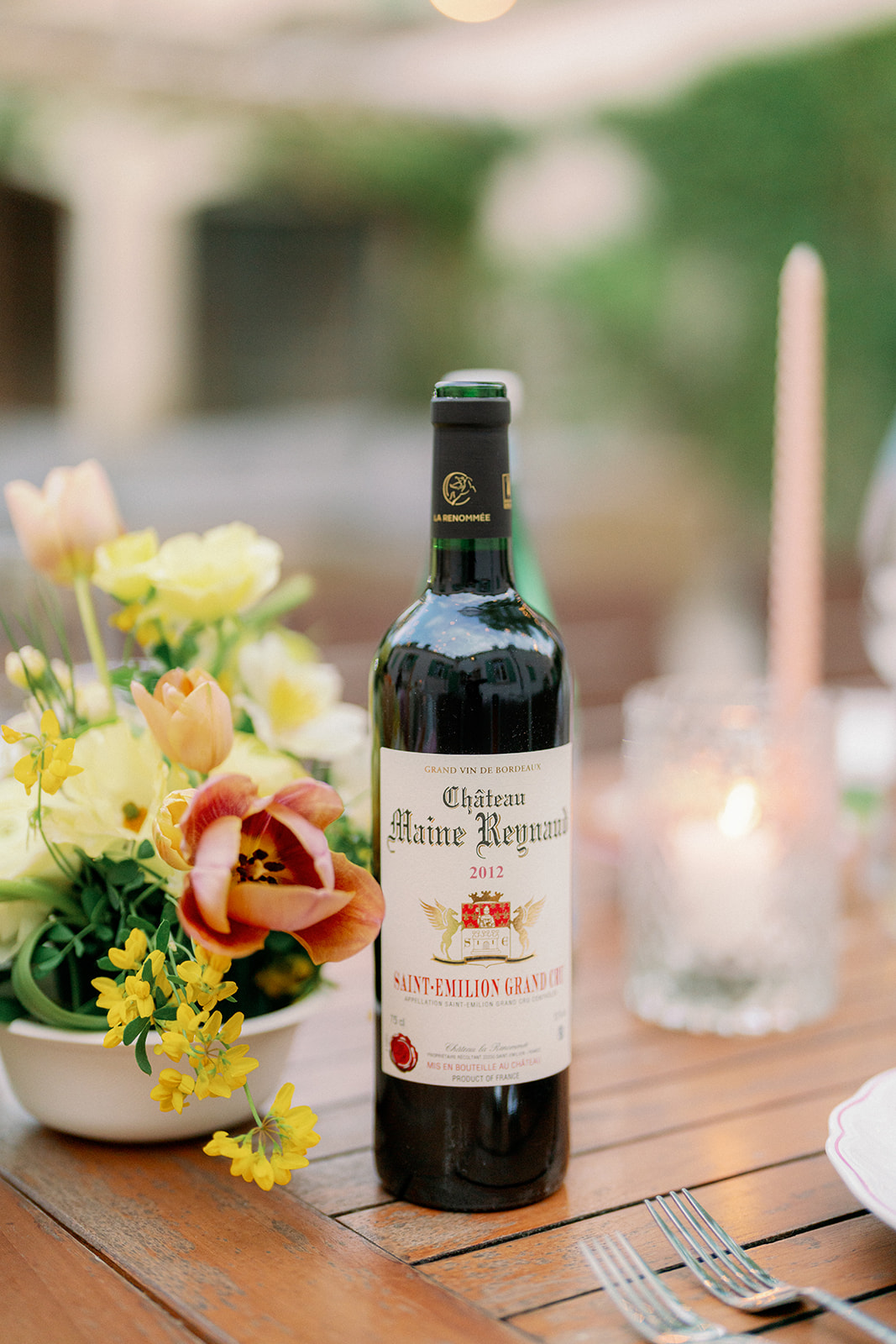
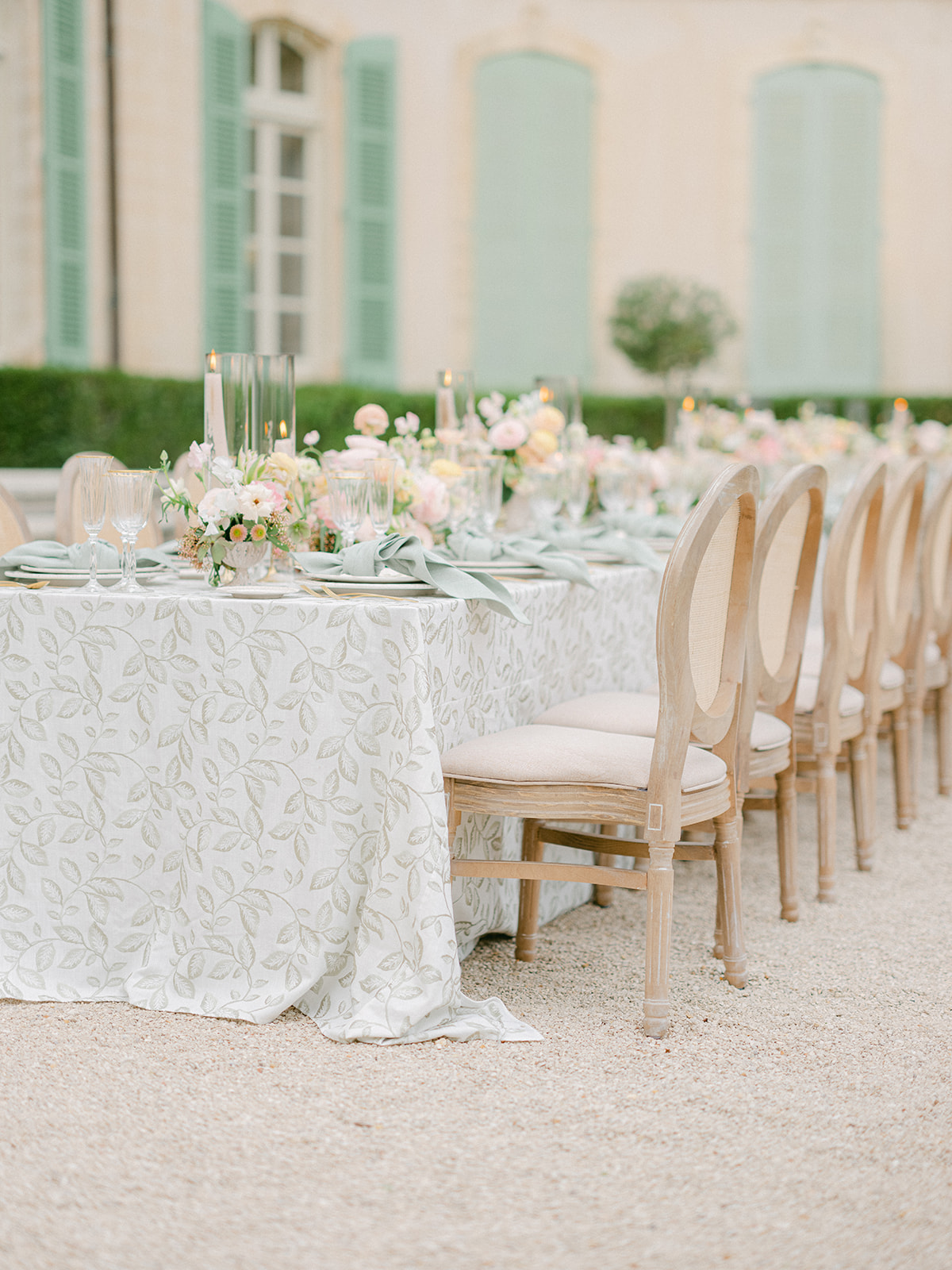
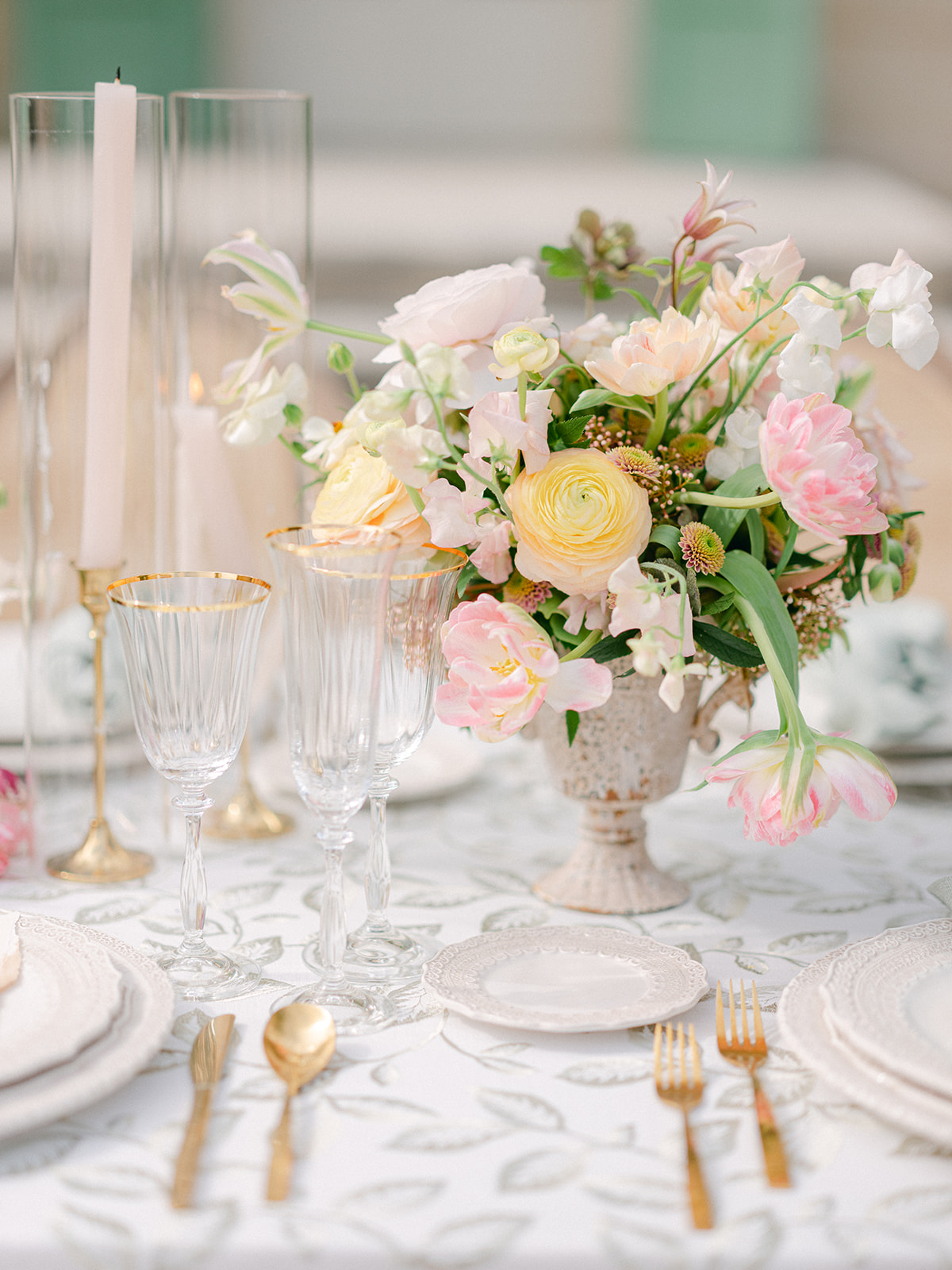
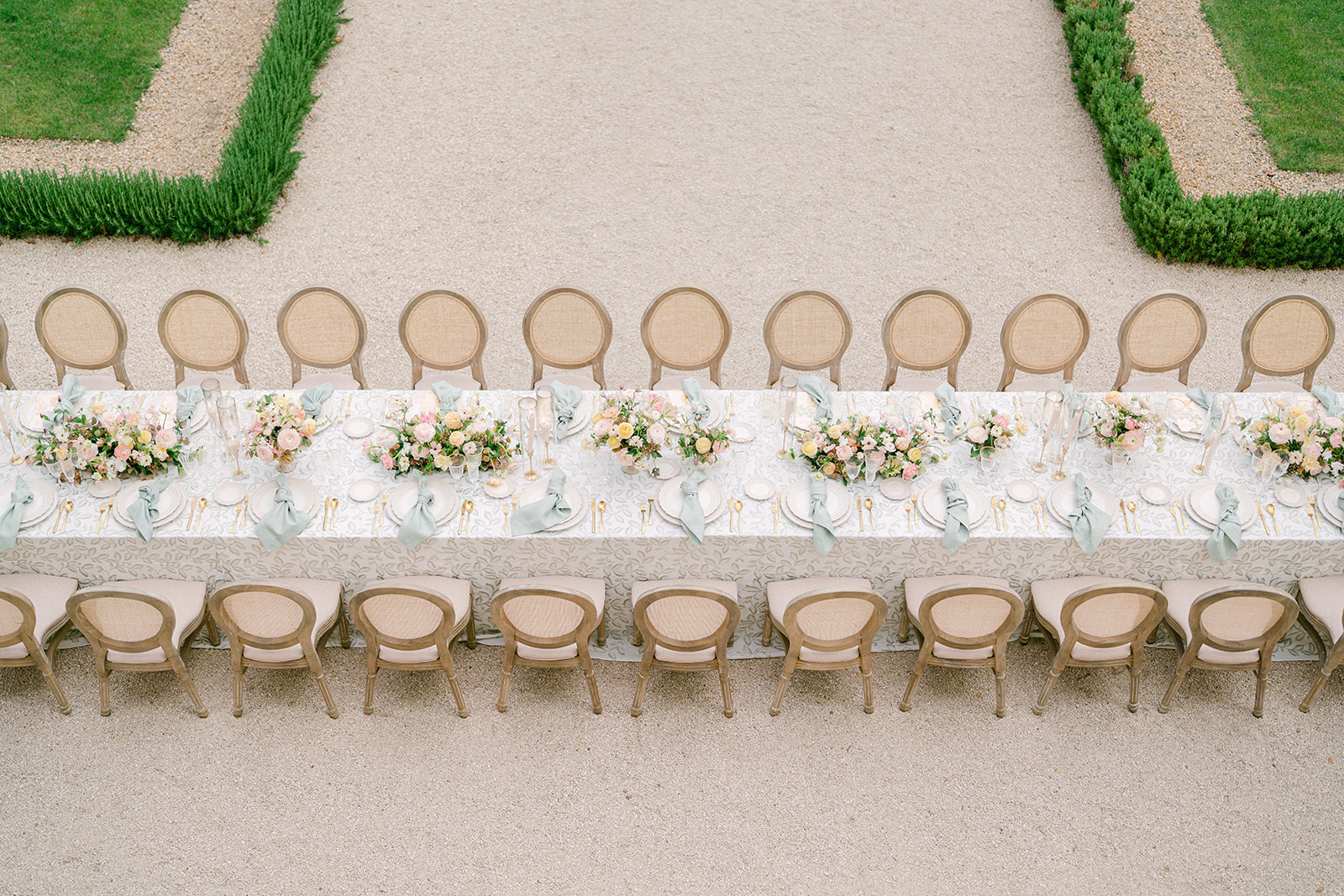
The dining settings available across the estate create enormous variety within a single weekend. The 120-square-metre patio under the ancient plane tree for an al fresco dinner of extraordinary atmosphere. The pool house dining room for a more intimate morning breakfast or cocktail setting. The long table set in the garden for a candlelit dinner under the Provençal stars. A picnic in the orchard on the quiet Thursday afternoon before the wedding. The château’s own wine cellar, which houses prestigious local appellations including Châteauneuf-du-Pape, Gigondas, and Vacqueyras, contributes directly to the dining experience and reflects the wine culture of the surrounding region.
The 500-square-metre organic vegetable garden and the Mediterranean orchard supply fresh produce directly to the estate’s culinary program — meaning that what appears on your wedding dinner table has frequently grown within walking distance of where you are sitting. In a region where the food culture is defined by proximity to the land, this is both a practical reality and a meaningful statement about the estate’s relationship to its surroundings.
Beyond the Wedding: What to Do in the Surrounding Region
One of the most compelling arguments for choosing Château de Tourreau as a Provence wedding venue is not the estate itself — remarkable as it is — but what surrounds it within thirty to ninety minutes.
Avignon, one of the most historically significant cities in France, sits thirty minutes from Sarrians. The medieval Palais des Papes, the Pont Saint-Bénézet, the ramparts of the old city, and the vibrant restaurant and cultural scene make Avignon a genuinely extraordinary destination for guests who arrive a day or two before the wedding weekend begins.
Châteauneuf-du-Pape, one of the most celebrated wine appellations in the world, is practically within cycling distance. The estate can arrange guided vineyard tours, private tastings, and wine dinners at producers throughout the appellation — transforming the wedding weekend into something between a celebration and a wine journey through one of France’s most important wine regions.
Orange, with its remarkably preserved Roman amphitheatre — one of the best-preserved in Europe — is fifteen minutes away. The Pont du Gard, the UNESCO-listed Roman aqueduct, is within an hour. The antique markets of Isle-sur-la-Sorgue, renowned as one of France’s finest antiques destinations, are nearby. Aix-en-Provence, with its sophisticated café culture and Cézanne heritage, is an hour to the south. The lavender fields of the Valensole plateau bloom in late June and July, within comfortable driving distance for an excursion.
The estate can arrange hot air balloon rides over the Provençal countryside, horseback riding, cycling routes through the vineyards, and visits to UNESCO-listed historic sites for guests who want curated experiences rather than self-organized exploration. There is also, notably, a helipad on the estate for arrivals or excursions requiring a more dramatic mode of transport.
The Best Season for a Château de Tourreau Wedding
Château de Tourreau is available for events across the year, and each season has its own character. From a photographer’s perspective, the recommendations are specific rather than general.
Late May and June represent the most comprehensively beautiful conditions. This is when I photographed a wedding here and the weather was truly perfect. Not too hot and not too cold. The gardens are at their most verdant and full at this time of year.
The lavender fields in the surrounding Vaucluse begin to bloom in late June, creating the possibility of lavender excursion photography that is specific to this region and this season. The days are long, providing more golden-hour time than any other season. Temperatures are warm without the intensely demanding heat of high summer.
July is lavender peak season and the height of Provence summer — golden, saturated, beautiful, and very hot in the middle of the day. For photography, the challenge at Château de Tourreau in July is the intensity of the midday sun. The cypress avenue provides remarkable shade that makes photographs possible during hours when other venues surrender to the light. The estate’s 20 acres of varied environments — the dense orchard shade, the ancient plane tree over the patio, the garden paths with their dappled cover — give a skilled photographer tools that allow the full day to be used. July dates book furthest in advance; couples who want this month should be planning eighteen to twenty-four months out.
September is the month I recommend most often for couples who want beautiful conditions with slightly more flexibility on availability and the most comfortable temperature range for guests. The heat softens in September without abandoning the warmth of summer. The light takes on a deeper amber quality that it lacks in June and July — lower-angled, richer, the kind of light that turns the château’s stone facade and the surrounding landscape into something genuinely painterly.
September is harvest season in the surrounding wine country, and the energy of the appellation at this time of year — the workers in the vineyards, the smell of fermenting grapes, the particular urgency and celebration of harvest — adds a regional vitality to the wedding weekend that makes the Châteauneuf-du-Pape excursion especially rewarding.
October has its own quiet beauty — fewer visitors in the region, cooler evenings that make the post-dinner gathering around the estate genuinely pleasant rather than sweltering, and a quality of afternoon light that is extraordinary. For smaller, more intimate celebrations where the emphasis is on the estate itself and the inner circle rather than the broader wedding weekend experience, October is a strong choice.
Who Château de Tourreau Is Right For
Château de Tourreau is a very specific venue, and it is worth being direct about who it serves best — because the match, when it is right, is immediate and complete, and the couples who are wrong for it will know that almost as quickly.
This estate is designed for couples who want a true multi-day wedding weekend rather than a single-day event. The minimum four-night rental is not a limitation to be worked around — it is the architecture of how an estate wedding here should function, and couples who embrace it find that the extra time is one of their most treasured elements of the overall experience. The wedding day becomes the centerpiece of a celebration that includes the arrival dinner, the relaxed Thursday at the pool, the wedding Saturday, and the Sunday morning brunch — each element having its own character and its own memories.
It is right for couples who value total privacy. The estate is entirely yours for the duration of your stay — no other guests, no other events, no shared spaces with strangers. For couples who are investing in a destination wedding in Provence, the knowledge that this particular 20 acres is exclusively theirs for four or five days is a meaningful part of what they are purchasing.
It serves couples with a guest list that fits the estate’s intimate capacity well. The 29 on-site guests, with additional accommodation available nearby, creates a natural ceiling that self-selects for the kind of intentional, intimate wedding where everyone present is genuinely important to the couple. The venue does accommodate up to 150 for the main wedding events, but the inner circle — the people sleeping on the estate, sharing the mornings and the late nights — is necessarily small, and that intimacy is one of Château de Tourreau’s defining qualities.
It is right for couples who love wine country, the Provençal landscape, and the specific quality of life in the South of France — not just as a backdrop but as an actual part of what the celebration is about. The Châteauneuf-du-Pape vineyards, the Avignon culture, the lavender and thyme and the ancient plane trees: these are not incidental to a Tourreau wedding weekend. They are integral to it.
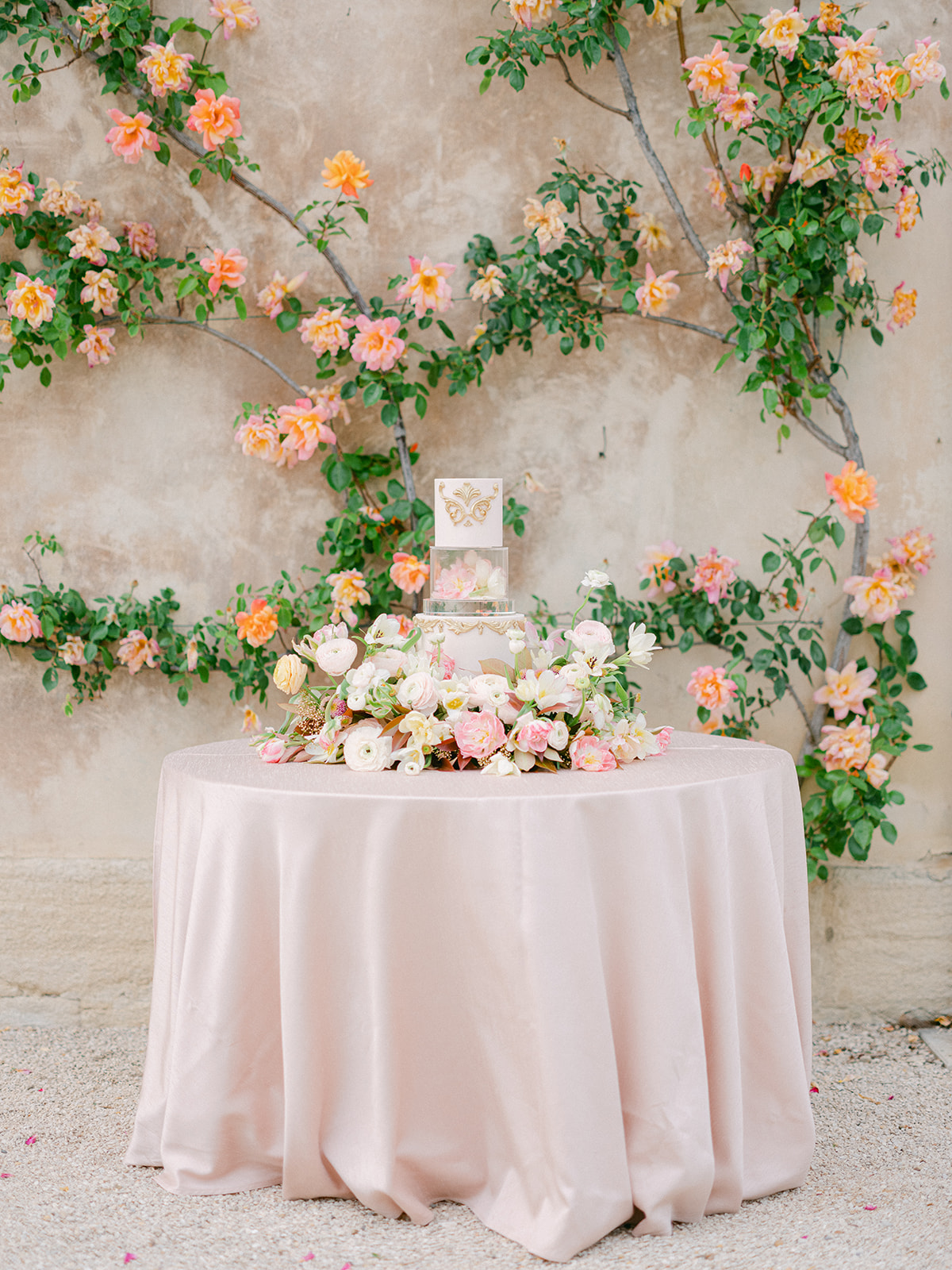
And it is right for couples who understand that the estate, beautiful as it is, is a blank canvas requiring them to bring in their own catering, décor, florals, entertainment, and wedding planner. The freedom this provides is extraordinary — no fixed packages, no imposed aesthetic, complete control over every element of the day — but it requires engaged planning, experienced vendors, and ideally a wedding planner who knows the property and the region well.
A Note on Wedding Planning at Château de Tourreau
A professional wedding planner with specific experience in Provence and ideally at this venue is not optional here — it is essential. The logistics of coordinating catering, florals, sound, lighting, décor, and guest transportation across a multi-day estate event, in a foreign country and potentially a second language, require professional experience that cannot be improvised. The estate’s concierge team provides valuable support, but they do not replace the coordination role of a planner who is specifically managing your wedding.
Begin your planning process earlier than you expect to need to. Château de Tourreau hosts a limited number of events each year, and the most desirable dates — peak-season Saturdays in June, July, and September — are typically booked twelve to twenty-four months in advance. If your heart is set on this venue for a specific date, reaching out as early as possible is not premature.
The estate is located at Route de Tourreau, 84260 Sarrians, France. It is 30 minutes from the Avignon TGV station (2 hours 40 minutes from Paris by high-speed train), 30 minutes from Avignon-Provence Airport, and 1 hour from Marseille Provence Airport — making it genuinely accessible for international guests arriving from London, Paris, or long-haul flights connecting through Marseille. The estate also has a helipad for arrivals by helicopter.
Château de Tourreau and the Question of Photography
I want to address this specifically because I think it matters to couples who care deeply about their wedding photographs — which, after 17 years of photographing destination weddings, I believe is most couples at this level of investment.
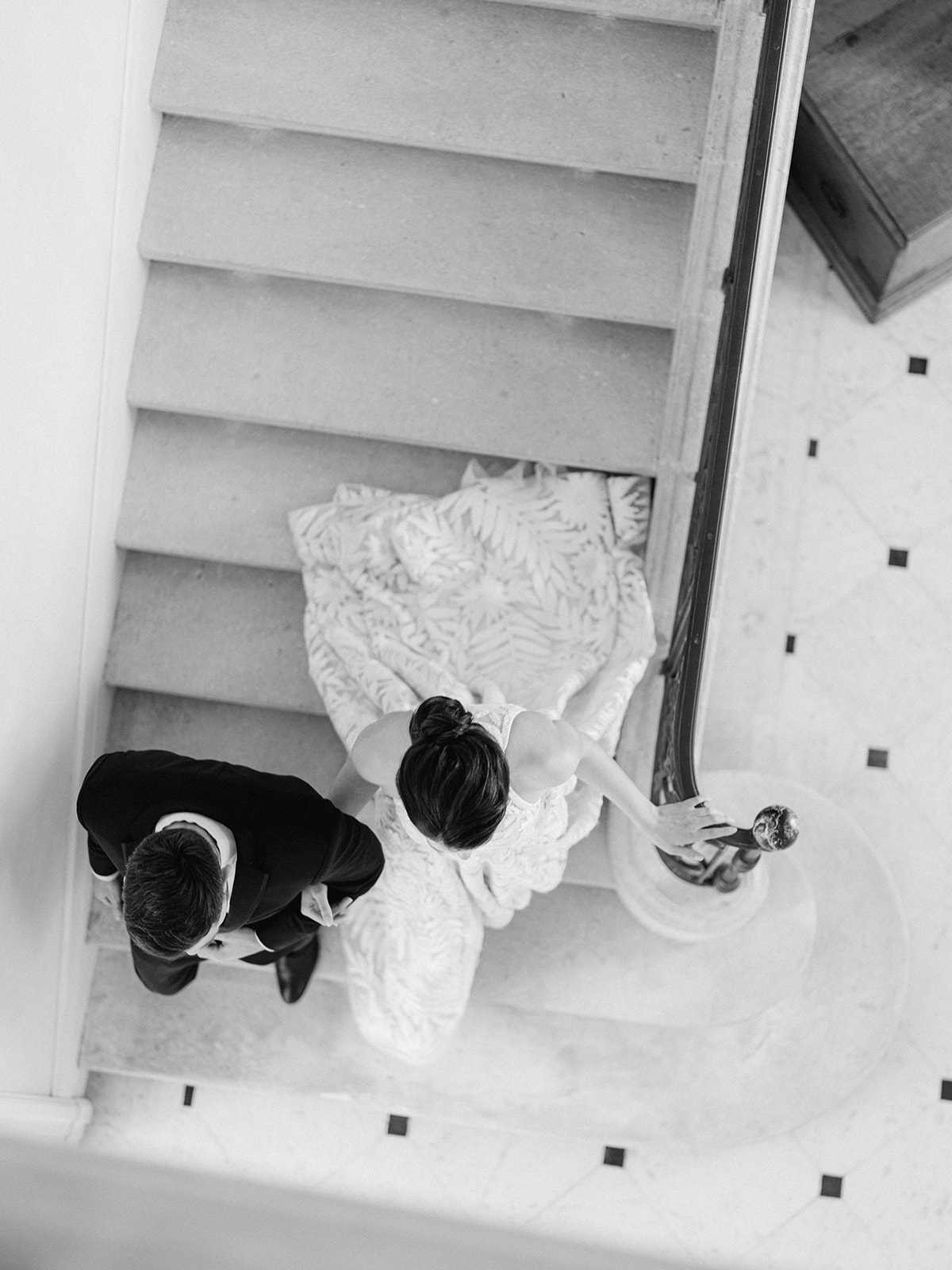
Château de Tourreau is one of the most photographically generous venues I know of in all of Provence. The variety of environments within the 20 acres means that a single wedding day produces images that look as though they were taken in five or six different locations. The chapel interior. The cypress avenue. The formal gardens. The patio under the plane tree. The infinity pool. The orchard in dappled afternoon light. The façade at golden hour. Each environment has its own visual character, and the natural pathways of the estate mean that moving between them is part of the day’s flow rather than an interruption to it.
The Provençal light is famous, but it requires knowledge to use well. The midday sun in July is harsh and demanding; the estate’s varied shaded environments are what allow a photographer to work productively during those hours. The golden hour in Provence — the 45 to 90 minutes before sunset — is extraordinary, and the château’s western-facing facade and the cypress avenue are positioned to receive this light in ways that consistently produce the most beautiful images of any wedding day here. A photographer who knows this venue and this light will be working toward that hour all day, using the shaded environments as a bridge, and arriving at the golden light fully prepared for what it offers.
September, specifically, produces the most reliably beautiful photography at this venue in my experience — the lower-angled light of the early autumn creates depth and warmth in the stone and the surrounding landscape that the flatter summer light cannot quite match.
In Closing
Château de Tourreau earned its place as one of the world’s most sought-after wedding venues not through marketing or celebrity association — though Sophie Turner and Joe Jonas choosing it for their celebration in 2019 certainly introduced it to a wider audience — but through what it genuinely is: a four-century-old Provençal estate of extraordinary beauty, historical weight, and intimate scale, in the heart of one of France’s most beloved regions, available for complete private use to the couples who find it and fall in love with it.
The couples who marry here consistently describe the same thing: that from the moment they drove through the gates and saw the cypress avenue open ahead of them, they knew. The estate does that to people. It has been doing it for a long time.
If you are planning a destination wedding in Provence and considering Château de Tourreau — or if you are a photographer or planner who would like to discuss working there — I would love to hear from you. Reach out through my contact page and let’s talk about your vision for a wedding in the South of France.
Key Details at a Glance
Year established: Land acquired 1612; chapel built 1614; château built 1750–1770
Total grounds: 20 acres / 8 hectares
Guest capacity for events: Up to 150
On-site accommodation: 29 guests — 15 in the château (9 suites) and 14 in the farm (7 rooms)
Minimum rental: 4 days / 3 nights
Flagship accommodation: The Impériale Suite — 150m² private terrace, jacuzzi, views of Mont Ventoux
Ceremony options: Consecrated 1614 chapel (70 guests), jardins à la française, fountain garden, orchard
Indoor salons: 6 salons and dining rooms across 2 floors
Catering: Preferred external caterers specializing in seasonal Provençal cuisine; no in-house catering team
Facilities: 25 x 10m heated infinity pool, pool house, summer kitchen, tennis court, basketball court, volleyball court, squash court, fitness room, pétanque court, helipad, organic vegetable garden, orchard, educational farm
Nearest airports: Avignon-Provence (30 minutes), Marseille Provence (1 hour)
Nearest TGV station: Avignon (30 minutes) — 2 hours 40 minutes from Paris
Best seasons for photography: Late May–June, September
