



The 5 Best Luxury Wedding Venues in Provence: A Helpful Guide on Picking Your Wedding Venue in France
Provence has a hold on the imagination that few places in the world can claim. It is the lavender fields and the ancient olive groves, yes — but it is also the quality of the light, which is specific and extraordinary in a way that photographers travel from around the world to work in. It is the pace of the culture, the depth of the food and wine, the particular warmth of the stone in the late afternoon sun, and the accumulated weight of centuries of human civilization concentrated in a landscape that still manages to feel unspoiled.
After 17 years of photographing destination weddings across France, and almost two years of living in Paris with regular trips south for weddings across the region, I can say clearly that Provence remains the destination I recommend most consistently to couples seeking a wedding that is genuinely and irreducibly beautiful.
This guide is the resource I wish every couple had when they begin the search for the best luxury wedding venues in Provence. I have photographed at or visited every venue featured here. The information is specific and current, the photographic assessment is honest, and the practical details are the ones that actually matter when you are planning a destination wedding from across the world. These are the luxury wedding venues in Provence that I recommend above all others — and the reasons why.
Why Get Married in Provence?
Before getting into the individual venues, it is worth being specific about what Provence actually offers as a wedding destination, because the generic description — beautiful scenery, good weather, amazing food — does not fully convey the depth of the argument.
Provence sits in the South of France between the Alps and the Mediterranean, encompassing roughly the departments of Bouches-du-Rhône, Vaucluse, Alpes-de-Haute-Provence, and Var. Its climate is Mediterranean in character — warm and dry from May through October, with long summer days and the kind of reliable sunshine that outdoor wedding planning requires. The region encompasses the Luberon massif, the Alpilles mountains, the plains around Avignon and the Rhône Valley, the Camargue marshes in the west, and the Côte d’Azur coast in the east. This geographical diversity is one of the reasons the luxury wedding venue market in Provence is so rich — each sub-region has its own distinct character, and the venues within them reflect that specificity.
The cuisine is among the most celebrated in France. Provence produces some of the country’s finest rosé wines, the world’s best olive oils, extraordinary fresh produce including tomatoes, courgettes, aubergines, peppers, herbs de Provence, and the black truffles of the Périgord spilling over its northeastern borders. Michelin-starred restaurants are not clustered only in major cities — they appear in farmhouse conversions, in the dining rooms of estate hotels, and in the bastides of historic estates across the region.
The transportation infrastructure makes Provence one of the most accessible destination wedding regions in France. Marseille Provence Airport handles direct flights from most major European hubs and significant transatlantic connections. The TGV high-speed train from Paris reaches Aix-en-Provence in approximately three hours and Avignon in two hours and forty minutes — which means couples flying into Paris can be at their venue the same afternoon without significant additional travel. Nice Airport, on the eastern edge of the region, adds further flight options for guests arriving from across Europe.
For couples based in the United States, Australia, or other long-haul origins, Provence’s accessibility relative to its beauty is one of the most compelling practical arguments for choosing it as a wedding destination. And for guests who make the journey, the opportunity to experience the lavender season, the wine country, the medieval villages, and the Mediterranean coast as part of a wedding weekend is an experience that routinely generates the kind of gratitude and warmth that destination couples always hope their celebration will create.
The Best Luxury Wedding Venues in Provence
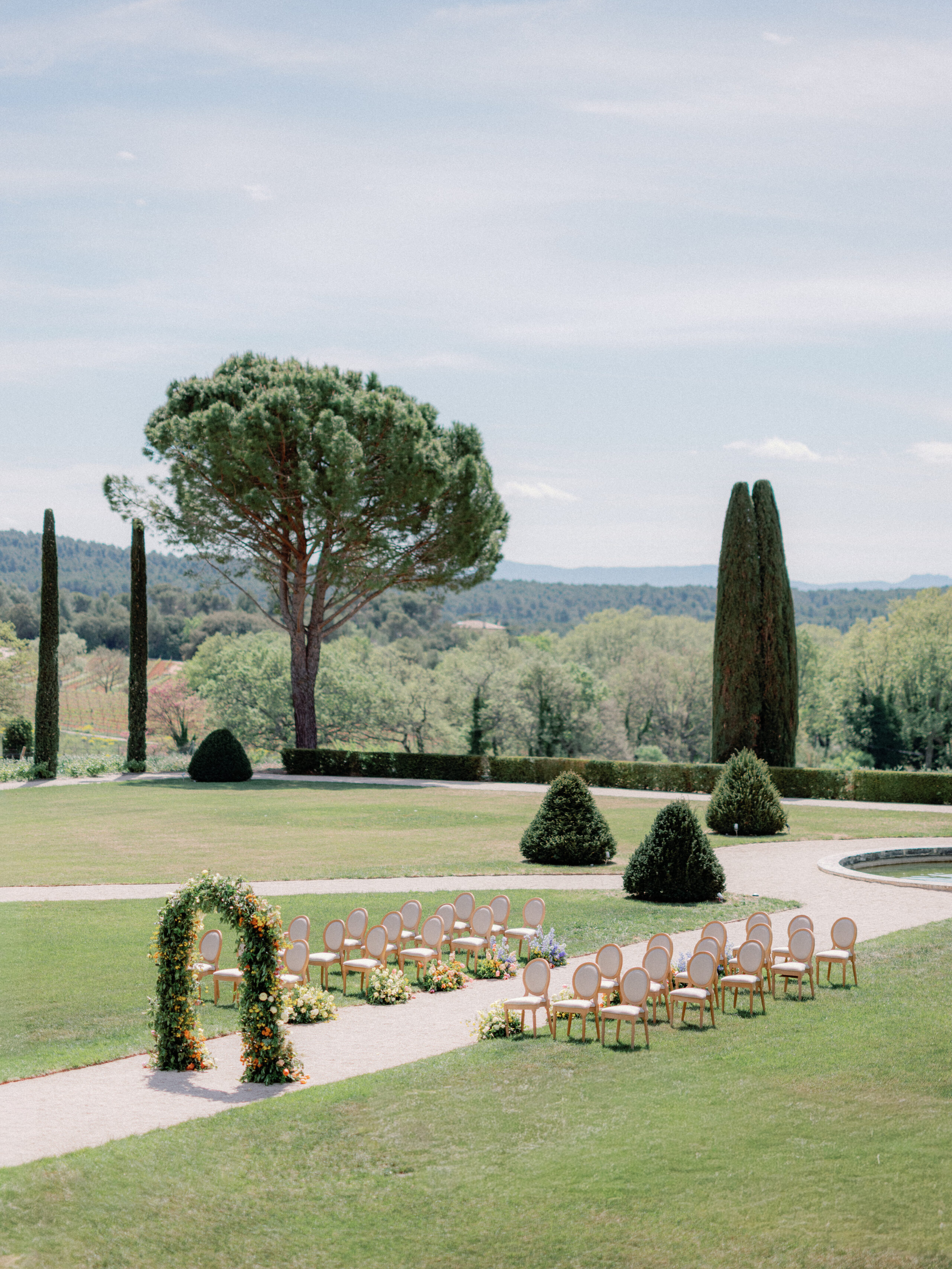
Château d’Estoublon — Fontvieille, Alpilles
There are properties that arrive at the title of “luxury wedding venue” through renovation and branding, and there are properties that have simply always been extraordinary. Château d’Estoublon is entirely and irreducibly in the second category. The estate’s history of olive oil and wine production dates to 1489 — before Columbus reached the Americas, before the Renaissance had fully transformed European art, before much of what we consider the modern world existed — and this is not merely a marketing claim. It is a lived continuity that shapes the estate’s character in ways that feel genuinely distinct from properties whose relationship with history is more recent and more cosmetic.
The domaine sits in the Vallée des Baux, pressed against the southern face of the Alpilles mountains near the medieval village of Fontvieille, spreading across 300 hectares of vineyards, olive groves, and private woodland. The scale of the property is difficult to convey without standing in it — 300 hectares is enormous by any measure, and the effect of being within a private estate of this size, surrounded on all sides by the estate’s own landscape rather than adjacent land, creates a quality of seclusion and ownership that even very expensive urban venues cannot replicate. You are not visiting a beautiful location. You are temporarily inhabiting one.
The 18th-century château underwent an extensive restoration — architectural professionals working with the Bâtiments de France designation that applies to classified historic structures — that respected every element of historical significance while bringing the accommodations to a genuinely contemporary luxury standard. The 10 suites and rooms, each individually designed with a refined natural palette and elegant Provençal furnishings, spread across approximately 1,500 square meters of living space. The design approach was deliberate in making the château feel like a home rather than a hotel — books on shelves, bottles of estate wine on tables, the sense of a place that expects guests to feel comfortable and settled rather than managed and processed.
The wine cellar, the theater, the games room, the hammam, and the heated pool complete the estate’s amenity list, but what distinguishes Château d’Estoublon photographically — and what I return to consistently when I think about this property — is the range and quality of its outdoor environments for wedding celebrations. The Romanesque-style chapel with its exquisite stained glass windows is one of the most beautiful ceremony spaces I have worked in anywhere in Provence. The Cour d’Honneur, planted with century-old olive trees and paved with warm stone, creates a cocktail hour and dinner setting that is specifically and irreplaceably Provençal.
The lavender fields — which bloom from late June through early August before the harvest — provide the outdoor ceremony and portrait backdrop that many couples cite as the primary reason they chose Estoublon: the specific image of vows exchanged in the lavender with the château’s golden stone façade illuminated behind them.
Château d’Estoublon accommodates approximately 100 to 200 guests for wedding celebrations and offers a minimum rental of three nights. The estate’s La Table d’Estoublon restaurant, with its kitchen garden-inspired menu, handles in-house catering for events. Fontvieille itself is five minutes from Les-Baux-de-Provence, 45 minutes from Marseille Airport, 25 minutes from Avignon, and approximately three hours from Paris by TGV. Budget planning should account for approximately €50,000 as a starting point for a one-day event, with multi-day celebrations rising significantly depending on guest count and service scope.
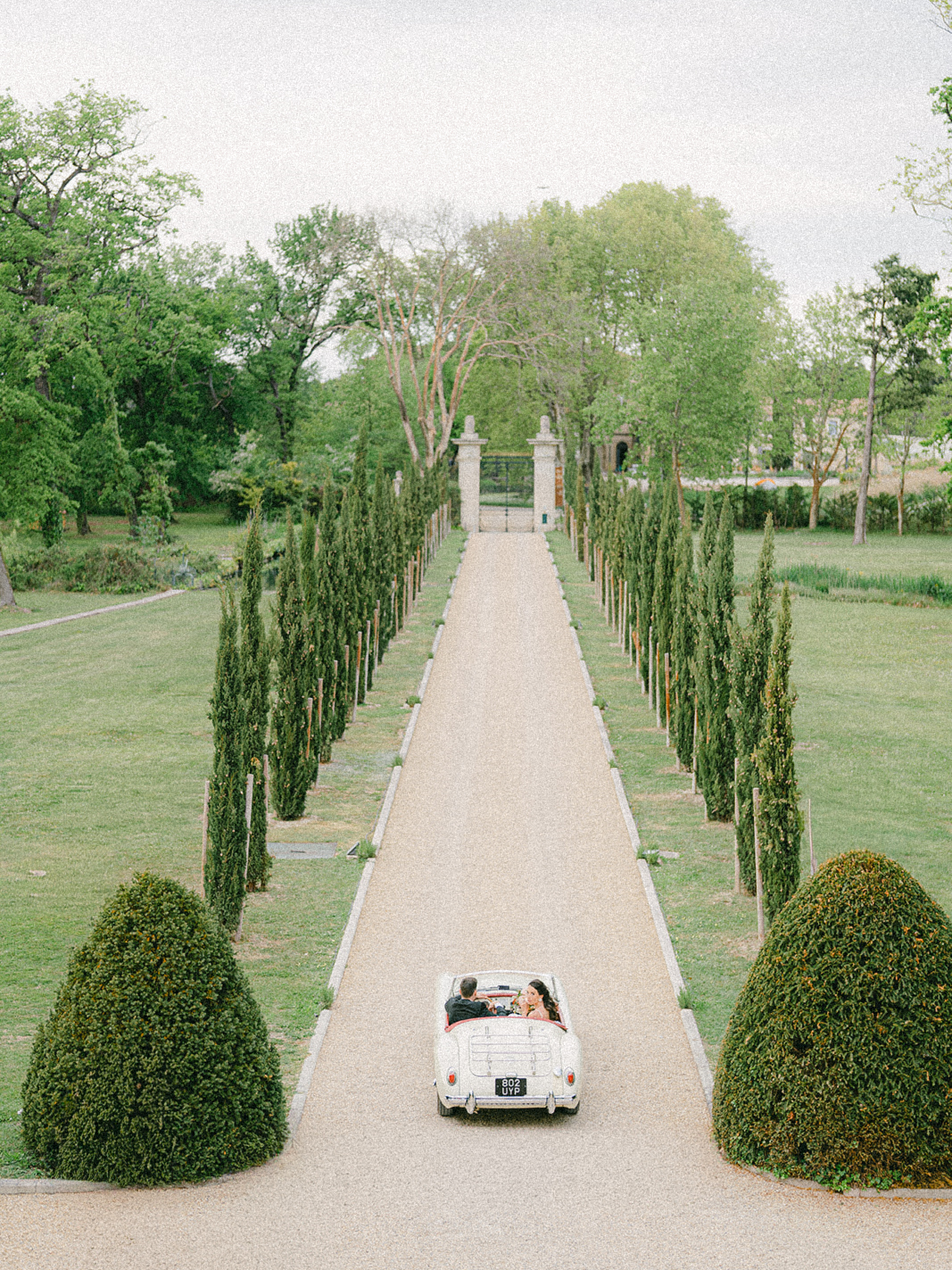
Château de Tourreau — Sarrians, Vaucluse
Between Avignon and the wine villages of Châteauneuf-du-Pape, Vacqueyras, and Gigondas, in a part of the Vaucluse that produces some of the finest wines in the southern Rhône Valley, sits Château de Tourreau. The approach says everything about what this estate believes itself to be: a grand entrance through the north gate, marked by the Tourreau family’s emblematic stone lions on either side, leading into an avenue of ancient Provence cypress trees that frames the château’s 18th-century façade at the end in a way that has made this driveway one of the most recognizable arrival experiences at any luxury wedding venue in Provence.
Arriving here for the first time — and even the fifth time — produces the specific sensation of stepping into a world that has already been organized to be beautiful.
The estate’s origins trace to 1614, when the chapel was first constructed, with the main château commissioned between 1750 and 1770 by François Bénézet de Tourreau and designed by architect Brun. The Tourreau family’s connections to the French royal court — François Paul Benezet de Tourreau served as a Grey Musketeer of the King of France — give the property a historical pedigree that goes beyond the merely architectural. The estate encompasses 20 acres of landscaped grounds that include French and English gardens in distinct zones, koi-filled ponds and waterways, mature orchards, an organic vegetable garden, and an educational farm where chickens, donkeys, and other animals create an unexpected and genuinely charming dimension to the estate’s character.
The accommodation is distributed between the main château and the adjacent farm buildings in a way that creates the distinct experience of an entire private estate rather than a hotel. The château itself provides 15 guests across its suite rooms, including the Imperiale Suite — the couple’s primary accommodation — with its extraordinary 150-square-meter private terrace, 25-square-meter marble bathroom with jacuzzi, and views that extend across the southern and northern park of the château depending on orientation. The Prestige Suite on the second floor features elegant pastel décor with refined artwork, and the Deluxe Suite on the first floor includes private outdoor access and a private office.
The farm suites, arranged around a Roman-style patio shaded by olive trees and jasmine, accommodate 14 additional guests in seven en-suite rooms with travertine bathrooms and Provençal decoration finished with Hermès amenities. Total on-site accommodation reaches 29 guests.
The consecrated chapel dating to 1614 — one of the oldest private consecrated chapels available as a ceremony space at any luxury wedding venue in Provence — seats up to 70 guests for fully official Christian ceremonies of any denomination. This is genuinely rare; the ability to hold a consecrated religious ceremony without leaving the estate, in a chapel that has been used for that purpose since before the French Revolution, is something very few Provence properties can offer.
The 25 x 10 meter heated infinity pool with its fully equipped pool house and summer kitchen for al-fresco dining is the natural center of the wedding weekend experience beyond the ceremony and reception — the space that guests migrate to on the afternoon before the wedding and the morning after. A tennis court, fitness room, squash court, basketball court, and helipad complete the estate’s facilities. Outdoor events can continue until 3:00 AM, making this one of the more permissive evening venues available in Provence.
Château de Tourreau accommodates outdoor receptions for up to 150 guests. The estate is located in Sarrians, approximately 30 minutes from Avignon city center and the TGV station, and one hour from Marseille Provence Airport. Exclusive use of the estate for a minimum of four days and three nights allows couples and their guests to genuinely inhabit the property rather than simply using it as an event backdrop.
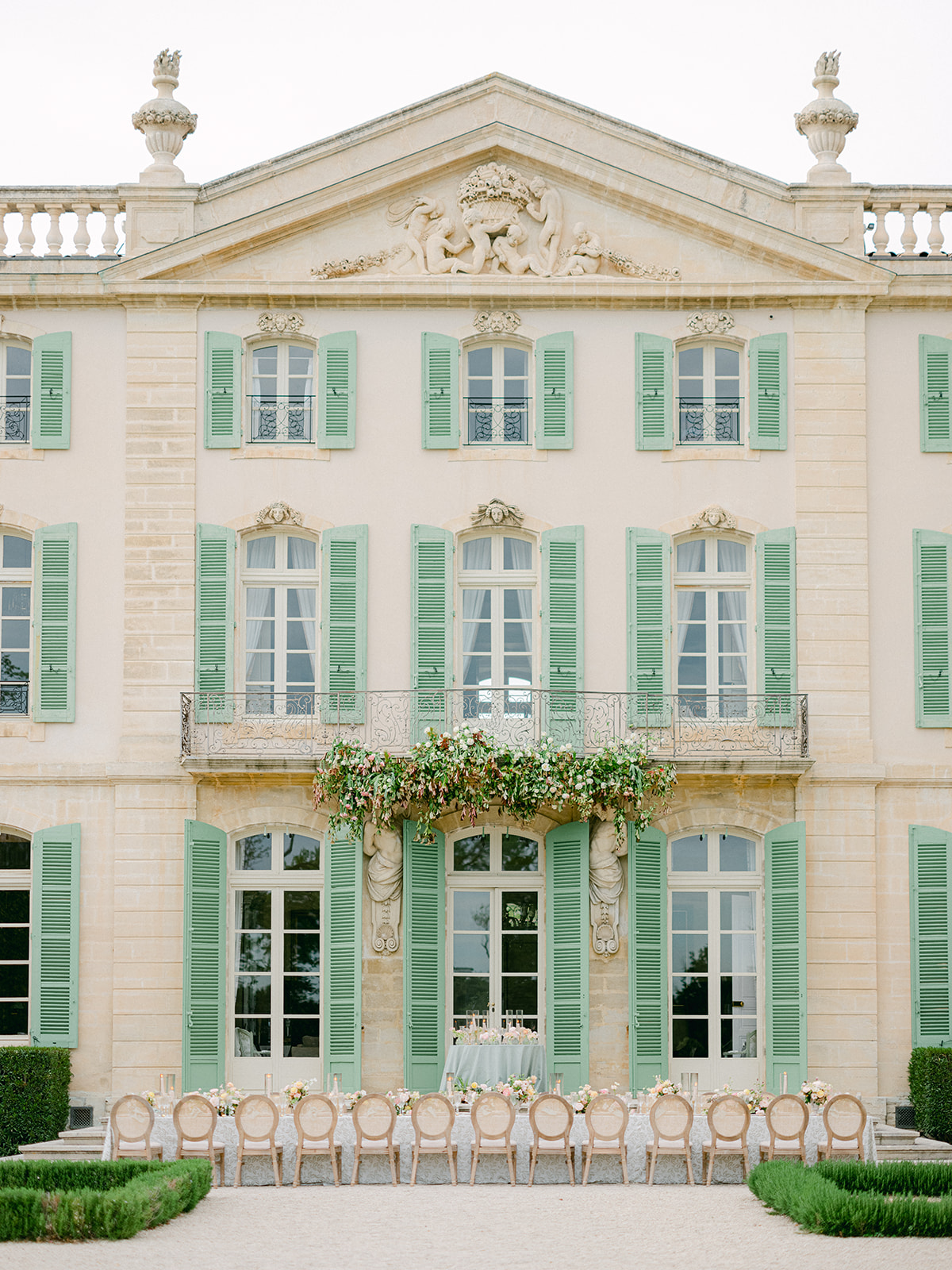
Château de Sannes — Sannes, Luberon
The Luberon — the massif that runs east to west through central Provence, sheltering the ochre villages of Roussillon, the hilltop perches of Gordes and Bonnieux, and the valleys between them — is the part of Provence that writers and painters have historically agreed is the most completely, essentially itself. Château de Sannes occupies 73 hectares in the foothills of this massif, between the village of Sannes and the nearby celebrated towns of Cucuron, Ansouis, and Lourmarin, and its history reaches back to 1603 — more than four centuries of continuous habitation on this specific piece of Luberon ground.
The estate began as a simple pavilion constructed by Jean de Thibaud de Tisati. Archaeological investigation by the current owners has revealed ancient sarcophagi on the property, suggesting Celtic ceremonial use of the site more than 2,000 years before the château was built. The French gardens and chapel were added in the 1640s; the estate turned to wine-growing in 1960 and is now cultivated entirely organically across its 40 hectares of vineyards.
The château, La Bergerie (a converted 18th-century farmhouse), and the Maison d’Amis (the converted stables guest house) together form an estate complex of considerable scale and variety — three buildings, each with distinct historical character, that can be rented individually or as a complete private compound accommodating up to 31 overnight guests.
One of the most visually distinctive features of the estate is the entry sequence. The drive approach from the road reveals one of the last remaining windmills in Provence — an authentic working mill standing in the landscape before the château comes into view — which creates an arrival experience that is quietly extraordinary and entirely specific to this property. No other luxury wedding venue in Provence begins this way.
Inside the main château, approximately 900 square meters of reception rooms and accommodation occupy the historic building, with seven double bedrooms and five spacious reception rooms. La Bergerie provides six bedrooms across 600 square meters with a vaulted living space and its own heated outdoor pool. The Maison d’Amis adds two further bedrooms, and the total rises to 31 when the château bedrooms are included in the full privatization.
The gardens are among the most botanically diverse of any estate in the Luberon — century-old magnolia trees, cedar trees, cherry orchards, lavender fields, olive groves, and the formal French garden surrounding the ornamental pond that serves as the focal point of the estate’s geometric landscape. The chapel, built in 1661 with its magnificent carved gate, provides an intimate ceremony space within the estate grounds. Multiple pools across the property include the famous indoor pool situated uniquely within the estate’s historic Orangerie — a glass-walled aquatic space that is one of the most architecturally unusual and most photographically interesting features of any venue in this guide.
The Nomadic Orangery — a 300-square-meter movable reception structure — accommodates up to 220 guests for seated dinners with panoramic views across the pond, vineyards, and Luberon hillsides. All catering at Château de Sannes is provided exclusively by Roland Paix Traiteur, specialists in seasonal Provençal gastronomy who have been working with the estate for many years. The estate’s own wines, olive oils, and perfume waters are available as part of the wedding experience and make distinctive guest gifts. The closest TGV station is Aix-en-Provence, 35 minutes by car; Marseille Provence Airport is 45 minutes. Weekly rental rates run approximately €42,500 to €66,225 depending on season and configuration.
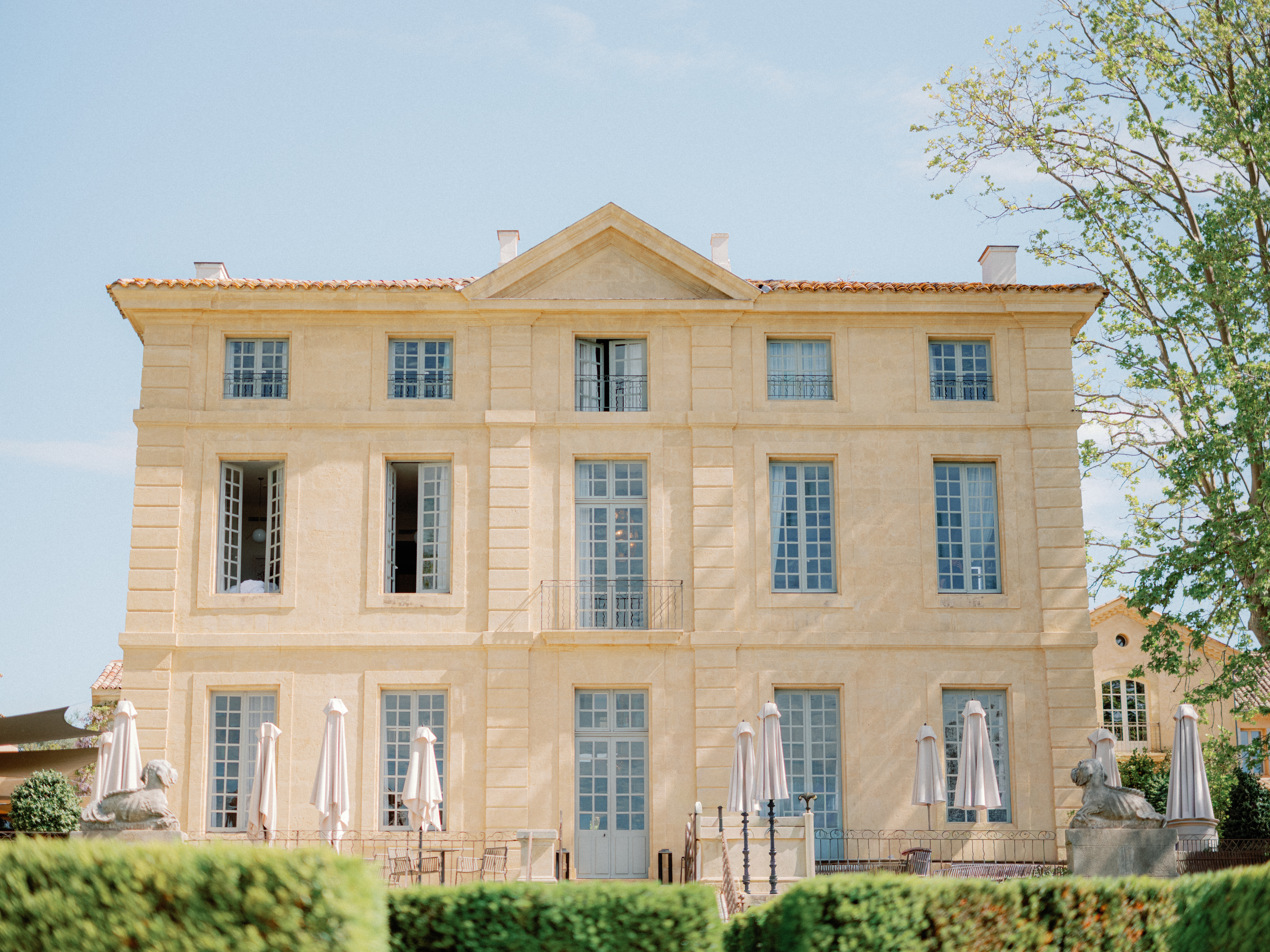
Château de la Gaude — Aix-en-Provence
Ten minutes from the center of Aix-en-Provence, in the Pinchinats district overlooking the city’s northeastern hills with the Montagne Sainte-Victoire — the limestone peak that obsessed Cézanne for the last decade of his life — visible on the horizon, Château de la Gaude opened as a luxury hotel in 2019 following a meticulous restoration that transformed an 18th-century Provençal bastide into one of the most architecturally compelling luxury wedding venues in France. Both the main building and the formal gardens are classified as French historical monuments — a designation that reflects not just their architectural significance but their continuous contribution to the cultural landscape of Aix-en-Provence.
The restoration was driven by a founding vision centered on three pillars: wine, art, and gastronomy. The result is a property whose character is genuinely distinct from any other luxury hotel wedding venue in Provence. The interiors are minimalist white-on-white contemporary design set against the château’s original carved stone fireplaces, ornate ceiling moldings, and period architectural detail — a contrast that is deliberate and completely successful in a way that many historic property renovations attempt and few achieve.
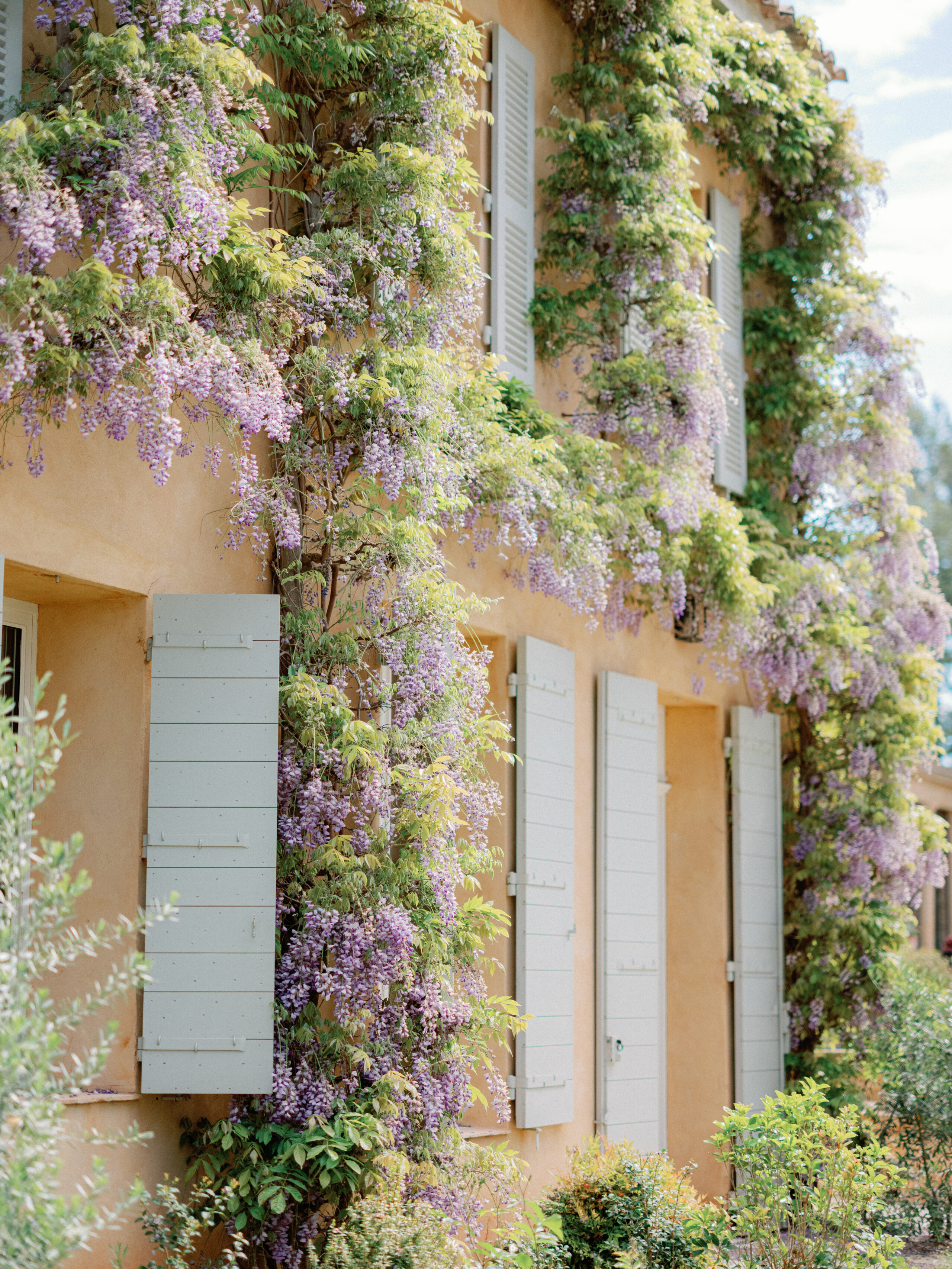
The rooms in the main Bastide carry this aesthetic most fully; the longère rooms have a warmer, more domestic Provençal character; and the three contemporary cabins overlooking the 25 hectares of organic vineyard add an entirely unique overnight option that has no equivalent at any other venue in this guide.
Le Art, the estate’s Michelin-starred restaurant led by Chef Matthieu Derible, earned its star within months of opening — a pace that reflects genuine culinary distinction rather than accumulated reputation. The menus draw from the estate’s own kitchen garden and the finest seasonal produce of Provence, with the estate’s AOP Coteaux d’Aix-en-Provence wines — grown organically across the surrounding vineyards — available throughout the celebration. The Spa Valmont, created within the converted former stud farm, offers bridal preparation experiences of exceptional quality: the stables converted to treatment rooms, the outdoor fountain transformed to a relaxation garden, with Valmont skincare treatments available throughout.
The classified 900-square-meter French gardens accommodate up to 150 guests for outdoor ceremonies, with the bastide’s pale stone façade and the Montagne Sainte-Victoire visible beyond as the ceremony backdrop. The restaurant terrace accommodates up to 120 for cocktail receptions. Indoor evening celebrations can continue until 3:00 AM. Full privatization of the estate for exclusive events requires a minimum of two nights and accommodates up to 60 guests across 21 rooms and suites. A contemporary villa with five bedrooms and its own private pool is available as the primary couple’s accommodation. Privatization rates start from approximately €174,400 for a Friday-through-Sunday weekend.
Marseille Provence Airport is 32 kilometers from the estate; the Aix-en-Provence TGV station is approximately ten minutes by car, making this the most logistically accessible of the five venues in this guide for international guests.

Airelles Gordes, La Bastide — Gordes, Luberon
The village of Gordes has been cited as one of the most beautiful in France by virtually every authority that has ever attempted to rank such things, and the citations are not exaggerated. The medieval hilltop village rises from the northern Luberon with the authority of a place that has been perched on its limestone cliff since the Middle Ages, and the view from its ramparts across the Luberon Valley — olive groves, lavender fields, garrigue, and the Alpilles on the horizon — is among the most purely beautiful landscapes in the South of France.
Airelles La Bastide occupies the ramparts of this village, and the view from its hanging terraces is the most dramatic of any luxury wedding venue in Provence.
The bastide itself dates to the 16th century — a former seigneurial residence that was restored by more than 150 skilled artisans into a hotel of extraordinary quality as part of the Airelles Collection, a small group of French luxury properties distinguished by their commitment to historic authenticity, exceptional service, and the specific character of each location. The restoration preserved the honey-colored stone façade, the medieval character of the architecture, the terraced gardens cut into the cliff, and the relationship between the building and the ancient village around it.
The interior aesthetic carries the same commitment to period atmosphere: velvet armchairs, thick wooden beams, antique furnishings, tapestries, and suits of armour positioned throughout — and the staff in uniforms appropriate to the building’s historic period, a level of theatrical commitment to atmosphere that separates this venue from every conventionally luxurious hotel on any comparable list.
Forty rooms and suites across the property accommodate up to 90 overnight guests, including the private La Maison de Constance villa — 350 square meters, five en-suite bedrooms, a private outdoor pool, a light-filled salon, and its own 1,000-square-meter garden with panoramic views across the Luberon Valley and the Alpilles — which serves as the primary accommodation for the couple and their immediate family. The 1,600-square-meter Airelles Spa by Guerlain provides bridal preparation and pre-wedding wellness experiences of the highest luxury standard.
The ceremony takes place on the hanging terraces — suspended between the medieval village above and the valley below, looking out across the Luberon Mountains to the lavender fields and olive groves stretching to the horizon. It is the most dramatic ceremony backdrop of any venue in this guide, and the photographs produced here carry a quality of place that is entirely specific to this cliff, this village, and this landscape. Multiple restaurants on the property include Clover Gordes, the creation of Michelin-starred chef Jean-François Piège, which featured in Emily in Paris as L’Esprit de Luberon, and La Table de La Bastide, each with a distinct culinary register but all drawing from the finest Provençal produce.
Capacity for seated wedding receptions reaches 120 guests. Partial use packages start from approximately €10,950 in low season. Full privatization pricing is available on enquiry for peak summer dates. Avignon TGV station is 30 minutes from the venue; Marseille Provence Airport is 45 minutes by car.
Choosing the Right Luxury Wedding Venue in Provence
Five venues, five distinct arguments, five completely different answers to the question of what a Provence luxury wedding can be. The practical questions that most reliably lead couples toward the right choice are these:
How many guests do you want to accommodate on-site? If you want a significant portion of your guest list sleeping on the property, Château d’Estoublon’s ten suites, Château de Tourreau’s 29 on-site beds, Château de Sannes’s 31, Château de la Gaude’s 60, and Airelles La Bastide’s 90 give a clear hierarchy of scale.
What kind of landscape do you want to wake up in? The Alpilles and olive groves of Estoublon; the Châteauneuf-du-Pape wine country of Tourreau; the rolling Luberon hills and organic vineyards of Sannes; the Sainte-Victoire and the city of Aix at La Gaude; or the cliff-top drama of Gordes and the Luberon Valley at Airelles — each is specific, beautiful, and entirely unlike the others.
What is the non-negotiable ceremony requirement? A consecrated private chapel for a religious ceremony narrows the choice to Tourreau and Sannes. A dramatic outdoor terrace ceremony with a panoramic landscape backdrop points to Airelles or Estoublon. A classified garden ceremony points to La Gaude.
And what matters most about the culinary experience? An estate wine and in-house chef tradition at Estoublon; a Provençal seasonal menu in the wine country of the Vaucluse at Tourreau; Roland Paix’s exclusive catering partnership at Sannes; a Michelin-starred kitchen and estate organic vineyard at La Gaude; or the Luberon’s finest produce through Michelin-starred chef Jean-François Piège at Airelles — each answer is the right answer for a different couple.
I have spent seventeen years building the knowledge to help couples navigate this decision correctly — not toward any particular venue, but toward the one that is genuinely right for them. If you are planning a Provence luxury wedding and want to talk through what your day might look like at any of these venues — the light at different seasons, the spaces that photograph best, the practical logistics of each property — I would love to have that conversation. Reach out through my contact page and let’s start planning your Provence wedding together.
Planning a Luxury Wedding in Provence: What You Need to Know
Planning a destination wedding in Provence from the United States, the United Kingdom, Australia, or anywhere outside France involves a set of requirements, logistical considerations, and cultural differences that most general wedding planning guides do not adequately address. What follows is the specific, honest information I share with every couple I work with who is planning a Provence wedding from abroad.
You Will Not Be Legally Married at the Venue
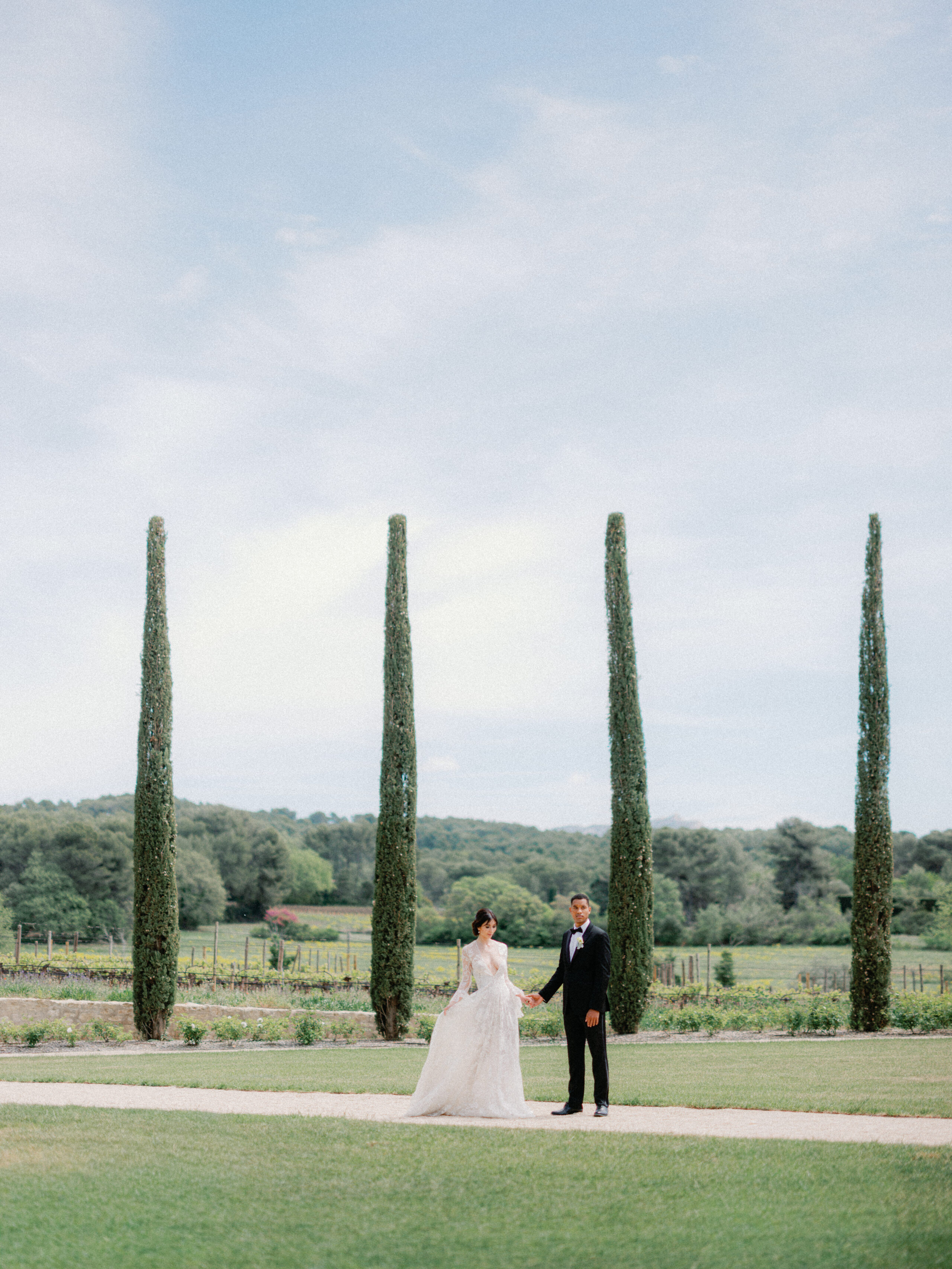
France requires legal civil marriages to take place at the mairie — the local town hall — of the commune where one party is officially registered as a resident. Private property marriages, including every château and estate on this list, are not legally valid in France regardless of how much the venue costs or how significant the ceremony is. This is French law and it does not negotiate.
The overwhelming majority of international couples planning a Provence wedding choose to marry legally in their home country before the France celebration, then hold a symbolic or humanist ceremony at the château. This symbolic ceremony carries no legal standing but is culturally accepted, personally meaningful, and practically speaking often more emotionally resonant than the legal ceremony — because you can write every word of it, choose any officiant, and design the entire ritual around who you are as a couple. Guests experience it as the wedding, because it is, in every meaningful sense.
If you specifically want the legal ceremony to happen in France, it is possible but requires establishing the relevant documentation with the French mairie many months in advance, observing a mandatory ten-day publication of banns period, and attending a brief ceremony at the town hall conducted entirely in French. Most destination couples who investigate this route choose the legal-at-home approach instead — not because the French option is prohibitive, but because the symbolic ceremony at the château is simply a better experience.
You Need a French Wedding Planner — Not Optional
I say this clearly and without qualification: a French wedding planner who has worked at your specific venue before is not an optional luxury for a destination Provence wedding. It is the single most important hire you will make, and it is the decision that determines more than anything else whether your wedding day runs beautifully or encounters avoidable complications.
Here is what the right planner brings that no amount of personal organization from abroad can replicate. They have vendor relationships with the caterers, florists, musicians, lighting designers, and transport companies who regularly serve your specific venue. They know the venue’s specific operational rules — the exact noise curfew, the load-in timing requirements, which parts of the grounds are available for which phases of the celebration, where the power points are for the band, how the venue team manages the transition from cocktail hour to dinner. They conduct all of this in French, which is the language in which French vendors conduct business regardless of how much English they speak socially.
When selecting your planner, ask specifically how many weddings they have organized at your chosen venue. Ask what went unexpectedly on the most recent wedding they managed there and how they handled it. Ask which vendors they recommend for your specific vision and why those vendors rather than others. The answers to these questions will immediately distinguish planners with genuine specific experience from those who are enthusiastic but learning.
Budgeting: The Real Numbers
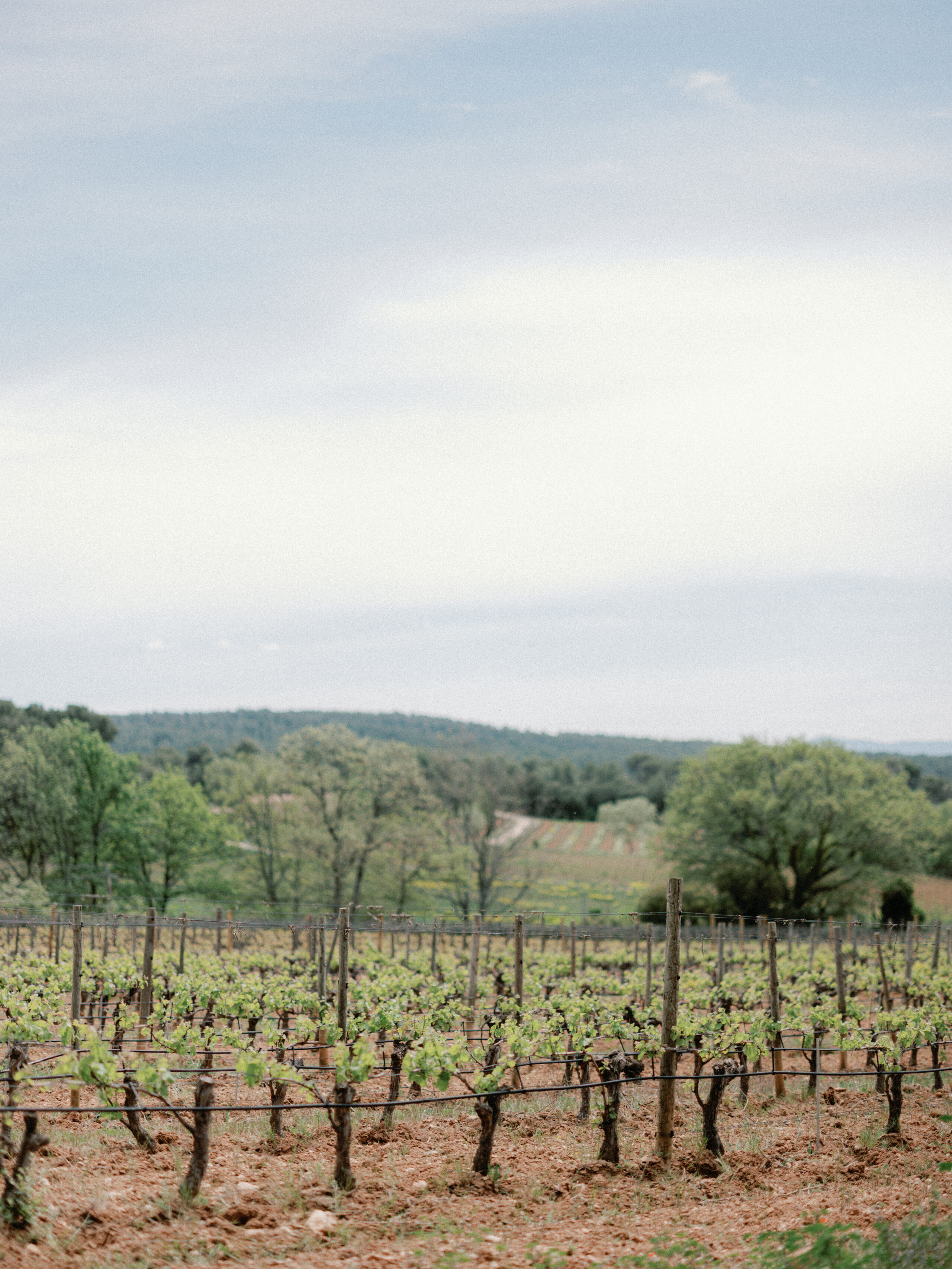
The venue fee at any of the luxury wedding venues in Provence in this guide is the starting point of the budget, not the total. The venue fee — typically ranging from €22,000 to €174,000 depending on the property, season, and duration — covers the building and the grounds and typically the accommodation. Everything else comes on top.
Catering is the largest variable expense. A fully catered wedding dinner in Provence at luxury level runs typically €300 to €600 per person for food, inclusive of service staff but typically separate from wine and champagne. For 80 guests, this represents €24,000 to €48,000 in catering alone before a single bottle of wine is opened. Wine and champagne for 80 guests across a full wedding weekend can add €8,000 to €20,000 depending on the wine list and the length of the celebration.
Florals at luxury Provence venues typically run €8,000 to €25,000 depending on the complexity of the design and the floral abundance of the couple’s vision. Lighting design — which makes an enormous difference to the quality of evening photographs and to the atmosphere of the reception — runs €4,000 to €15,000. Live music for a ceremony, cocktail hour, and reception typically €5,000 to €12,000. Photography at the level this caliber of venue deserves runs €5,000 to €15,000.
Add the wedding planner’s fee — typically 10 to 15 percent of the overall wedding budget for a full-service French planner, or a flat fee in the range of €8,000 to €20,000 — and the total picture for a Provence luxury wedding for 80 guests starts somewhere around €120,000 to €180,000 and rises from there based on guest count, the level of the catering and wine program, the florist’s vision, and the number of days the celebration spans.
This is not a figure designed to discourage. It is the honest number that allows couples to plan accurately rather than experiencing the progressive sticker shock of a budget that expands with each new vendor contract. Knowing the real number from the beginning is what allows the planning process to remain enjoyable.
The Preferred Vendor Arrangement
Many luxury Provence venues maintain preferred vendor lists — caterers, florists, photographers, and planners with whom they have existing working relationships — and some charge an additional fee, typically 10 to 15 percent of the vendor’s invoice, when couples bring in suppliers who are not on this list. Some venues make their preferred caterer mandatory, meaning the couple does not have the option to source independently. I know this sounds frustrating and complicated, but you will find that many venues in France are this way.
Before signing any venue contract, ask specifically whether a preferred caterer is mandatory or simply recommended. Ask whether a preferred vendor fee applies to other supplier categories and what the percentage is. Understand this fully before committing, because at the scale of budgets involved, a 15 percent preferred vendor surcharge applied to a €40,000 catering bill represents a €6,000 cost that was not visible in the venue’s headline fee.
The Noise Curfew Reality
Outdoor amplified music curfews vary by venue and commune, and this detail matters more than couples typically anticipate when planning. Some Provence venues allow outdoor music until midnight or later with appropriate permissions. Some require amplified music to move indoors by 11:00 PM. A small number have earlier restrictions depending on their relationship with neighboring properties.
Confirm the exact outdoor music curfew at your chosen venue in writing before signing the rental agreement. If a late-night outdoor dancing reception is central to your vision and the venue’s curfew is 11:00 PM, this is a fundamental incompatibility that needs to be resolved before, not after, the contract is signed. Several of the venues in this guide — including Château de Tourreau and Château de la Gaude — have notably permissive evening policies. Others are more restricted. Your planner should know this precisely for your specific venue.
Event Liability Insurance
French venue rental agreements almost universally require event liability insurance, and American or Australian homeowners or renters policies do not transfer for this purpose. You will need a dedicated event liability policy — typically providing a minimum of €1 million in general liability coverage — with a certificate submitted to the venue before the event date. Some venues require higher coverage levels. Your planner will know the specific requirement for your venue and can typically recommend brokers who issue event policies for destination weddings in France efficiently and at reasonable cost. Do not leave this to the last moment — insurance processing can take several weeks.
Guest Logistics: Getting Everyone There
International guests attending a Provence destination wedding most commonly arrive via Marseille Provence Airport or via the TGV high-speed train network — Paris to Aix-en-Provence in approximately three hours, or Paris to Avignon in two hours forty minutes. Nice Airport on the eastern edge of the region serves further European connections. Guests traveling from the United Kingdom have the Eurostar option to Paris with a TGV connection south, or direct flights into Marseille, Nice, or the smaller Avignon Airport.
Rural Provence does not have the ground transportation infrastructure of a city. There are no ride-sharing apps operating reliably in the countryside, taxi supply is limited on peak summer weekends, and expecting guests to arrange their own transportation from hotels or accommodation to a rural château is a recipe for late arrivals and stressed guests. Organize group shuttles for every event of the wedding weekend — Friday welcome dinner, Saturday ceremony and reception, Sunday brunch — and communicate the logistics clearly to guests in a pre-wedding information booklet sent at least six weeks before the event. Your planner will typically manage shuttle coordination as part of their service.
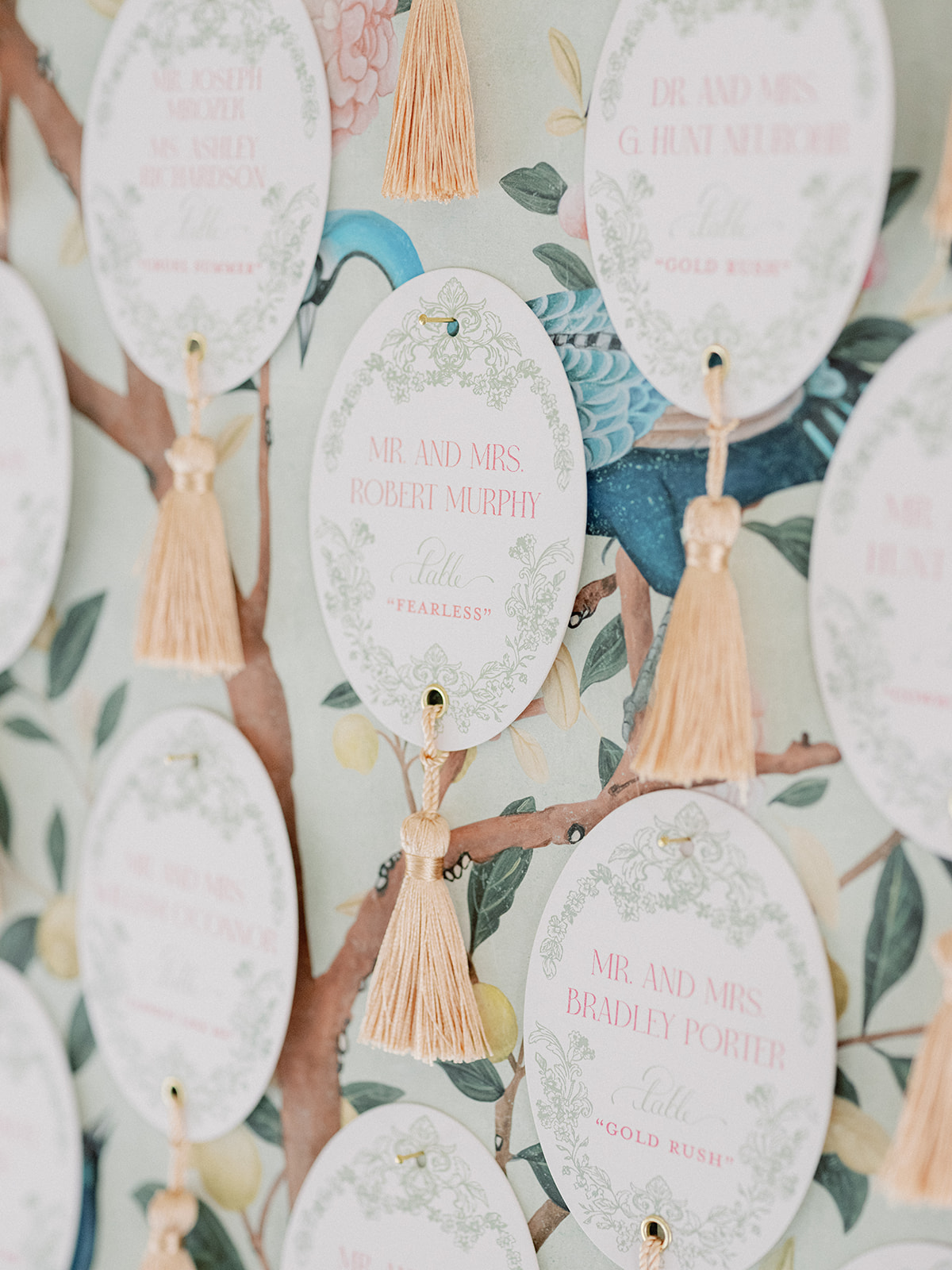
Build the guest information booklet as early as possible — ideally six months before the wedding. Include recommended hotels at different price points near the venue, travel directions from the nearest airports and train stations, a weekend itinerary so guests know what to plan for, suggestions for activities in the surrounding region, and practical information about the Provence climate and appropriate dress for outdoor events. International guests who have traveled a long distance to attend your destination wedding are deeply grateful for this kind of thorough preparation, and the couples who do it consistently receive higher attendance from their international guest lists.
The Timeline: Later Than You Think
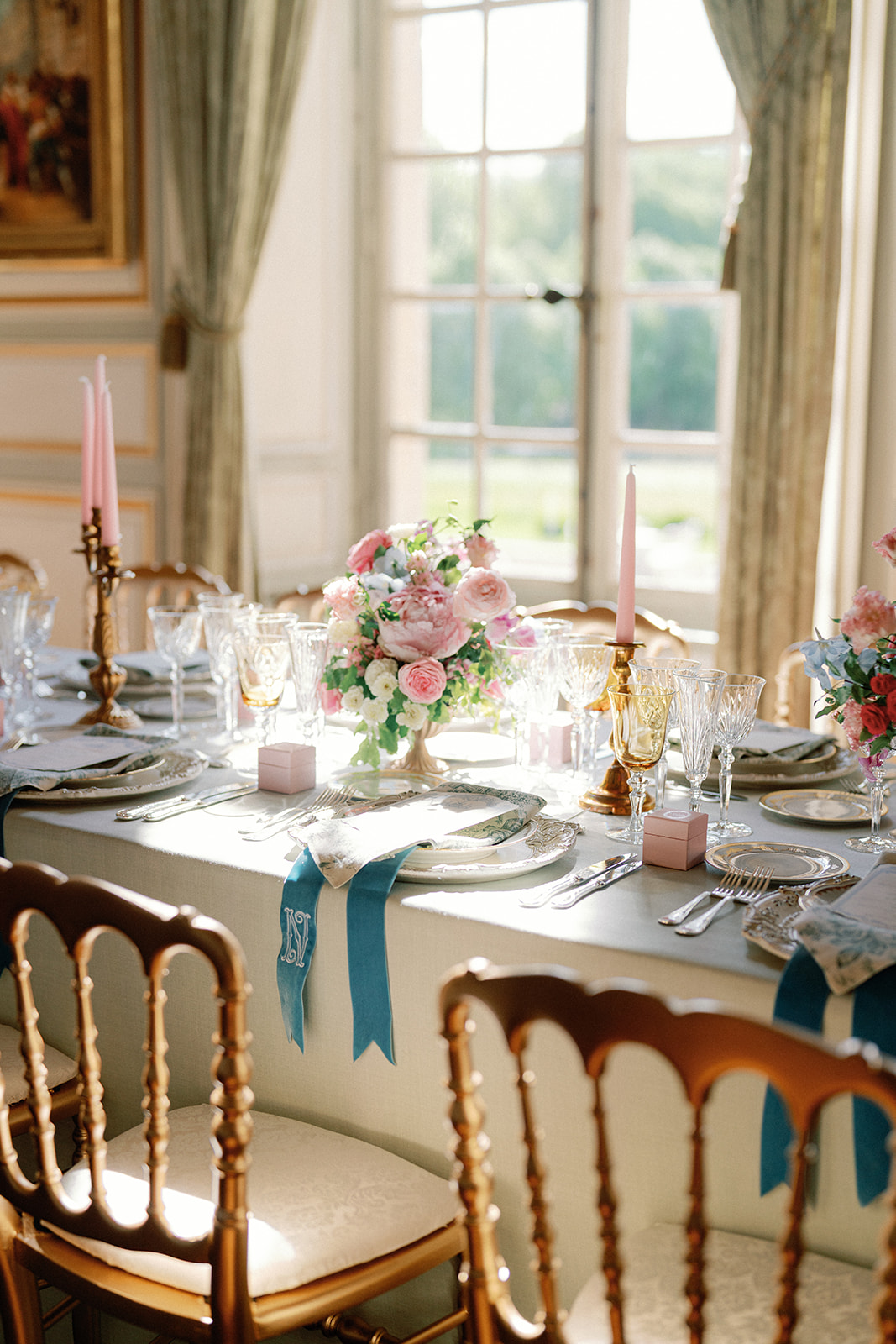
French wedding ceremonies in Provence typically begin between 4:00 PM and 6:00 PM, not at 2:00 PM as many American couples initially plan. This later timing is not a quirk — it reflects the fundamental structure of a French wedding day. The ceremony is followed by the vin d’honneur, the French cocktail hour of champagne and substantial canapés that runs 90 minutes to two hours. Then comes dinner, which in France occupies three to four unhurried hours of multi-course eating and conversation. Then dancing, which runs late. The full sequence simply does not fit comfortably into an evening if the ceremony begins at 2:00 PM.
The practical advantage of this later timeline for couples is significant: the morning of the wedding day is genuinely relaxed. There is time for a leisurely breakfast, an unhurried getting-ready process, a couple’s portrait session or first look in the morning light, and a relaxed pre-ceremony period without anyone feeling rushed. For photographers, a 5:00 PM ceremony places the vows in late-afternoon golden light — the most beautiful light of the day — and creates a portrait window in the early evening that is extraordinary.
Work with your planner to build a detailed day-of timeline from the beginning of the planning process. A good French wedding timeline is not constructed on the day — it is the product of months of coordination between the venue, the caterer, the florist, the entertainment, the photographer, and every other supplier who has a role in the day’s sequence.
Working With Your Weather
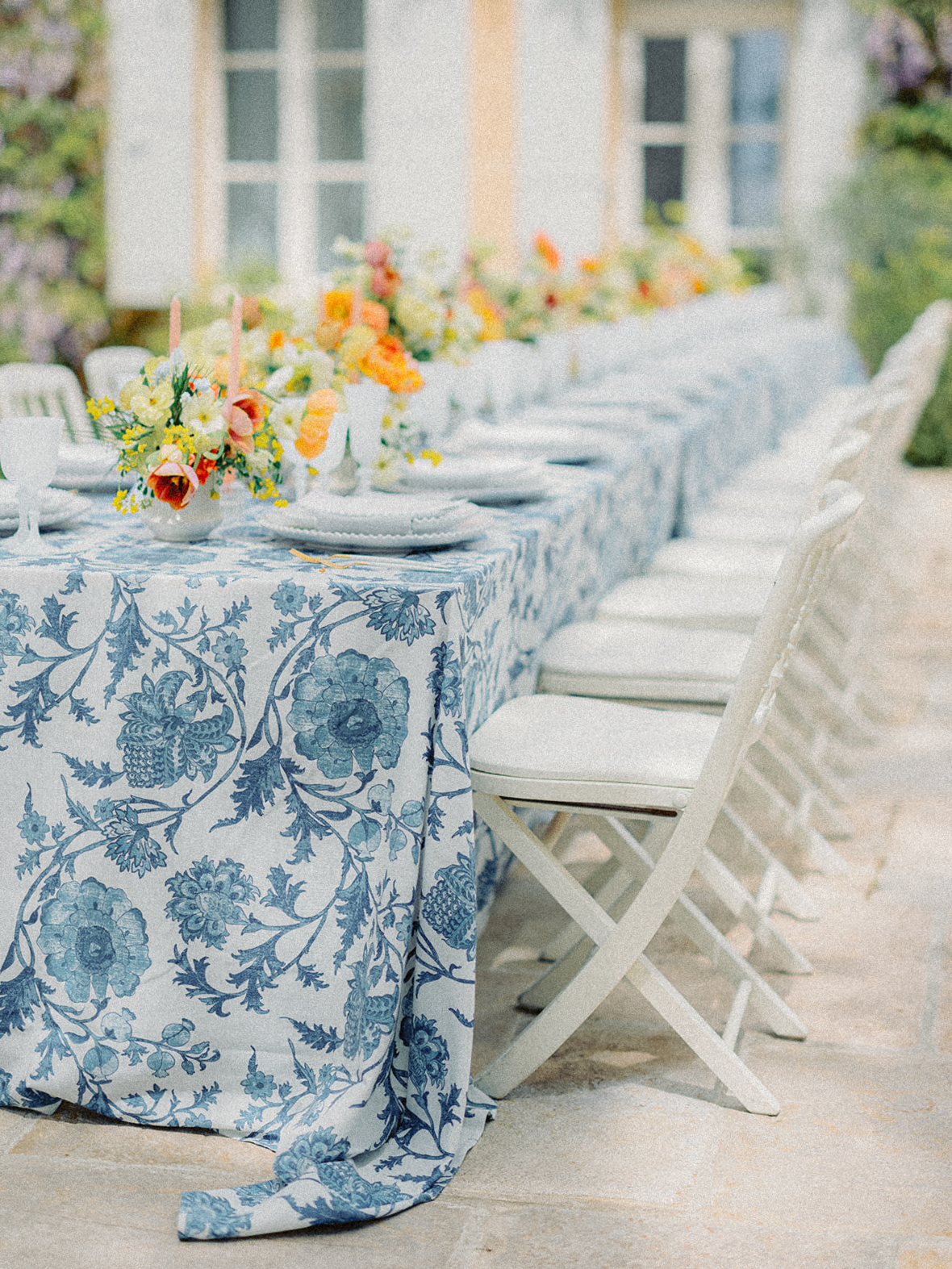
Provence is not immune to weather surprises, and couples who treat the outdoor ceremony plan as fixed — without a genuine indoor alternative they would be happy to execute — occasionally find themselves making difficult decisions on the morning of their wedding day. Build the rain plan from the beginning. Confirm with your venue which indoor spaces are available for each element of the celebration. Brief your planner and all vendors on both scenarios. Make the decision about which plan you are executing by noon on the wedding day at the latest, rather than in real time as the ceremony approaches.
The mistral — Provence’s powerful northern wind — is most active in winter and early spring but can arrive unpredictably in any season. It does not bring rain, but it creates wind strong enough to disturb floral installations, move lightweight furniture, and make a ceremony in an exposed garden considerably less comfortable than any photograph of that garden in still weather would suggest. Ask your planner specifically whether your chosen venue is exposed to the mistral and what the wind management protocol is for outdoor events.
With the right preparation, Provence in any season delivers the wedding that couples imagine when they first fall in love with the idea of getting married in the South of France. The work of that preparation — finding the right venue, the right planner, building the right timeline, managing the logistics honestly — is real work. But the result, when it comes together well, is something that I have watched couples and their guests describe as the most extraordinary weekend of their lives. Consistently. Year after year. At every one of the luxury wedding venues in Provence in this guide.
If you are at the beginning of that planning journey and want guidance from someone who knows these properties and this region as well as anyone outside the planning industry — reach out through my contact page. I would love to help you find the right Provence luxury wedding venue and begin building your vision for the day.
If you are planning a wedding in France, I would love to connect with you. After living in Paris for almost 2 years, I have learned a lot about photographing weddings and events here and I would love to help you photograph your special day.



add a comment
+ COMMENTS