



Bonneville Salt Flats: What To Know Before Your Photo Session There
If you’ve ever scrolled through a photographer’s portfolio and stopped dead in your tracks at an image that looked almost too surreal to be real — white ground stretching endlessly to the horizon, a perfectly mirrored reflection, mountains floating in the distance — there’s a good chance you were looking at the Bonneville Salt Flats.
It is one of the most otherworldly locations in the entire United States. And it happens to be right here in Utah.
I’ve photographed couples, families, and individuals out on the salt flats more times than I can count, and every single time, the location delivers something magical and totally different than the session before. But I’ve also seen sessions go sideways because people showed up completely unprepared for what the salt flats actually are — and what they demand of you.
So before you pack your camera bag or plan your outfits, let’s talk about everything you need to know before heading out to Bonneville.

Where Exactly Are the Bonneville Salt Flats?
The Bonneville Salt Flats are located in Tooele County in northwestern Utah, about 120 miles west of Salt Lake City near the Nevada border. The nearest town is Wendover, Utah — which sits right on the Utah/Nevada state line.
To get there, you’ll take I-80 West from Salt Lake City. The drive is straightforward and takes roughly 1.5 to 2 hours depending on where you’re coming from. There is a marked exit and a short access road that leads you directly onto the flats.
A few things to note about getting there:
* There is no fee to enter the Bonneville Salt Flats — it is managed by the Bureau of Land Management (BLM) and is free and open to the public
* There are no restroom facilities on the flats themselves — plan accordingly before you leave Wendover
* Cell service is limited to nonexistent once you’re out on the flats — download your maps offline before you go
* The access road can become impassable when wet — more on that shortly
What Are the Bonneville Salt Flats, Actually?
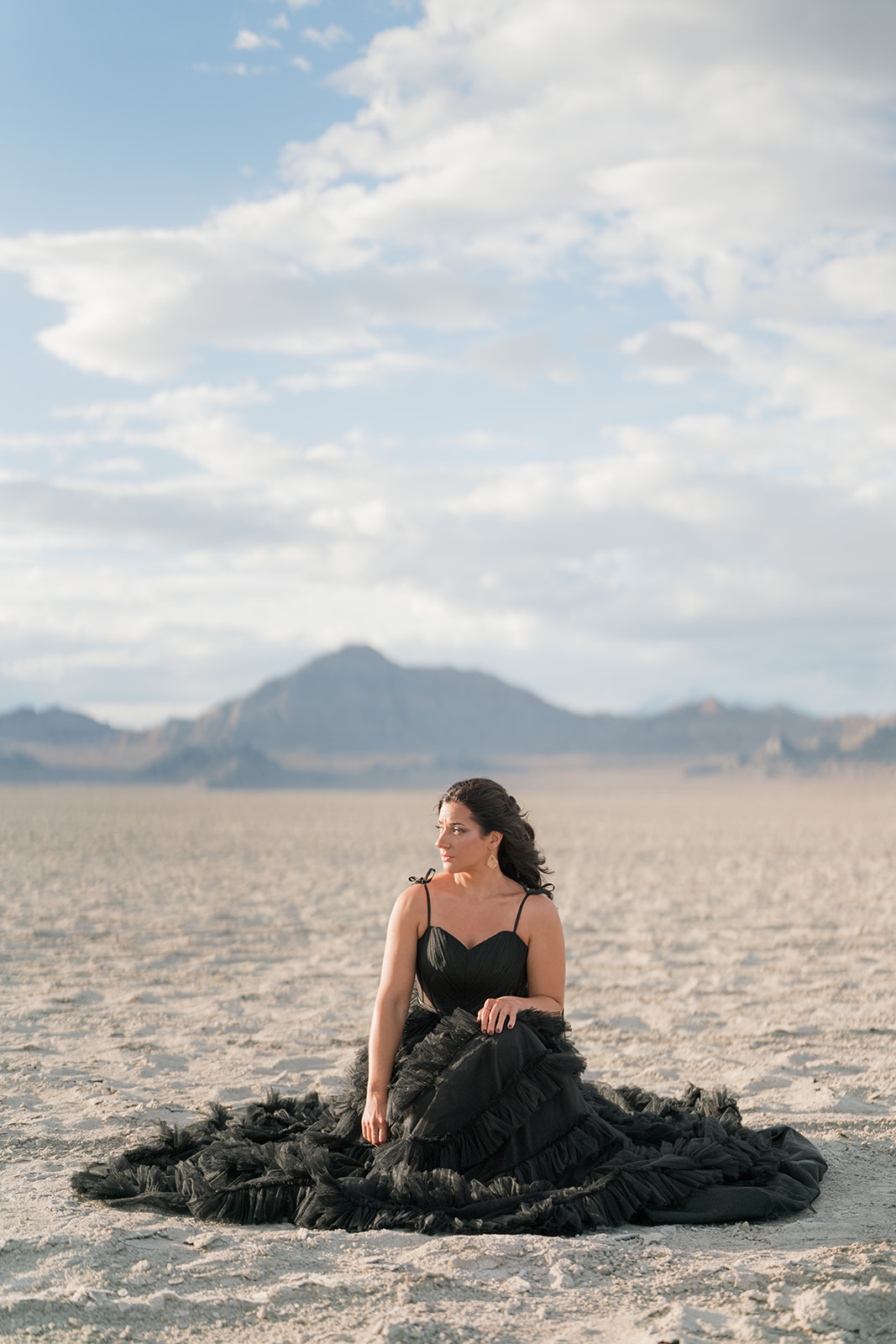
The Bonneville Salt Flats are a large, densely packed salt pan — a remnant of the ancient Lake Bonneville that covered much of Utah thousands of years ago. As the lake dried up over millennia, it left behind a perfectly flat expanse of salt crust that spans roughly 30,000 acres.
The surface is made up of sodium chloride — table salt — mixed with other minerals. When dry, it forms a hard, white crust that crunches slightly underfoot. When wet, the surface becomes a thin sheet of water that creates the famous mirror reflection effect that photographers and travelers travel from all over the world to capture.
It is truly unlike anywhere else on earth.
Weather at the Bonneville Salt Flats: What to Expect Year Round
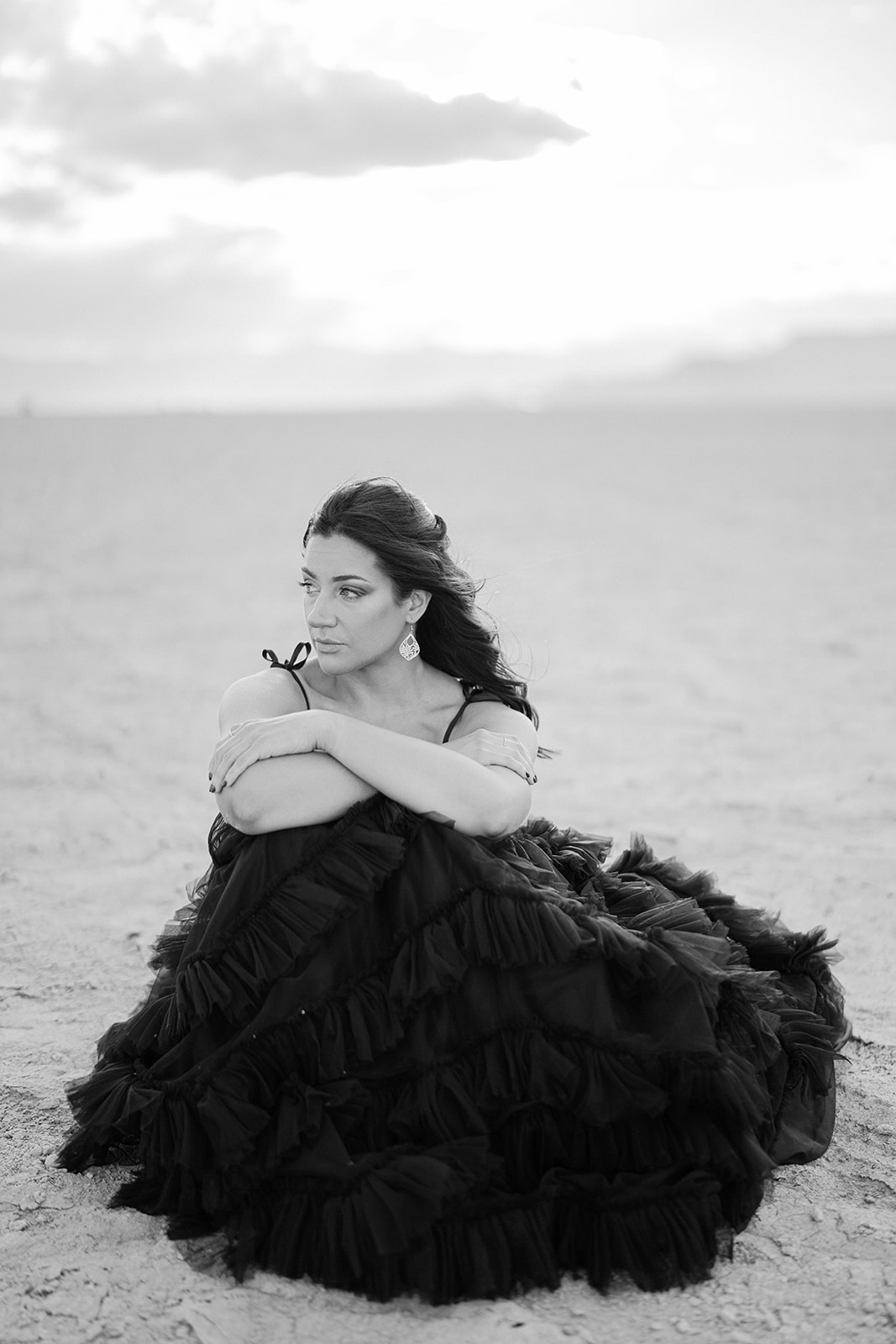
This is probably the most important section of this entire post. The weather at the Bonneville Salt Flats is not forgiving, and it is not predictable. Understanding what each season looks like out there will save your session — and possibly your safety.
Summer (June, July, August)
Summer at the Bonneville Salt Flats is brutal.
I don’t say that to scare you — I say it so you go prepared. Temperatures regularly climb to 100–110°F during the day, and the reflective white surface amplifies the heat significantly. Standing on the salt flats in the middle of a July afternoon feels like standing inside an oven with a mirror pointed at your face.
There is also zero shade. Not a tree, not a structure, not a cloud. You are completely exposed.
That said, summer does have its advantages:
* The salt is typically dry and firm, making it easy to walk on and drive on
* You get long golden hours — both sunrise and sunset are extended and absolutely stunning
* The stark white surface against a deep blue summer sky creates a high-contrast look that photographs beautifully
* Summer storms rolling in from the distance can create **dramatic cloud formations** that look incredible behind a couple or subject
Summer tips:
* Shoot at sunrise or within the first hour after — temperatures are manageable and the light is soft and warm
* Bring more water than you think you need — at minimum one gallon per person
* Avoid scheduling sessions between 10am and 5pm in peak summer months
* Wear sun protective clothing and bring sunscreen — UV exposure on the flats is intense
Fall (September, October, Early November)
Fall is widely considered the best time of year to photograph at the Bonneville Salt Flats, and I wholeheartedly agree.
Temperatures cool down to a much more comfortable 65–85°F range during the day. The light in September and October takes on that warm, golden quality that photographers dream about. The crowds thin out compared to summer. And depending on early fall rainfall, you may even catch partial reflection conditions on the surface.
September in particular hits a sweet spot — it’s warm enough to be comfortable, cool enough to not be miserable, and the light is absolutely gorgeous.
Fall tips:
September and October are the sweet spot — prioritize these months if possible
* Golden hour in fall lasts longer and the colors in the sky tend to be richer
* Watch the weather — early fall can bring unexpected rain that affects surface conditions
* This is peak season for speed racing events at Bonneville — check the schedule in advance as the flats may be closed to the public during race weeks
Winter (December, January, February)
Winter at the Bonneville Salt Flats is cold, often wet, and frequently inaccessible.
Temperatures can drop below freezing, and the flats often receive enough moisture to make the surface soft, muddy, or completely flooded. Driving or walking on a saturated salt flat can damage both the surface and your vehicle.
That said, if conditions align — a dry winter spell followed by just a small amount of water — you can catch some of the most spectacular mirror reflections of the entire year, often with dramatic winter skies above.
Winter tips:
* Always check road conditions before heading out — the access road can close without notice
* If the surface is flooded, do not attempt to drive onto the flats — vehicles can get stuck
* Dress in warm layers — wind on the open flats in winter is relentless
* Winter sunrise happens later, which makes early morning sessions more manageable schedule-wise
Spring (March, April, May)
Spring is unpredictable at the Bonneville Salt Flats. March and April tend to bring moisture and flooding, which can be either a photographer’s dream or a logistical nightmare depending on the depth of the water.
A light layer of water — just a centimeter or two — creates the perfect mirror reflection that makes salt flat images so iconic. Too much water, and the flats become inaccessible. Too little, and the surface is simply dry and cracked.
May starts to transition toward summer conditions and is generally more reliable for access and surface conditions.
Spring tips:
* Check conditions obsessively before your session — they can change within 24 hours
* Follow BLM Utah and local photography groups on social media for real-time surface reports
* If you catch the right water depth in spring, the reflection shots will be the most spectacular images of your life
* Have a backup plan in case the flats are flooded or inaccessible
The Mirror Reflection: What Creates It and How to Find It
Let’s talk about the reflection — because it’s what most people are really after when they book a salt flats session.
The mirror effect happens when a thin layer of water sits on top of the salt crust, typically **one to three centimeters deep**. At that depth, the water is shallow enough to walk through but deep enough to create a perfect, glassy reflection of the sky above.
The result is one of the most surreal photography conditions on the planet. Subjects appear to be floating. The sky doubles. The horizon disappears. Images look like they were composited in Photoshop — but they weren’t.
How to know if reflection conditions exist:
* Follow @blm_utah and local Utah photography Facebook groups for surface condition updates
* Search #bonnevillesaltflats on Instagram and filter by recent posts — locals and photographers often post real-time conditions
* Call the Bonneville Salt Flats Information Line or check the BLM website before making the drive
The best reflection conditions typically occur in late winter through early spring and after late summer monsoon storms
Best Times of Day to Photograph at the Bonneville Salt Flats
Timing your session correctly at the Bonneville Salt Flats is everything. Here is how each part of the day compares:
Sunrise
Hands down my favorite time to shoot at the flats. The light is soft, warm, and directional. Temperatures are manageable even in summer. The flats are empty — you often have the entire location to yourself. If there is any moisture on the surface, early morning light reflecting in it is absolutely breathtaking.
Arrive 20–30 minutes before sunrise to set up and catch the pre-dawn blue light as well.
Golden Hour (Evening)
The hour before sunset is equally stunning and slightly more logistically friendly for couples who aren’t morning people. The warm amber light wraps beautifully around subjects, and the mountains in the distance glow.
Evening golden hour also tends to bring calmer winds than morning in certain seasons.
Midday
Avoid it. Especially in summer. The light is harsh, the shadows are flat and unflattering, and the heat is genuinely dangerous. Even in cooler months, midday light on the reflective white surface creates extreme brightness that is difficult to expose correctly.
If you must shoot midday, overcast days soften the light considerably and can produce beautiful, even exposures.
Blue Hour and Night
The Bonneville Salt Flats are a stunning location for astrophotography and night sessions. With minimal light pollution in the area, the Milky Way is often clearly visible above the flats. If there is water on the surface, the stars reflect below as well — creating an effect that looks completely unreal.
Night sessions require careful planning and the right camera equipment, but the results can be absolutely extraordinary.
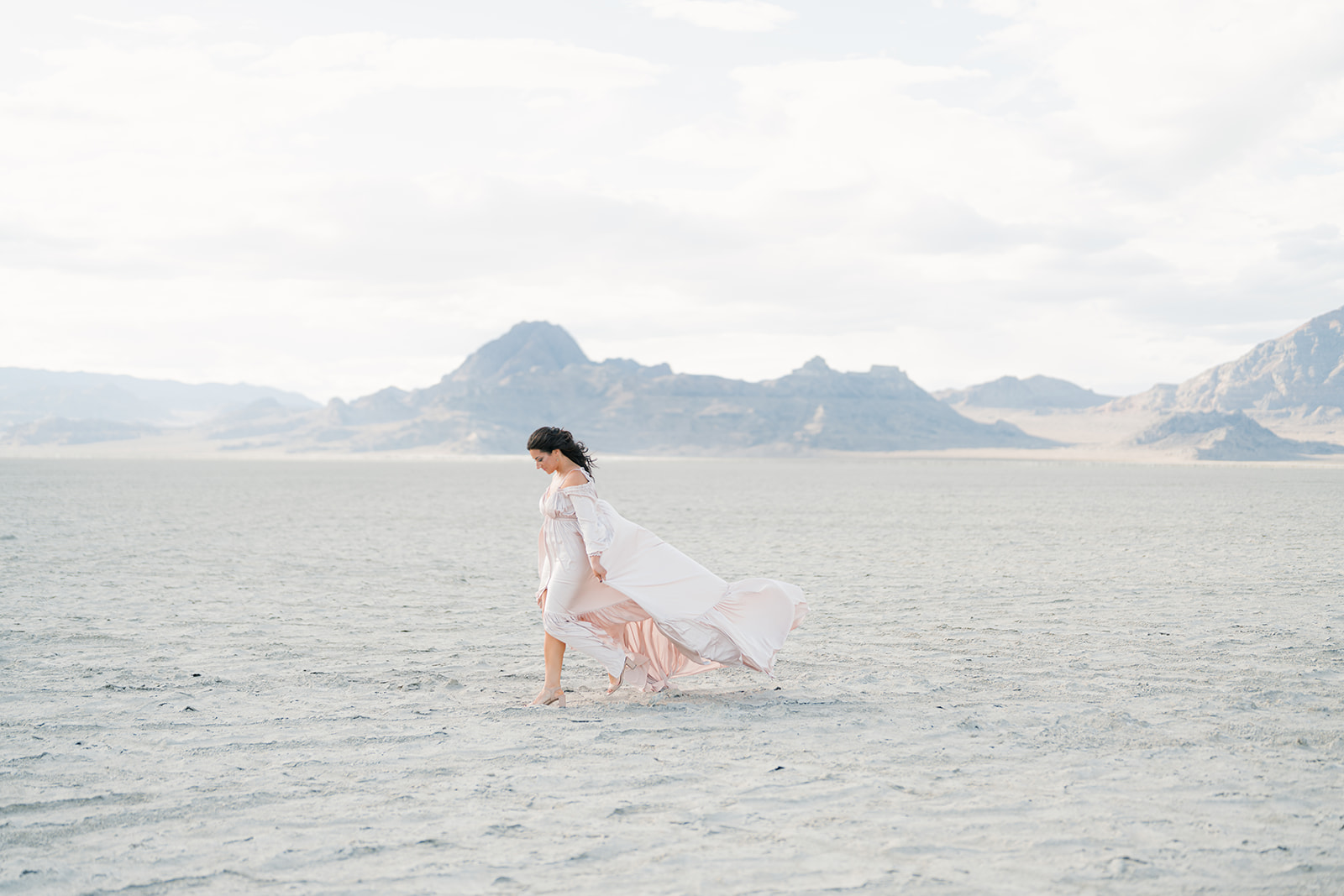
Best Spots to Photograph at the Bonneville Salt Flats
While the flats feel infinite, there are a few specific areas that tend to produce the most compelling images:
📍 The Main Access Area (Off I-80 Exit 4)
This is where most people start and where the majority of sessions take place. Drive out onto the flats and position yourself with the Pilot Peak mountain range to the west as your backdrop — it’s the most iconic composition at Bonneville.
📍 Deeper Into the Flats
The further you drive from the highway, the more isolated and truly endless the landscape feels. For couples who want that “edge of the earth” feeling with no road or traffic visible in the background, driving further out is worth it.
📍 The Race Timing Shed Area
Near the famous racing area, there are old timing structures and markers that add an interesting industrial and historical element to images. This area works especially well for editorial and adventurous styled shoots.
📍 Water Puddle Zones
After rain, water collects in different areas across the flats. Exploring to find the best reflection pools for your session is part of the adventure. Follow other photographers’ footprints or simply walk until you find water depth you love.
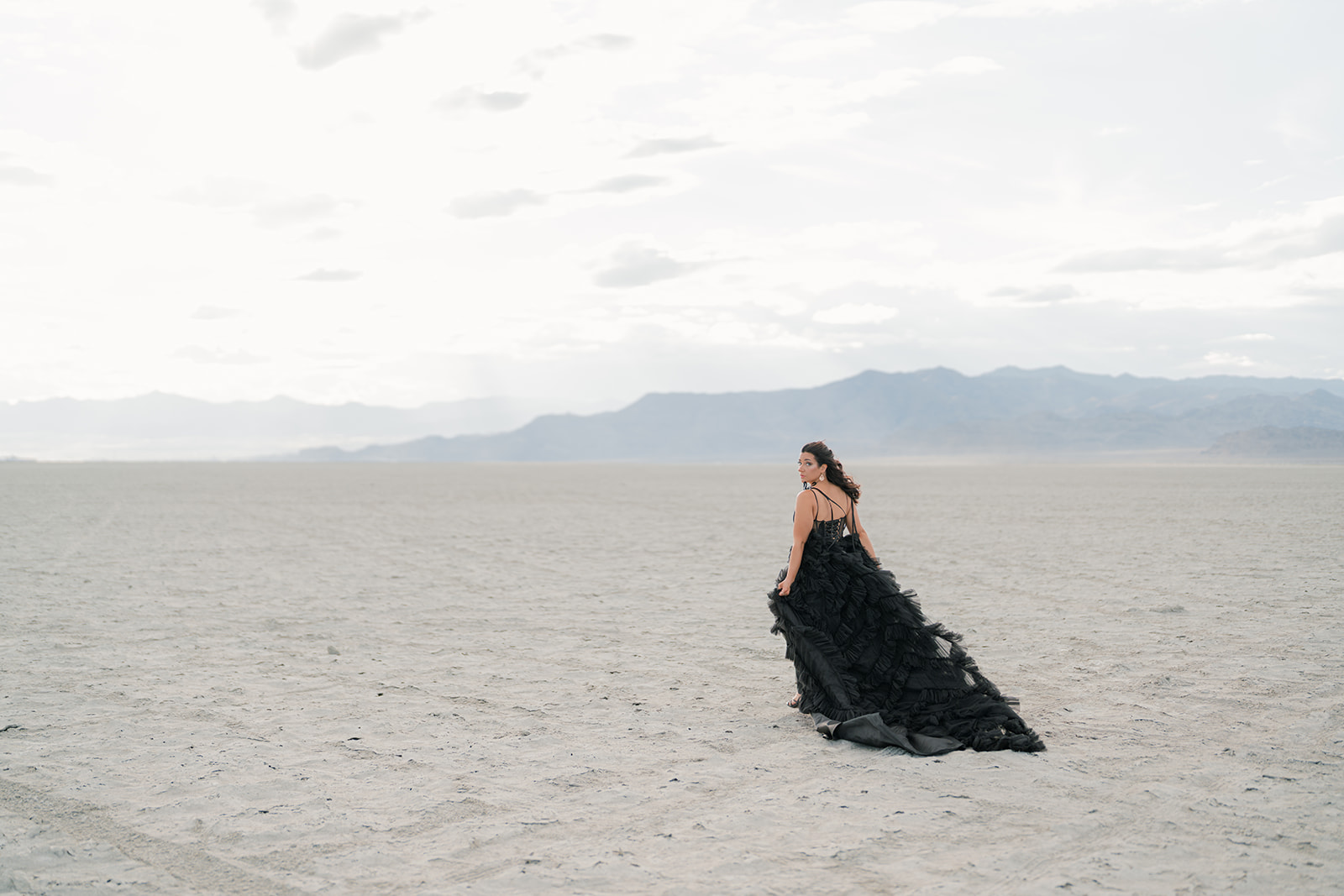
What to Wear: Outfit Guide for Your Salt Flats Photo Session
Outfit selection for a salt flats session is genuinely one of the most fun parts of the experience — but it also requires some thoughtful planning. The environment is unique and what works in a garden or forest setting does not always translate well to the flats.
Here is everything you need to know:
Colors That Photograph Beautifully on the Salt Flats
The white surface and open sky create a neutral, high-contrast canvas. Colors that pop against it include:
* Deep, rich tones — burgundy, rust, terracotta, navy, forest green, mustard
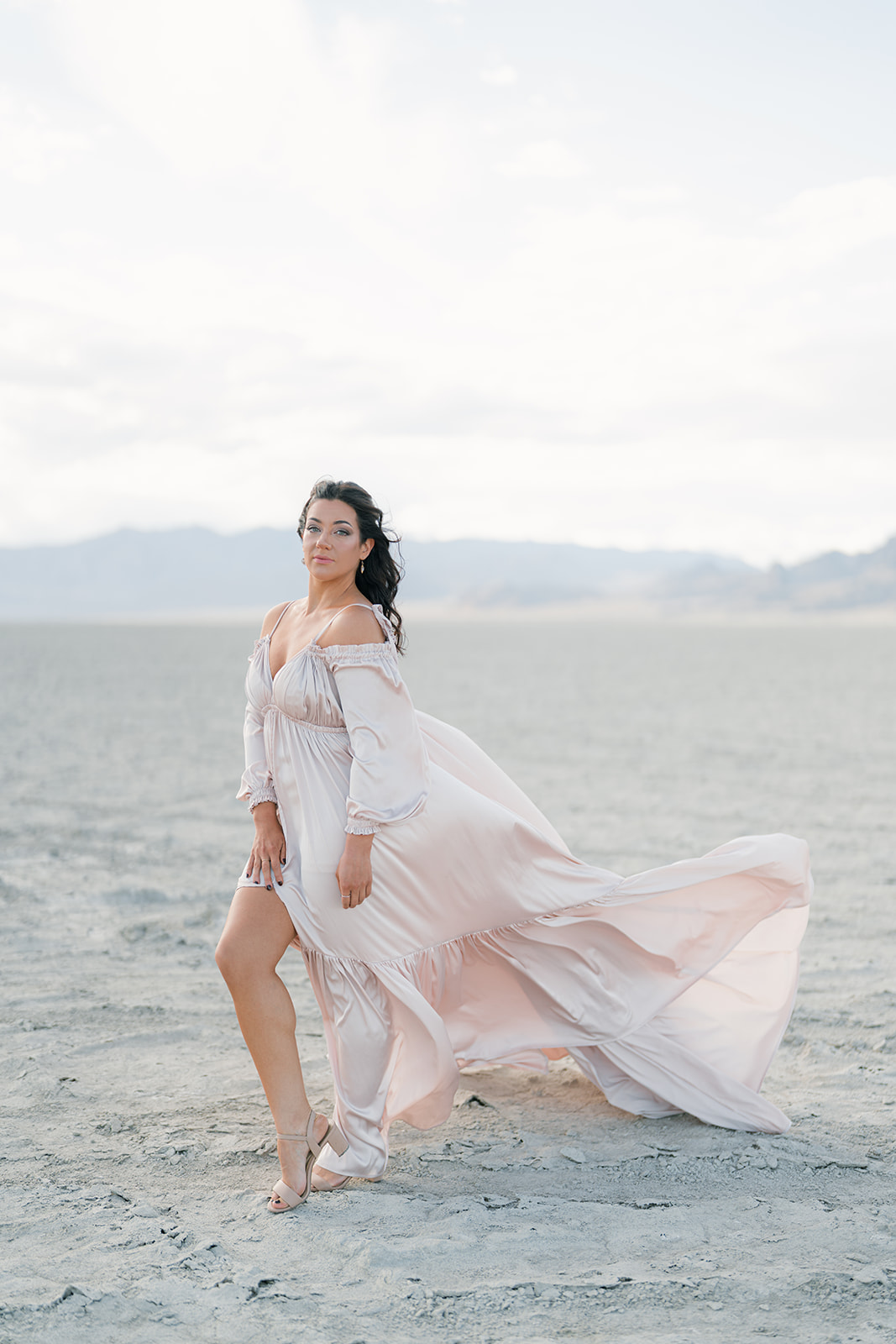
* Soft pastels — blush pink, sage, lavender, powder blue — especially beautiful against reflection conditions
* Bold, saturated colors — red, cobalt blue, emerald — for a high-fashion editorial look
* Earth tones — camel, tan, cream, and warm neutrals blend beautifully with the landscape
* Bright white — it blends into the salt surface and can make subjects appear to disappear from the waist down
* Neon or fluorescent colors — the already bright environment makes these overwhelming on camera
* Busy patterns or small prints — they tend to distract from the landscape and can create a visual “buzzing” effect in images
For Women: Outfit Ideas
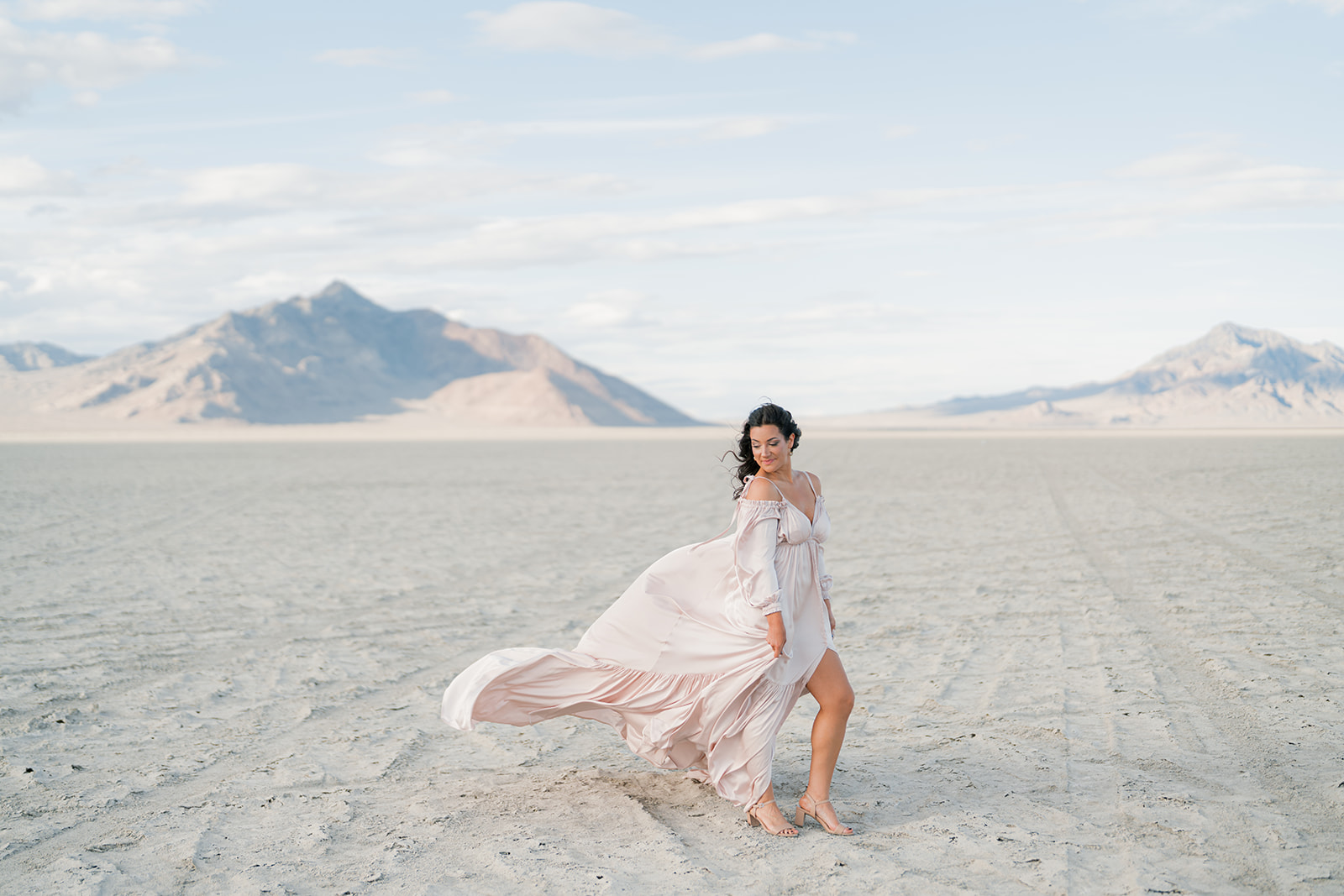
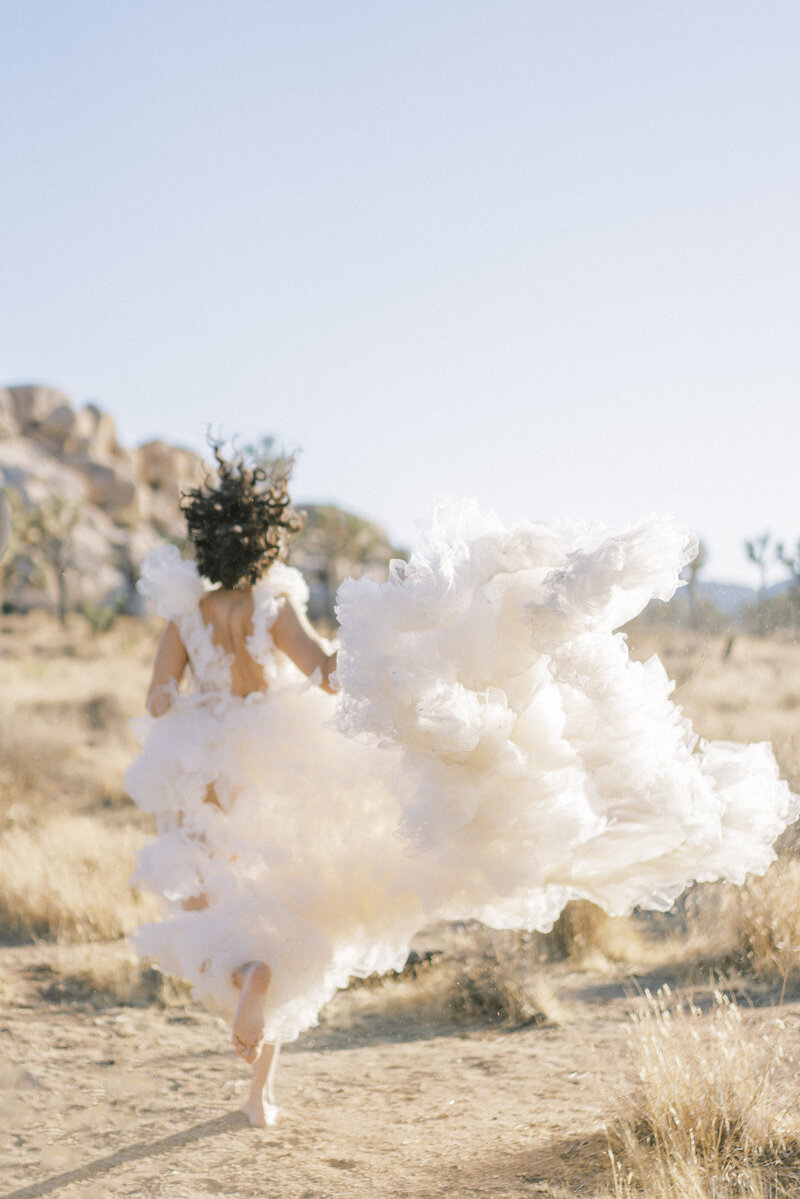
A flowing maxi dress is the quintessential salt flats look — and for good reason. A long, flowing dress in a rich jewel tone or soft pastel caught in the wind against the white expanse creates an absolutely iconic image.
Great options include:
* Flowy maxi dresses in chiffon, georgette, or satin — movement photographs beautifully
* Structured midi dresses for a more editorial, fashion-forward look
* Jumpsuits or wide-leg trousers with a relaxed blouse for a modern, chic feel
* Bridal or bridal-adjacent looks — the salt flats are a dreamy location for bridal portraits
Shoe considerations:
This is important. The salt surface is hard and flat when dry — most shoes work fine. When wet, the surface is slippery. Avoid stilettos on wet salt. Strappy sandals, block heels, and boots all work well. Many clients choose to go **barefoot** on the dry salt — it is safe and creates a beautiful, intimate feel in photos.
For Men: Outfit Ideas
* Linen or light fabric trousers with a simple button-down shirt — relaxed and elegant
* A well-fitted suit in a deep navy, dusty blue, or warm tan — especially stunning for couples sessions
* Dark denim with a structured jacket for a more casual editorial look
* Neutral tones — cream, tan, grey, and olive all work beautifully against the white surface
For Couples: How to Coordinate
The salt flats are one of those locations where coordinating without matching works best. Think complementary color families rather than identical outfits.
Some combinations that photograph beautifully:
* Dusty rose dress + navy linen suit
* Rust orange maxi + camel trousers with a white linen shirt
* Sage green dress + dark olive or tan pants
* Champagne or cream dress + warm grey or charcoal suit
Practical Outfit Considerations
Beyond aesthetics, there are some practical things to keep in mind:
* Bring layers — mornings and evenings on the flats can be significantly cooler than you expect, especially in fall and spring
* The salt will get on your clothing — especially on wet days. Wear outfits you don’t mind getting a little salty at the hem
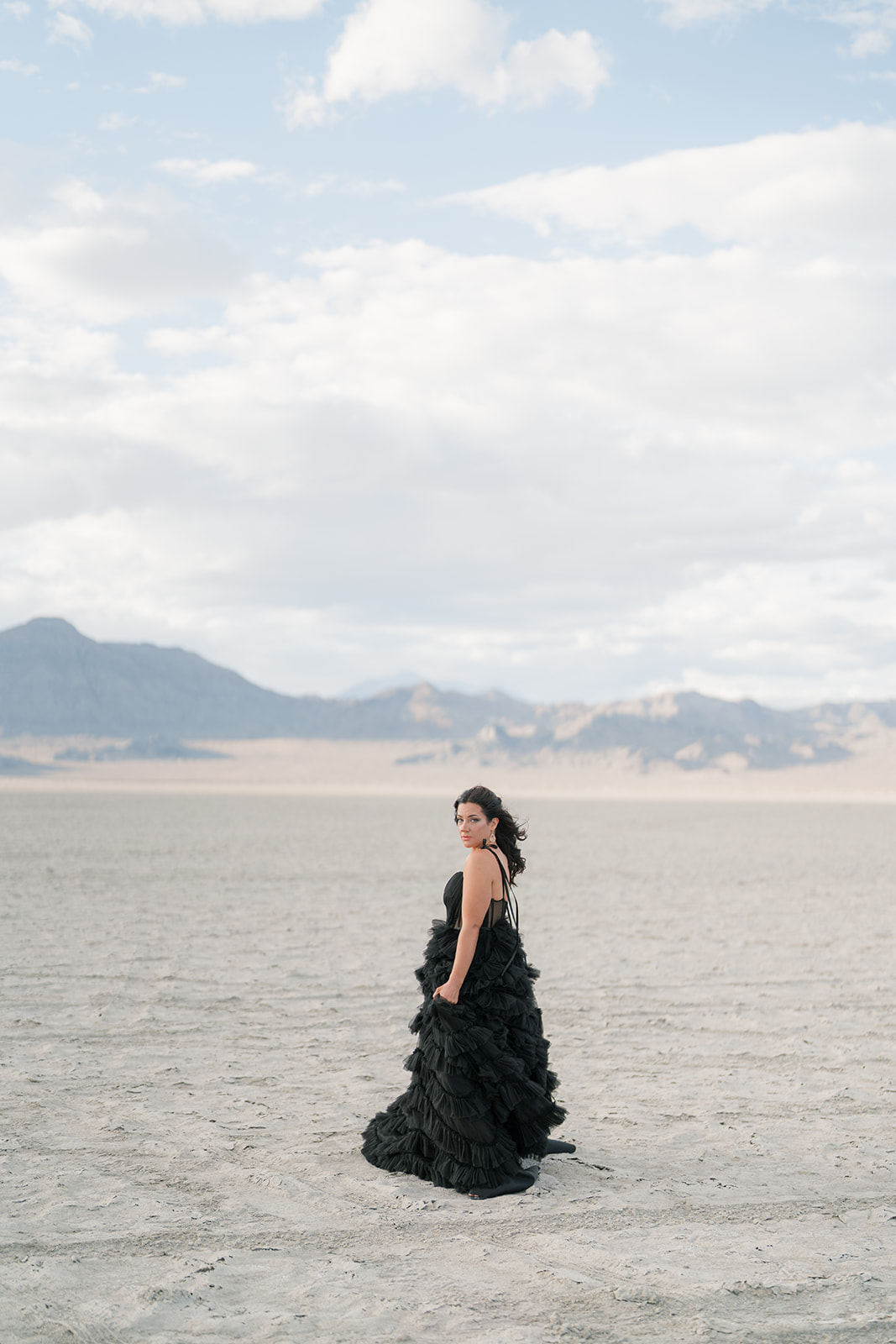
* Long dresses will drag on the surface — this is actually beautiful in photos, but be aware your hem may show salt residue afterward
* Avoid open-toe shoes when the surface is wet — the salt water can irritate sensitive skin with prolonged exposure
What to Bring to Your Salt Flats Photo Session
Before you head out, make sure you have these essentials packed:
Water — lots of it. Minimum one gallon per person in summer, at least 32oz per person in cooler months
Sunscreen — the reflective surface doubles your UV exposure
Sunglasses — the brightness on a clear day is intense
Extra shoes — if conditions are wet, having a dry pair to change into after is a lifesaver
Extra socks — salt water soaks through quickly
Offline maps downloaded — cell service is unreliable
Portable phone charger — especially if you’re using your phone for navigation
A light jacket or wrap — for sunrise and sunset sessions when temperatures drop
A bag or box to store outfits — if you’re bringing multiple looks, having them organized saves time
A Few Final Things to Know Before You Go
Respect the surface.
The salt crust at Bonneville is a fragile natural resource. Avoid driving vehicles onto the flats unnecessarily, especially when wet. Stick to established tracks when possible.
Check race schedules.
The Bonneville Salt Flats are world-famous for land speed racing. Several events throughout the year — including Speed Week in August — close portions of the flats to the public. Check the SCTA (Southern California Timing Association) schedule before planning your session.
Have a backup plan.
Conditions at the salt flats can change overnight. A rainstorm can flood the access road. A dry spell can leave the surface cracked and dusty. Always have a backup location in mind — whether that’s another spot in the area or a completely different Utah location.
Go further than feels comfortable.
The further you walk or drive from the parking area, the more expansive and isolated the landscape feels. Some of the most breathtaking images come from pushing just a little further out onto the flats than most people bother to go.
The Bonneville Salt Flats are one of those places that has to be experienced to be truly understood. Photos don’t fully capture what it feels like to stand in the middle of that white expanse with nothing but sky in every direction and the distant mountains floating on the horizon.
It is humbling. It is surreal. And it is one of the most creatively inspiring locations I have ever had the privilege of photographing in.
Go prepared. Go early. Wear something that moves. And let Utah do the rest.
If you have questions about planning a photo session at the Bonneville Salt Flats — whether it’s an engagement session, a bridal portrait, a family session, or a solo shoot — feel free to reach out. I’d love to help you plan something unforgettable.








add a comment
+ COMMENTS