



A Villa Cetinale Wedding: The Complete Guide to Getting Married at Tuscany’s Most Extraordinary Estate
The first time I walked through the iron gates at Villa Cetinale, I was there as a photographer on a creative retreat — not yet on a wedding day, not yet with a couple and a timeline and the full weight of the occasion. I was simply a person arriving at a place for the first time, with no expectation properly prepared for what I was about to encounter.
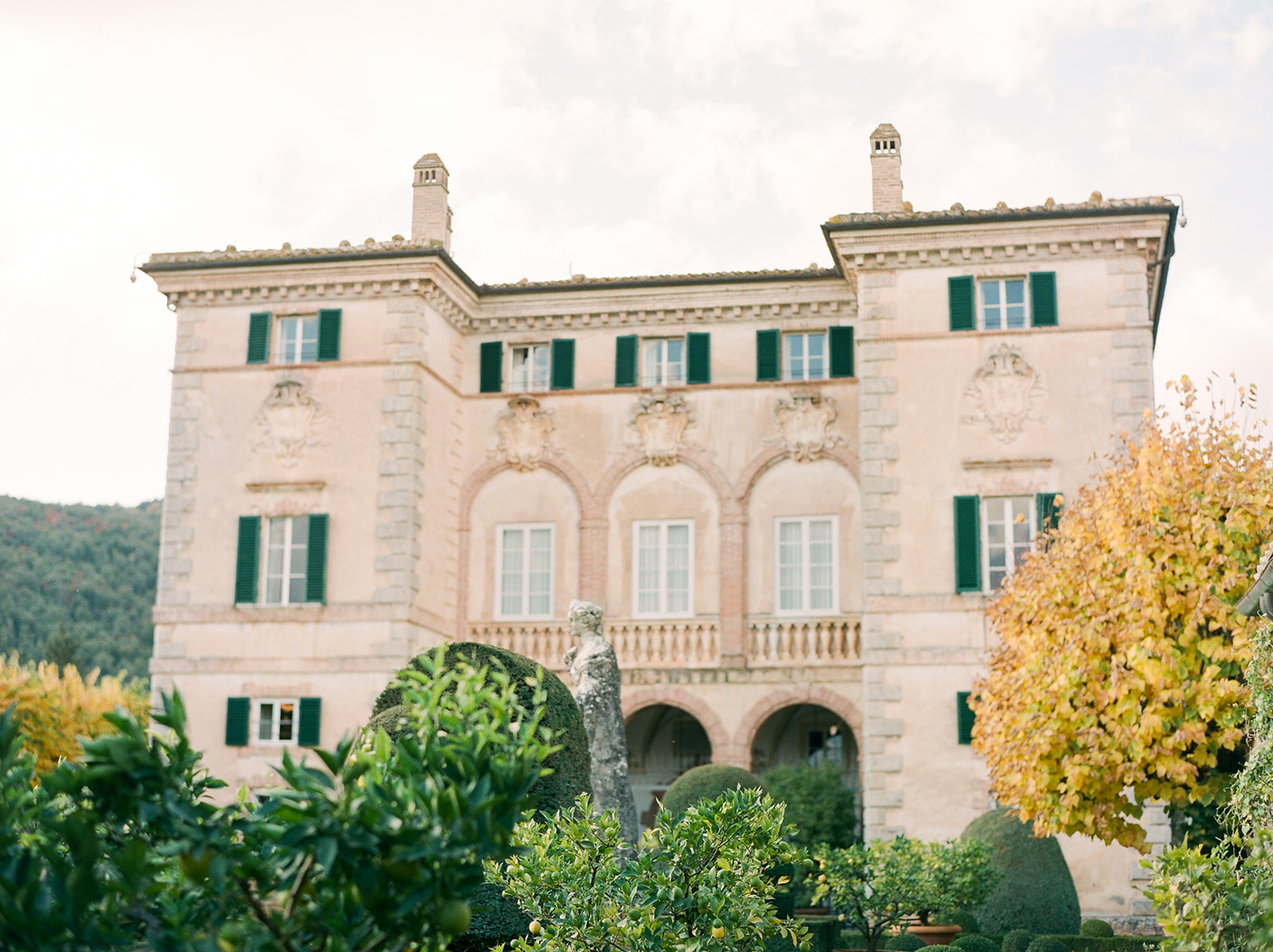
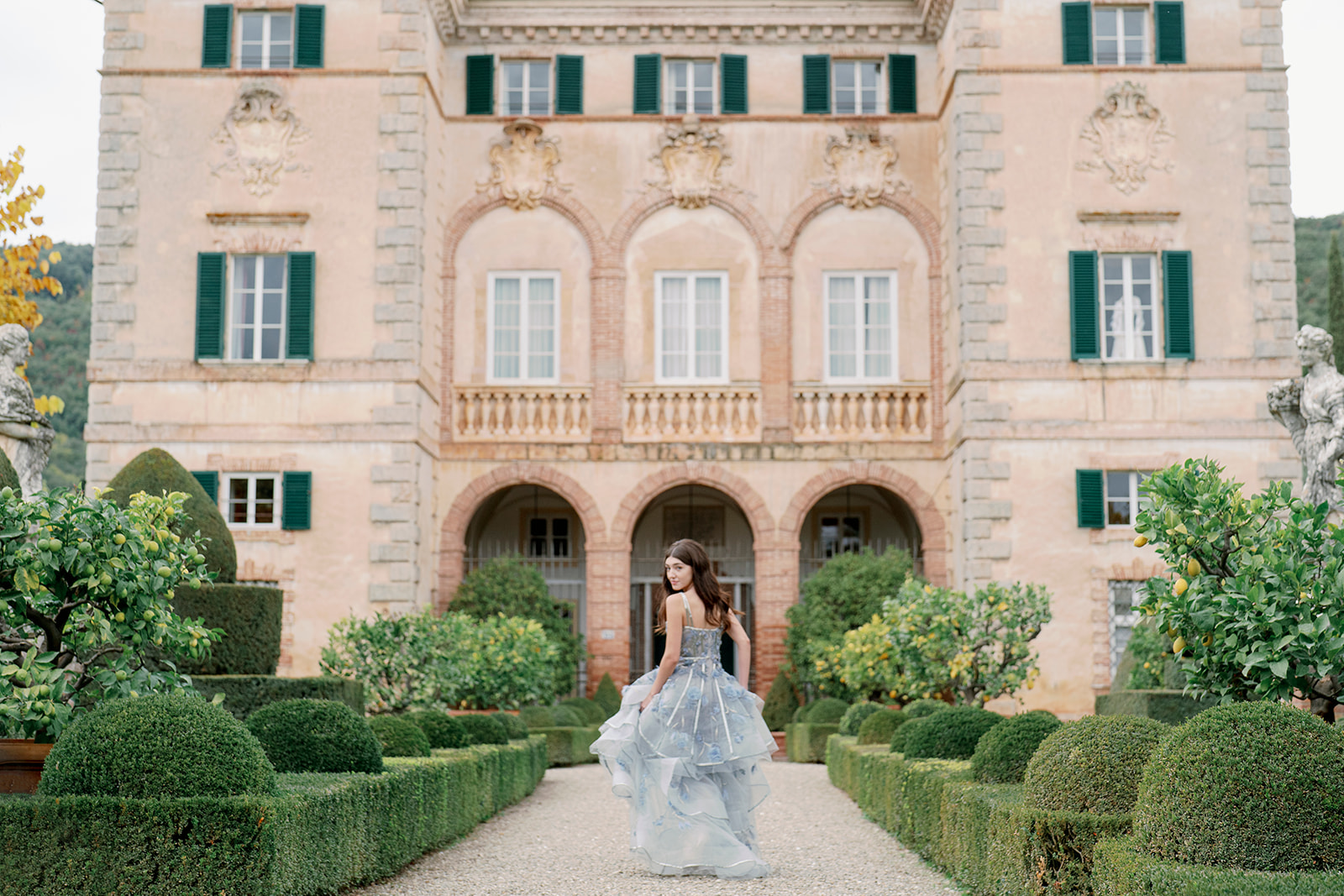
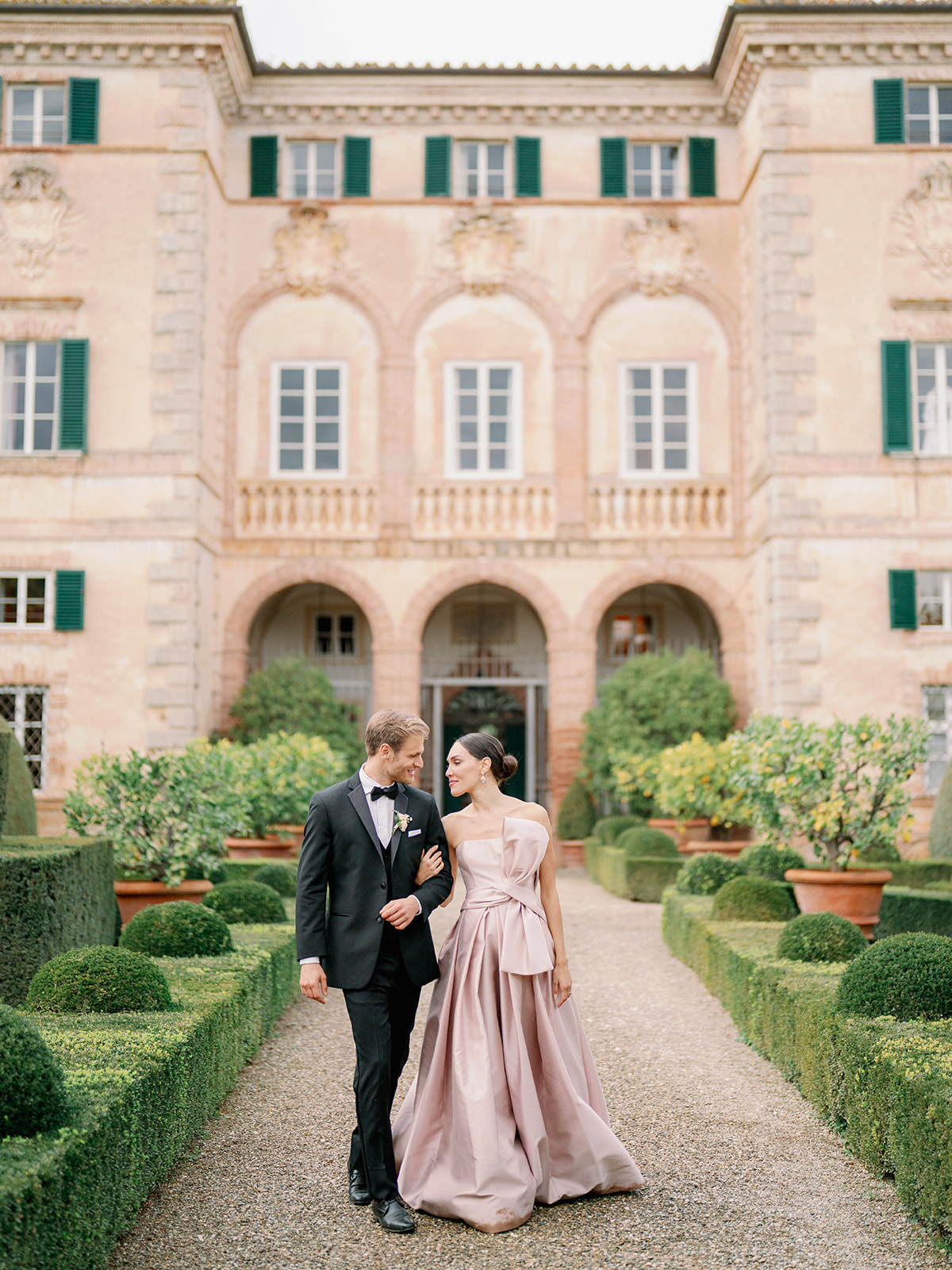
I remember stopping on the gravel drive. The villa rises before you as the gates open — a 1680 Roman Baroque masterpiece designed by Carlo Fontana, one of Bernini’s most distinguished pupils, framed by formal gardens and ancient oaks and the particular quality of Tuscan light in the late afternoon that turns warm stone the color of honey.
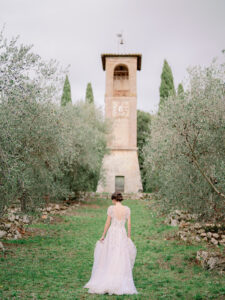
The gardens stretch away on either side. The cypress lane leads toward the hill. Three hundred stone steps climb through the Holy Wood toward the tiny hermitage monastery at the summit. And the whole estate carries an atmosphere of accumulated time — of centuries of significant human moments — that I found genuinely difficult to leave behind when my retreat ended and I flew home.
I have thought about Villa Cetinale regularly since that first visit. And when couples come to me dreaming of a Tuscany wedding that feels genuinely, irreplaceably of that landscape — not a hotel event space with Italian food, but a real piece of Italian history that has been opened to them for a week and a celebration — this is the venue I describe. Every time.
What Makes a Villa Cetinale Wedding Different From Every Other Tuscany Wedding
There are many beautiful venues in Tuscany. There are vineyards and farmhouses and converted monasteries and hilltop estates with sweeping Chianti views, and many of them are genuinely lovely. What Villa Cetinale offers that the broader Tuscany wedding market does not is something more specific and more rare: the experience of getting married in a building and on a landscape that has been continuously inhabited and cared for since 1680, that carries three and a half centuries of significant human history in its stones and gardens, and that has been opened to wedding couples not as a commercial event facility but as the private family home it has always been.
The villa was built for Pope Alexander VII — born Fabio Chigi — by Cardinal Flavio Chigi in 1680, designed by Carlo Fontana on the foundations of an ancient Etruscan settlement. The estate passed through papal and cardinal ownership for generations before coming into the hands of Viscount Antony Lambton in the twentieth century, who undertook its meticulous restoration and made it one of the most celebrated private houses in Italy — a gathering place for writers, artists, and figures of international significance including Princess Margaret, Mick Jagger, and Kate Moss.
The visitor’s book at this villa contains names that span centuries of European cultural life. Since 2006, following Lambton’s death, it has been available for private rental — allowing wedding couples to inhabit something that was, for most of its history, accessible only to popes and their most trusted associates.
When you book a Villa Cetinale wedding, you are not booking a room. You are booking the estate itself — every garden, every path, every corner of the building — as your private home for a week.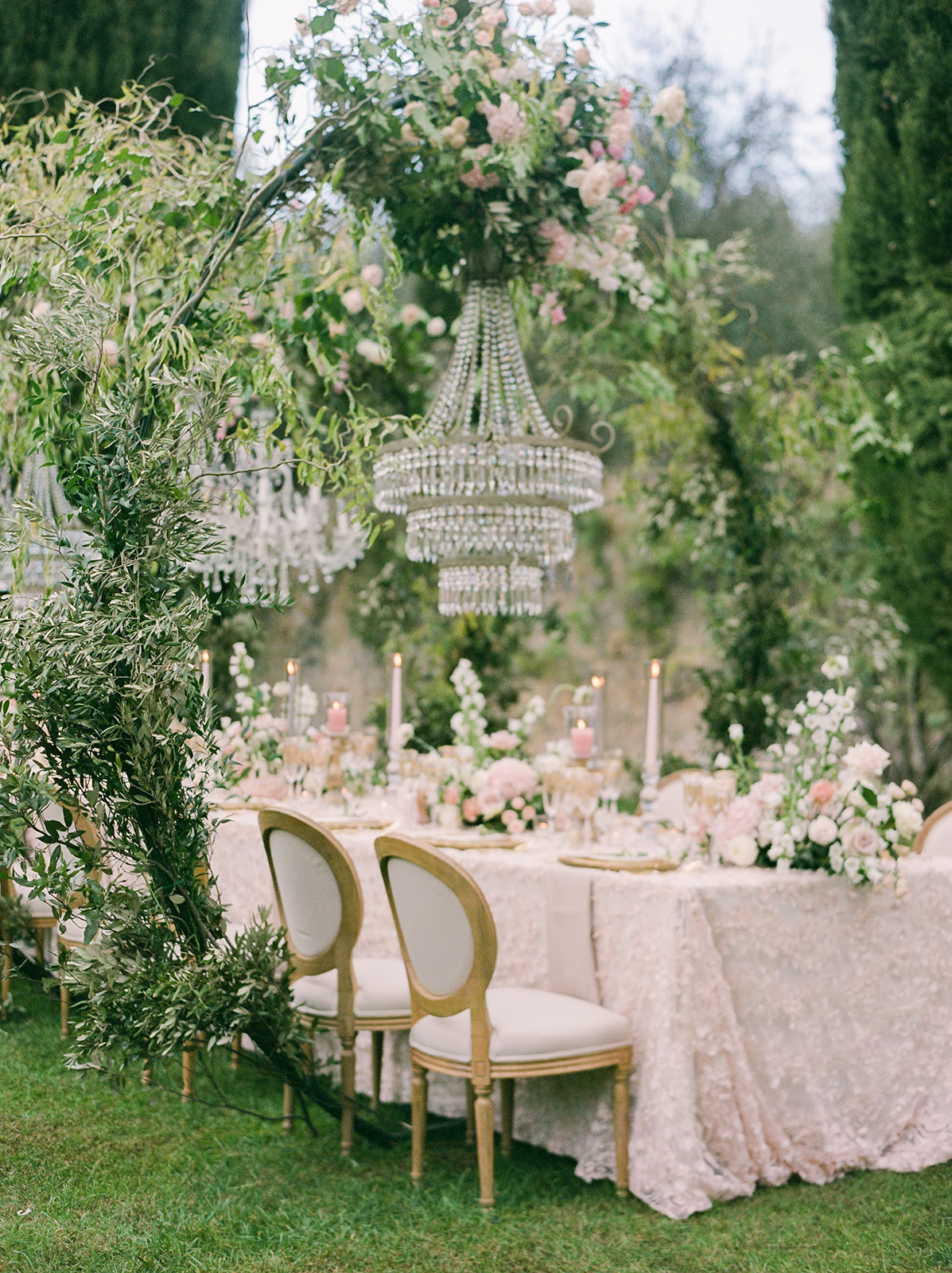
The Estate: Gardens, Spaces, and What to Expect
The formal gardens at Villa Cetinale are among the most celebrated in Italy — a ranking that carries real weight in a country whose garden tradition is among the most distinguished in the world. Edith Wharton, whose writing on Italian gardens remains authoritative more than a century after it was published, praised the gardens here specifically. They encompass a front courtyard garden that frames the villa’s Roman Baroque facade — the most photographed element of the estate, and the location of most cocktail hours — a private pool and tennis court, the famous Holy Wood climbing the hillside above, and the long cypress lane at the rear of the villa leading toward the Romitorio.
The Holy Wood is one of those elements of Villa Cetinale that couples often do not fully comprehend until they are standing within it. A penitential landscape planted and designed for spiritual reflection, its paths wind through ancient oaks past carved stone statues by the seventeenth-century sculptor Giuseppe Mazzuoli — figures emerging from the trees in attitudes of devotion and contemplation — climbing toward the Romitorio at the summit.
The 300 stone steps that lead there are the same steps that cardinals and abbots climbed over three centuries of devotional use. For a Villa Cetinale wedding ceremony held at the Romitorio, with the Tuscan countryside spreading below in every direction and those ancient oaks surrounding the approach — there is no ceremony setting I know of anywhere that carries this weight of place.
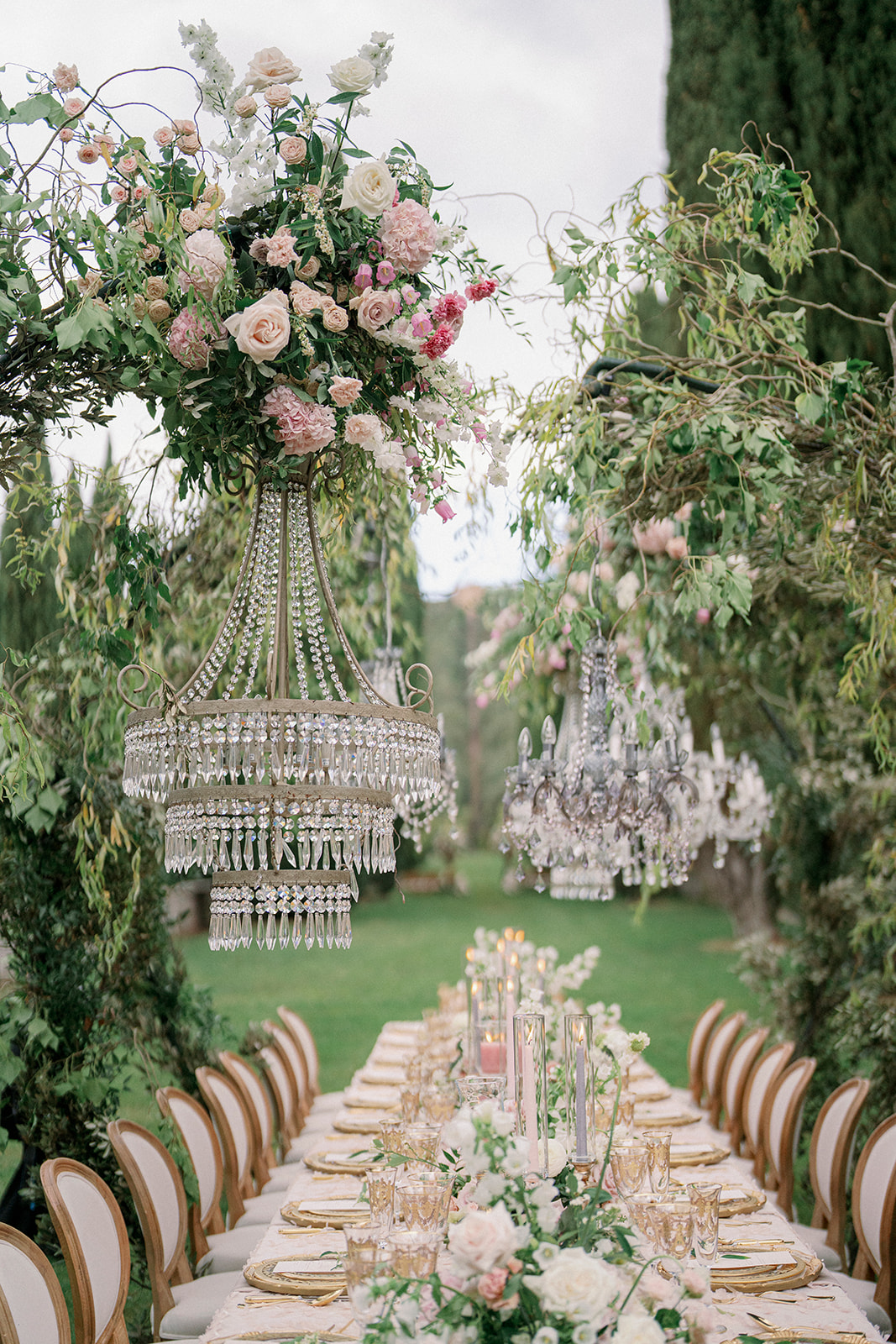
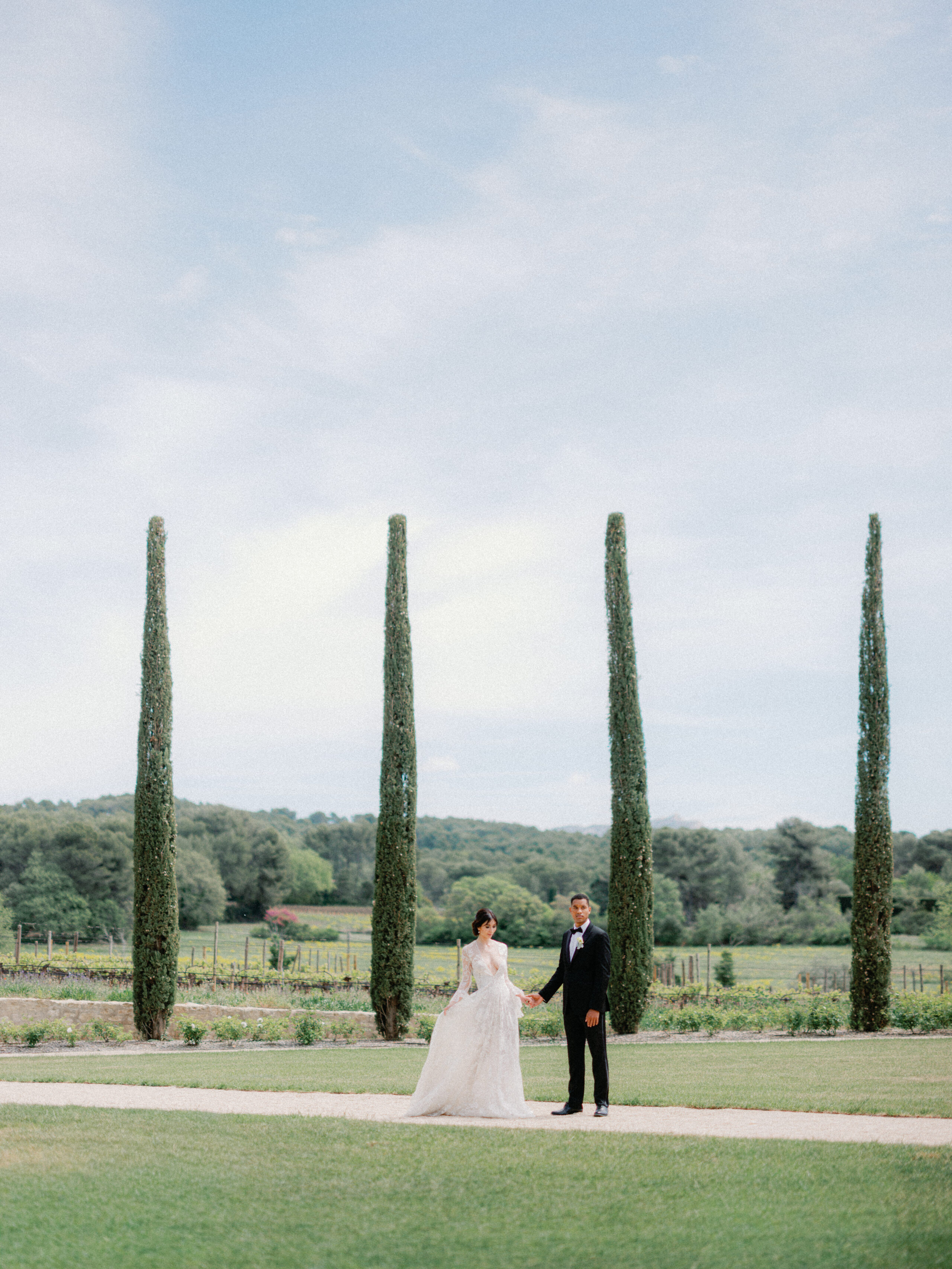
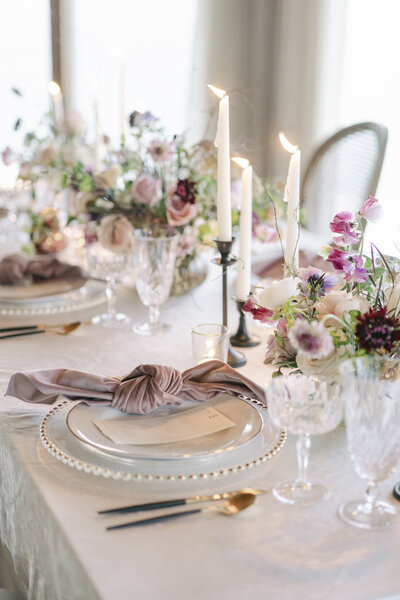
The cypress lane that runs along the rear of the villa, leading from the back facade toward the Romitorio and lined on both sides by towering Italian cypress trees, is the most frequently used dinner setting at Villa Cetinale weddings. A long communal table set beneath those cypresses — candles at every height, flowers gathered from the surrounding gardens, the Romitorio lit on the hill above and the Tuscan sky darkening overhead — produces one of the most breathtaking reception photographs I have ever seen at any venue anywhere in the world. Couples who have dined here describe it as the singular most memorable meal of their lives.
The villa’s interiors honor the estate’s centuries of habitation without feeling like a museum. The thirteen bedrooms are named after colors and spread across four floors, each furnished with antique pieces and original artworks — trompe l’oeil paintings, original frescoes, bas-relief panels. The ground floor loggia has marble dining tables looking over the front garden. The dining room with its spectacular vaulted ceiling and original frescoes serves intimate indoor gatherings. The drawing room with its open fireplace and French doors is the natural gathering point for evenings that begin outside and move in as the Tuscan night cools.
The private chapel — the seventeenth-century Chiesa di Sant’Eustachio — accommodates blessings for up to thirty people. Stepping into this chapel with a small gathering of the people who matter most to you, with the candles lit and the original stone walls closing around the ceremony, is an experience that couples who have done it struggle to adequately describe. It is simply very moving.
The Villa Cetinale Wedding Week Format
One of the most important things to understand about a Villa Cetinale wedding is that the minimum rental period is one full week — Friday to Friday during peak season, with a four-night minimum available from mid-October through April. This is not a limitation. It is the structure around which the Villa Cetinale wedding experience is built, and understanding it as an opportunity rather than a logistical requirement transforms the entire planning approach.
A Villa Cetinale wedding week is not a single event. It is several days of life shared with the people who love you most, in a setting that rewards slow, present inhabitation. The Tuscan rhythm the estate naturally imposes — long lunches at the marble dining tables, afternoons at the pool, evening walks through the Holy Wood before dinner under the cypress trees — creates a depth of connection between guests that a single-day event simply cannot achieve.
By the time the ceremony arrives, your guests are not strangers who flew in that morning to attend your wedding. They are people who have been living alongside you in one of the most beautiful private estates in Italy, and the ceremony lands with a weight of feeling that reflects everything the week has built.
Couples who have hosted their wedding at Villa Cetinale consistently describe the week format as the single most important decision of their planning process — more important than any other vendor choice, more important than the floral design or the menu or the ceremony structure. The setting and the week together produce something that a one-day event, however beautifully executed, cannot.
How a Villa Cetinale Wedding Day Actually Flows
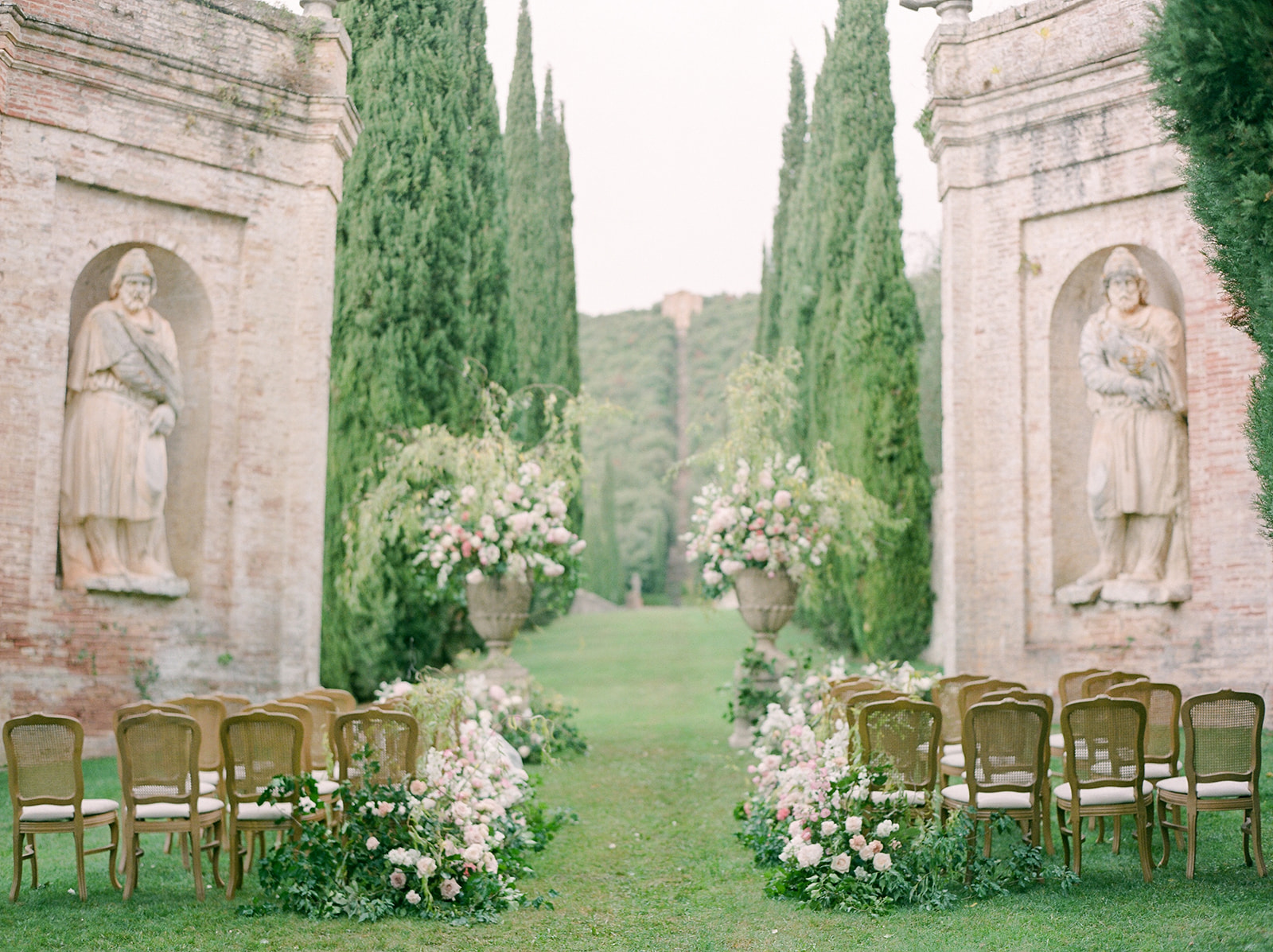
For the ceremony itself, Villa Cetinale accommodates symbolic ceremonies in any of the estate’s outdoor spaces — the front garden with the villa facade as backdrop, the Holy Wood and Romitorio, hidden clearings within the gardens, the long cypress lane. It accommodates intimate blessings in the private chapel for up to thirty guests. For Catholic couples wanting a full sacramental ceremony, Roman Catholic churches in the surrounding Siena countryside approximately twenty minutes from the estate are available, with the reception returning to the villa. For civil ceremonies requiring legal registration, the enchanting Wedding Hall in Siena — a UNESCO World Heritage Site fourteen kilometers from the villa — is the recommended option, with the celebration at Villa Cetinale afterward.
Symbolic ceremonies, where the couple arranges legal registration at home before or after the Italy trip and holds the full celebration at the villa as the true wedding experience, are the most popular format for international couples. This approach eliminates the administrative complexity of foreign marriage registration while giving complete freedom in designing the ceremony — any vows, any officiant, any structure, in any space on the estate.
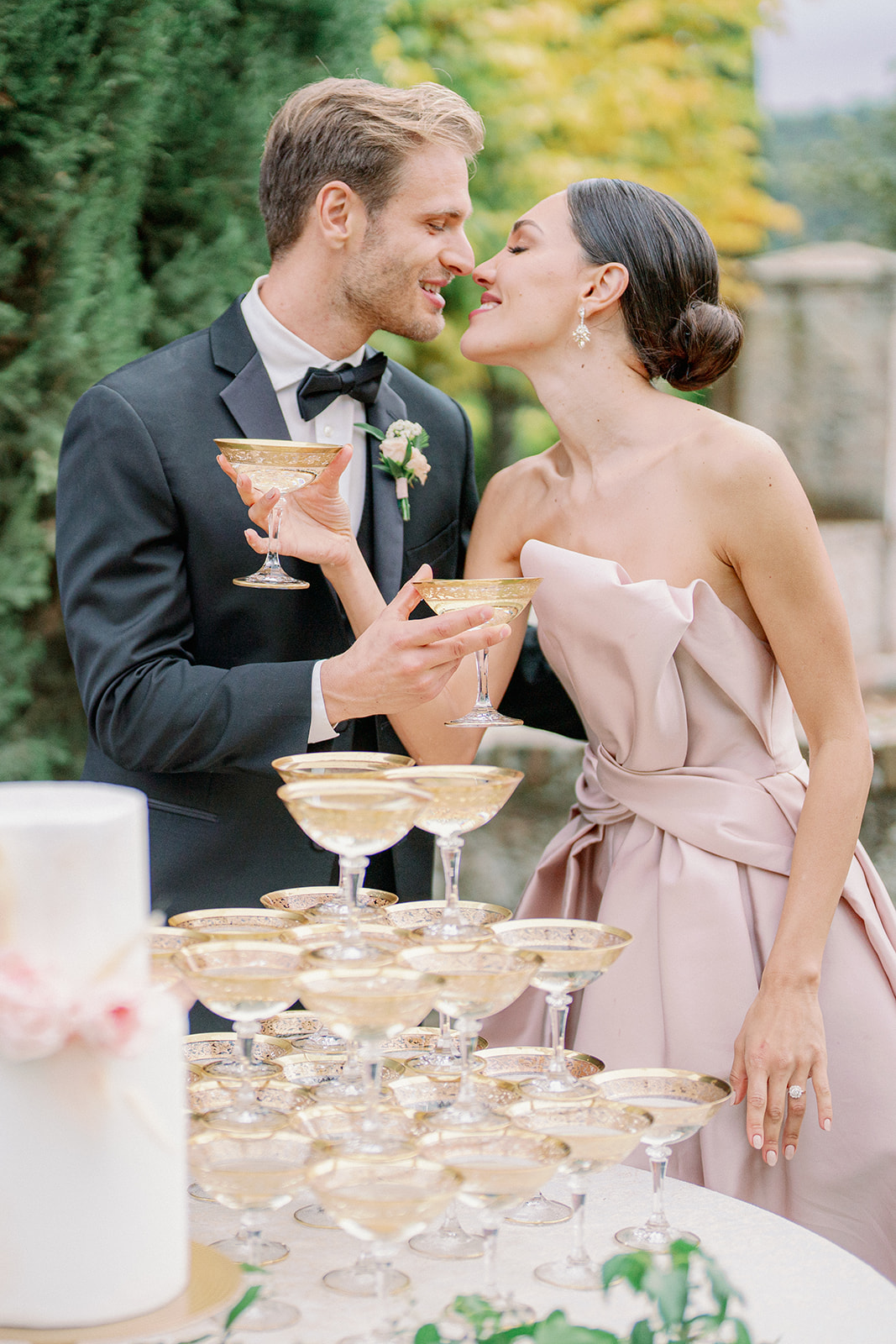
The cocktail hour is traditionally held in the front garden facing the villa’s Roman Baroque facade — one of the most spectacular architectural backdrops available at any wedding venue in the world. As the sun moves lower and the light turns warm, the stone of the facade takes on a depth and richness that photographs with extraordinary power. Guests move through the gardens with glasses of the villa’s own olive oil-pressed estate produce and Chianti wines from the surrounding region, and the informality of that movement through a beautiful outdoor space creates exactly the relaxed and joyful energy that the best cocktail hours produce.
Dinner along the cypress lane follows, or in the loggia, or at long tables set on the estate’s various outdoor terraces depending on the scale of the gathering and the configuration the couple has chosen with their wedding planner. Dancing continues outside until midnight, with softer background music permitted until 1:00 AM — notably later than most Italian venues, which is one detail that couples who have researched the Tuscany wedding market specifically appreciate about Villa Cetinale.
Capacity, Accommodation, and Pricing
Villa Cetinale accommodates a maximum of 100 guests for a wedding event. The main villa sleeps 23 adults and 4 children across its 13 bedrooms. Three additional estate properties — three farmhouses adjacent to the main villa — sleep a further 23 guests across three separate structures, bringing total on-estate accommodation to approximately 46-48 guests. For intimate weddings where the guest list consists primarily of the wedding party and closest family, the entire wedding party can live on the estate together throughout the week.
The event supplement for a Villa Cetinale wedding is €20,000 for up to 100 guests, or €30,000 if the guest count exceeds 100. These fees are separate from and in addition to the weekly accommodation rental cost, which varies by season and should be confirmed directly with the villa or through a specialist rental agency. Heating costs approximately €2,000 per week additional during cooler months. Food and beverage through the villa’s private chef program is charged at approximately €100 per adult per day and €50 per child under 12, with drinks and wine charged separately upon consumption.
The villa’s chef service is included in the stay, producing what multiple independent sources describe as an extraordinary standard of Italian cooking — simple, seasonal, deeply rooted in the culinary traditions of the Siena region. The estate produces its own olive oil from the first pressing of the estate’s olive trees, available for purchase and genuinely beautiful as a wedding favor for guests. A comprehensive selection of Tuscan wines is available at the villa, with vintage Bordeaux and ports available by prior arrangement.
To begin the booking process for a Villa Cetinale wedding, couples should contact Isabella, the villa’s manager, through villacetinale.com. The villa is also represented by several luxury rental specialists including Villas of Distinction, Haute Retreats, and Firefly Collection.
The Best Seasons for a Villa Cetinale Wedding
Each season at Villa Cetinale has a distinct character that suits different couples and aesthetics, and being specific about the differences matters for couples making a decision around timing.
Spring — April through June — is when the formal gardens are at their most lush and actively blooming. The wisteria drapes the villa walls in late April and early May. The climbing roses come into flower through May and June. The lilies appear in the garden beds. The surrounding Tuscan hills are green and soft with the last of the spring rains, and the quality of afternoon light in May is as beautiful as anything I have experienced anywhere. Spring is the season that most people picture when they imagine a Tuscany wedding, and it delivers on that image completely.
Summer — July and August — brings the characteristic dry heat of the Tuscan summer, the landscape shifting from spring green to the golden-parched palette of the Italian high season, and the long warm evenings that allow dinner under the cypress trees to extend late into the night in genuine comfort. The villa’s pool becomes the center of daily life during the midday hours, and the combination of heat, excellent food, good wine, and extraordinary beauty creates a particular quality of sensory richness that Tuscan summer genuinely monopolizes.
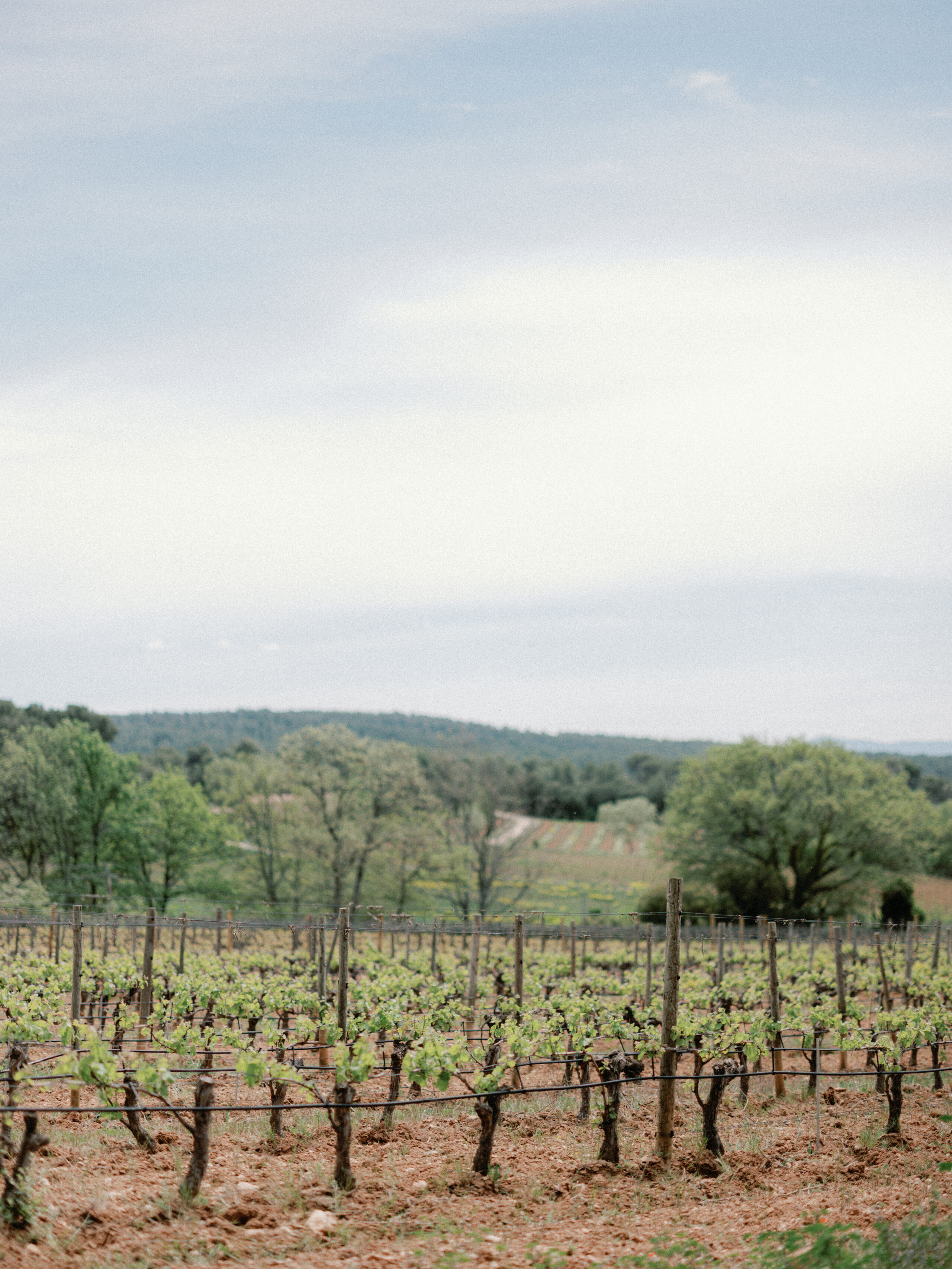
Autumn — September through November — is my personal preference for photography at Villa Cetinale, and I want to be specific about why. The light in October in Tuscany has a depth and amber warmth that summer light does not replicate. The surrounding vineyards are in harvest. The landscape takes on the rich golden tones of the Italian autumn. The evenings are cool and fragrant. And the four-night minimum available from mid-October through April makes a fall Villa Cetinale wedding financially more accessible than the full-week requirement of peak season.
A candlelit dinner under the cypress lane in October, with the cool Tuscan air and the harvest season surrounding the estate, is one of the most beautiful things I can imagine photographing.
Winter brings the quietest and most intimate version of the estate. The four-night minimum applies through March, making winter the most accessible booking period. The villa’s interior — the loggia with its marble tables, the dining room with its frescoes, the drawing room fireplace — becomes the heart of the gathering as the outdoors cools, and the intimacy that the enclosed interior creates suits micro weddings and elopements particularly well.
Getting to Villa Cetinale: Travel Logistics
Villa Cetinale is located in the Ancaiano district approximately fourteen kilometers west of Siena — a twenty-minute drive — and one hour south of Florence. The nearest major airport is Florence, approximately 85 kilometers from the estate, roughly one hour by car. Rome’s Fiumicino airport is approximately two and a half hours and offers more trans-Atlantic connection options for guests traveling from North America.
A car is necessary for the duration of the stay — the rural setting of the villa is one of its defining qualities, and there is no practical way to access the estate or the surrounding Tuscan landscape without personal transportation. Most couples booking Villa Cetinale arrange a fleet of private car transfers to bring guests from Florence or Rome on arrival day and return them at the end of the week. The nearest town, Sovicille, is five kilometers from the estate and provides a café, restaurant, market, pharmacy, and bank for basic needs during the stay.
Siena is fourteen kilometers away and offers everything from world-class restaurants and wine bars to the Palio horse racing tradition, the extraordinary Gothic cathedral, and the medieval Piazza del Campo — considered among the finest civic spaces in Europe. Florence is one hour away and provides the full range of Renaissance art, architecture, and culture that makes it one of the most visited cities in the world. San Gimignano, Monteriggioni, Volterra, and the Chianti wine country are all within easy day-trip distance for guests who want to extend their exploration of the region during the wedding week.
Who Is a Villa Cetinale Wedding Right For?
I am honest with couples about this because not every couple and not every vision is the right match for Villa Cetinale, and the investment involved makes it important to be clear.
A Villa Cetinale wedding is ideal for couples who want their wedding to be a week-long experience rather than a single event — who want the people they love most to gather in a beautiful place and live together for several days, building toward the ceremony rather than arriving for it. It is the right choice for couples whose guest list is genuinely intimate: twenty to fifty guests who are the actual inner circle, the people who will be equally present at the dinner table as they are at the ceremony.
It suits couples who approach their wedding with a genuine sense of adventure — who are excited by the complexity of planning an international celebration and who trust a good destination wedding coordinator to manage that complexity on their behalf. It is not the right choice for couples who want the simplicity of a local venue with a built-in team managing every element.
And it is, above all, the right venue for couples who have been to Italy — who have walked these hills, eaten this food, drunk this wine — and who want to get married in the place that feels most like the essential version of what Italy is to them. A Villa Cetinale wedding is not a generic “Tuscany aesthetic.” It is a specific, three-and-a-half-century-old papal estate outside Siena with a private chapel, a Holy Wood, a cypress lane, and gardens that Edith Wharton wrote about admiringly. There is no other venue that replicates it.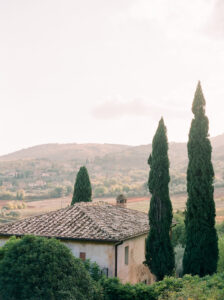
As Your Villa Cetinale Wedding Photographer
I want to be direct about what photographing a Villa Cetinale wedding means to me, because I think it matters for couples who are trying to choose their team.
I have been inside this estate. I have photographed within these gardens and walked the Holy Wood and stood on the gravel drive as the afternoon light changes. I know how the front facade catches the last hour of sun and what the cypress lane looks like when it is lit by candles and how the light moves through the loggia in the morning. I know which corners of the estate reveal themselves gradually and which spaces photograph differently than you expect when you first see them.
17 years of photographing weddings in beautiful places has produced a specific and practiced ability to find the photograph within the setting — to be in the right position at the right moment, to understand where the light is going before it arrives there, to make the images that couples carry with them for the rest of their lives. A Villa Cetinale wedding deserves that level of preparation and that depth of attention, and I bring both.
If you are planning a destination wedding or elopement and looking at a Villa Cetinale wedding and looking for a photographer who has been there, who loves this estate specifically and Tuscany deeply, and who will travel to Siena with everything they have to give — I would be genuinely honored to talk with you. Reach out through my contact page and let’s have a real conversation about your vision, your week, and what you want your Villa Cetinale wedding photographs to carry for the rest of your lives.




add a comment
+ COMMENTS