



Villa Cimbrone: A Wedding Venue Above the World
Gore Vidal lived in Ravello for thirty-two years. He was an American writer of exceptional literary range and exceptional precision with language, and he had access to virtually every beautiful place on earth. In 1976, asked by an American magazine which was the most beautiful place he had ever seen in all his travels, he answered without hesitation: the view from the belvedere of Villa Cimbrone on a bright winter’s day, when the sky and the sea were each so vividly blue that it was not possible to tell one from the other.
That is the view from the Terrazza dell’Infinito — the Terrace of Infinity — at Villa Cimbrone in Ravello, on the Amalfi Coast of southern Italy. And if you have stood there, even once, even briefly, you understand immediately and without qualification that Vidal was not exaggerating. At 300 meters above the Mediterranean, at the edge of a rocky promontory that juts out from the cliffside village of Ravello with nothing between it and the sea, the terrace looks out across the entire expanse of the southern Italian coastline and the blue water stretching beyond it to the horizon.
The marble busts that line the balustrade — 18th-century Roman-style figures of various deities, serene and slightly weather-worn — look as though they have been standing there watching this view since before human history, which is almost how it feels to stand beside them.
On clear days the coast stretches to Paestum and the Cilento mountains. On the clearest days, which happen with more frequency in this part of the world than anywhere else I have photographed, the sea and the sky merge at a horizon that is simply the edge of the visible world.
I have photographed destination weddings across Italy for 17 years. I have worked at estate villas in Tuscany, at grand hotels on Lake Como, at clifftop properties along the Cinque Terre, at palaces in Sicily and in Rome. And I can tell you that the Terrace of Infinity at Villa Cimbrone is the single most powerful ceremony backdrop I have ever stood in front of with a camera in my hands. It is not the most elaborate. It is not the most decorated. It is simply and irreducibly the most beautiful thing there is. Full stop.
This venue is perfect for anyone wanting to plan a multi day wedding weekend in Italy.
The History: A Thousand Years and an Eccentric Englishman
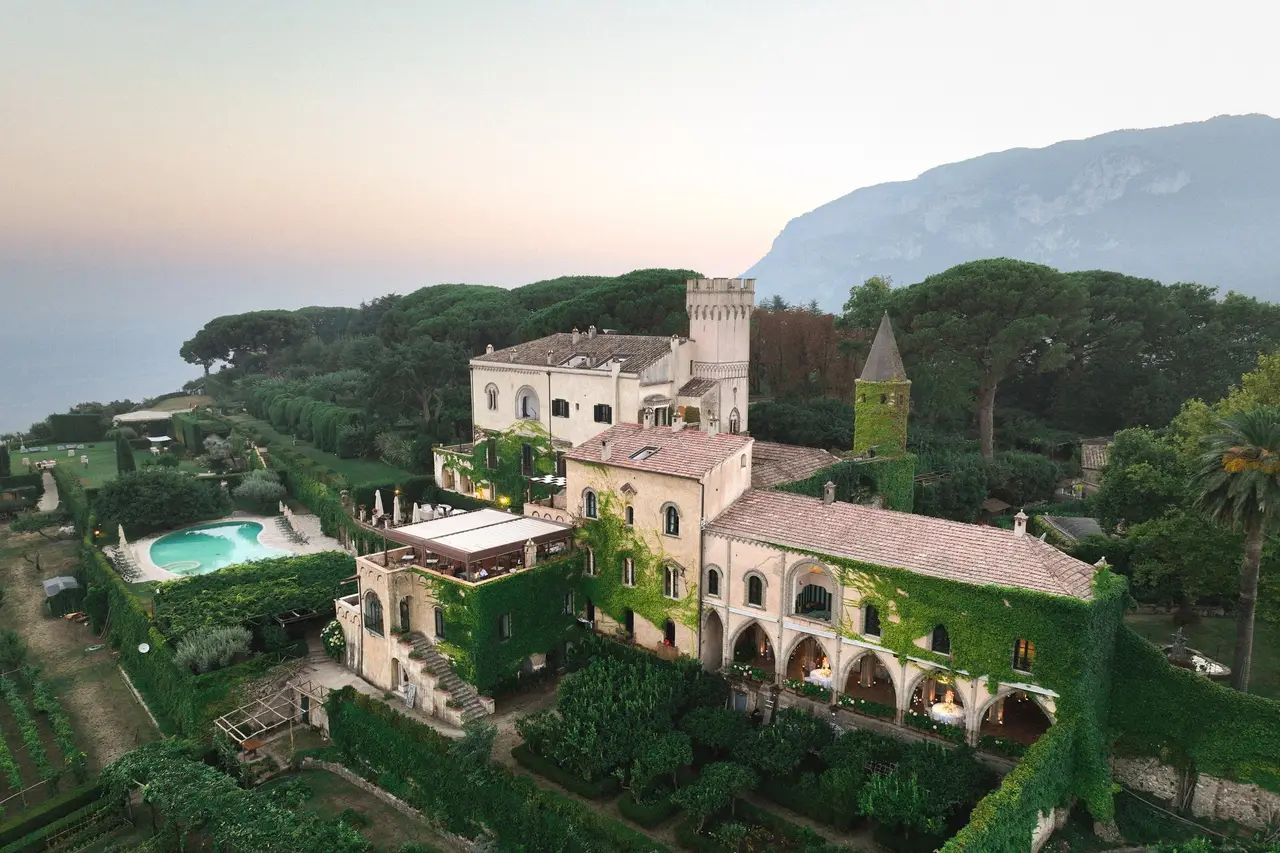
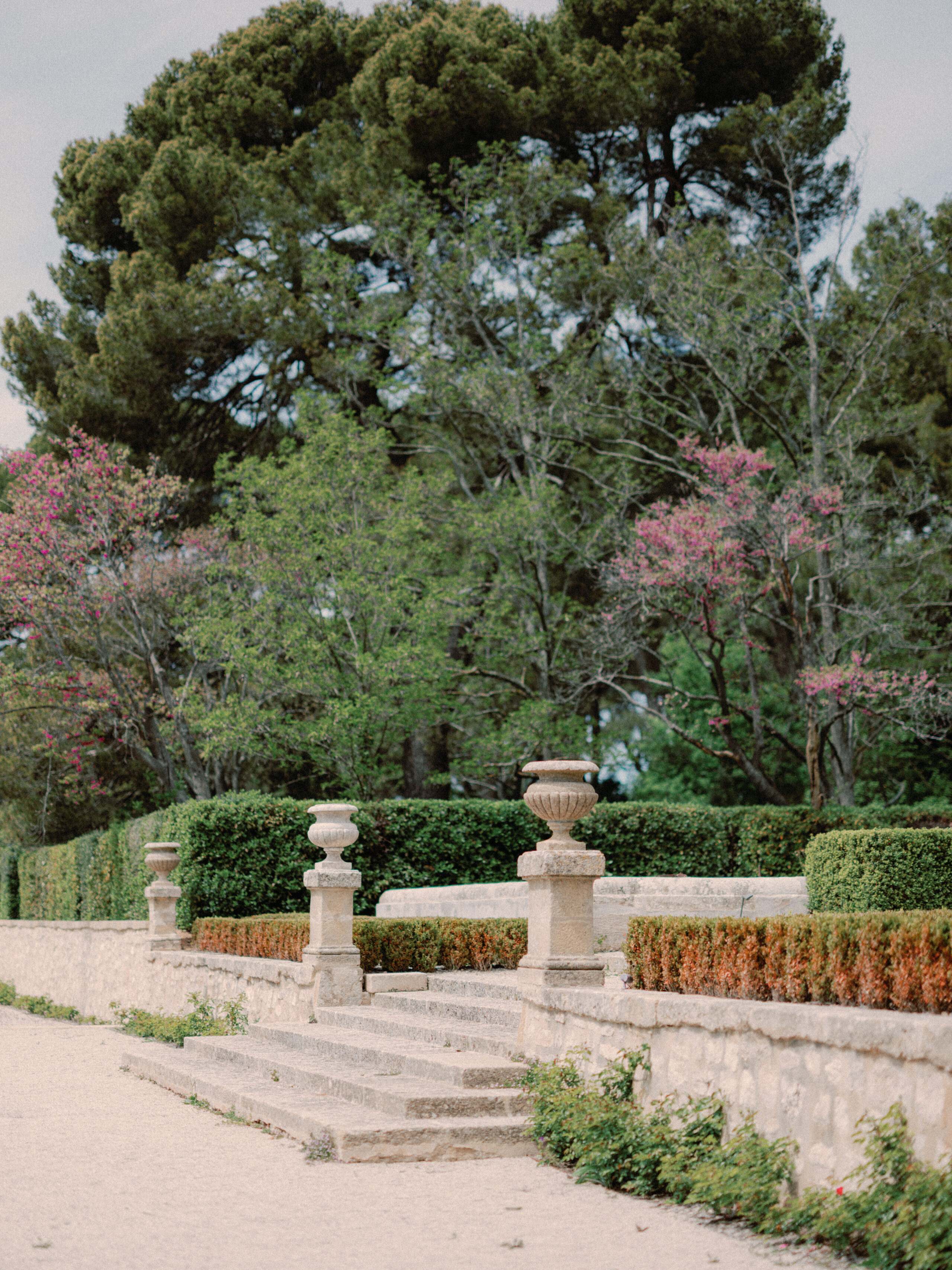
Villa Cimbrone stands on a rocky promontory known as Cimbronium — from which the name derives — and the earliest references to a structure here date to the 11th century, when the land belonged to the Accongiogioco, a noble family of Ravello. The property passed through several powerful families over the following centuries — the Fusco family held it for more than five hundred years, gradually transforming what had begun as agricultural land into an elegant park with classical and Renaissance landscaping elements, panoramic terraces, open pavilions, and the path structures that remain the bones of the garden today.
By the late 18th and early 19th centuries, the villa had fallen into a decline driven by economic hardship, French occupation, brigandage, and earthquake damage. When the English nobleman Ernest William Beckett encountered it during his travels in Italy in the late 1800s, it was effectively abandoned — a dilapidated medieval structure on one of the most dramatic coastal promontories in Europe, surrounded by an overgrown garden with views of staggering beauty.
Beckett, who would later inherit the title Baron Grimthorpe, had recently lost his wife and was consumed by grief. Something about the abandoned villa on its cliff above the sea spoke to him. He purchased it in 1904 and set about realizing an ambition that was partly architectural, partly horticultural, and partly the project of a deeply romantic sensibility given access to unlimited resources.
What makes the restoration remarkable — and what gives Villa Cimbrone its specific quality of romantic fantasy — is how it was done. Beckett did not engage a professional architect. Instead he formed a working relationship with Nicola Mansi, a Ravello local who had emigrated to London and who persuaded the baron to rely on local craftsmen and local materials rather than imposing a foreign architectural vision on an Italian hillside.
The result of this choice is a villa whose eclectic character — mixing medieval fragments with neo-Gothic elements, Moorish ornament, Venetian detailing, and Sicilian-Norman influences — feels entirely organic to the landscape and the culture rather than architecturally imposed upon it. Lord Grimthorpe did not want a historically accurate palace, by his own account. He wanted a place of fantasy. He succeeded completely.
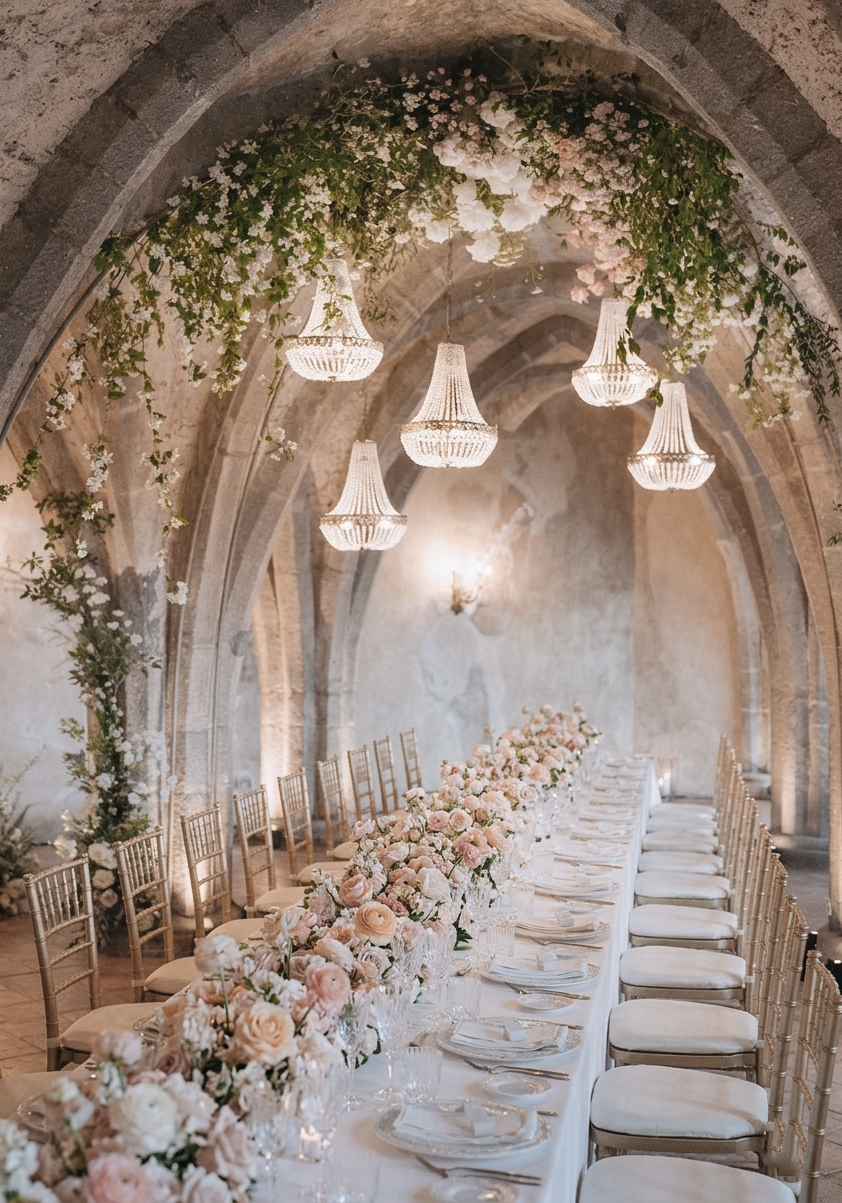
He also constructed the crypt — a Gothic open gallery with massive columns and complex arched vaults, modeled after the Fountains Abbey near Malton in Yorkshire where Grimthorpe was born, built between 1907 and 1911 — which would become the preferred gathering place of the Bloomsbury Group. He laid out the Avenue of Immensity, a long shaded promenade lined with ancient wisteria whose purple blooms in spring form a continuous overhead canopy of fragrance and color. He added the Temple of Bacchus, tucked into the northeastern corner of the garden with its own small panorama. This is one of my favorite places for photos at the villa.
He placed the statue of Eve in a cave where the setting sun’s rays cause the marble to glow with the warmth of living flesh. He created the Terrace of Infinity itself, lining its balustrade with the marble busts that give it its iconic profile. And at the garden’s highest point, he built a small temple intended as his burial place — he died in London in 1917, and his ashes were brought back to Ravello and interred at the base of its central pedestal, as he had wished. Lord Grimthorpe is quite literally part of the garden he created.
After Grimthorpe’s death, the villa passed through subsequent owners and eventually came to the Vuilleumier family, who first used it as a private residence and later converted it into the luxury hotel it is today. The six-hectare park and the structure are recognized as part of the Amalfi Coast’s UNESCO World Heritage designation. The gardens are open to the public daily; the hotel operates as a private five-star property accessible only to guests and to couples who have booked events within its walls.
The Famous Guests: A Century of Extraordinary Visitors
One of the qualities that distinguishes Villa Cimbrone from other beautiful Italian venues is the depth and the character of its cultural history. This is not merely a beautiful place where famous people happened to stay. It is a place that attracted, over the course of a century, a specific quality of intellectual and creative person — drawn precisely because Ravello’s elevation above the coast, and Villa Cimbrone’s position above even that, provides the quality of distance from ordinary life that creative work and romantic feeling equally require.
The London Bloomsbury Group adopted Villa Cimbrone as one of their preferred Italian retreats in the years following Grimthorpe’s transformation. Virginia Woolf, Leonard Woolf, E.M. Forster, John Maynard Keynes, and Lytton Strachey all stayed and worked within its walls. Vita Sackville-West, Virginia Woolf’s lover and the most gifted garden designer of her generation, contributed to the redesign of the gardens. The crypt, with its shaded Gothic interior and its view across the garden, became their gathering place — a literary salon on a Mediterranean cliff where some of the finest English prose and economic thought of the 20th century was discussed, debated, and occasionally written.
T.S. Eliot came. Winston Churchill came. D.H. Lawrence came and wrote portions of Lady Chatterley’s Lover in the villa’s gardens. Tennessee Williams came. Richard Wagner came. Jackie Kennedy came. Coco Chanel came. Salvador Dalí came. And Greta Garbo came — or fled, perhaps more accurately — in February 1938, arriving at Villa Cimbrone with the conductor Leopold Stokowski in what she hoped would be a secret romantic retreat. She had said, in the spirit that characterized her particular relationship with beauty, that she wanted to see this place before it vanished. She was recognized immediately, and the international press descended on Ravello, transforming her private sojourn into the most famous romantic news story of the year.
A plaque on the hotel wall commemorates the date of her stay. The Greta Garbo Suite is named in her honor and remains one of the most sought-after rooms for brides preparing for their ceremony.
Gore Vidal came, and eventually moved permanently into La Rondinaia — a nearby house built by Lucy Beckett, Grimthorpe’s daughter — where he lived for thirty-two years, looking out across the same view that had captivated him on first encounter and that he named, with the authority of a man who had seen everything the world of beauty could offer, the most beautiful he had ever seen.
The Terrace of Infinity: The World’s Most Romantic Ceremony Location
There is no gentle way to build toward a description of the Terrazza dell’Infinito that does justice to the experience, so I will be direct: in seventeen years of photographing wedding ceremonies around the world, I have never stood at a ceremony location that produces in every single guest — regardless of their age, their background, their emotional state going into the moment — the same immediate physical response. People stop talking. They stop moving. They look up and out across the sea and the sky, and something about the view literally takes the breath from them for a moment before the sensation resolves into something they have to try to describe.
The most common description, from guests who have attended ceremonies here and who I have spoken with afterward, is some version of: I felt like I could see the whole world.
The terrace extends to the very edge of the promontory, 300 meters above the Mediterranean, its balustrade lined by the 18th-century marble busts that Lord Grimthorpe collected and positioned to stand watch over the view.
The couple exchanging vows stands at the center of this stone-and-marble structure with nothing between them and the sea but open air and the specific quality of the Amalfi Coast light — which in the late afternoon turns the water the specific deep blue that Gore Vidal described as indistinguishable from the sky, and which in the golden hour turns the whole scene, the busts and the stone and the sea and the clouds, into tones of amber and gold that a painter would be accused of exaggeration for choosing.
As a photographer, the terrace presents the most technically generous ceremony environment I work in regularly. The light from the west in the afternoon is directional, warm, and abundant. The depth of the view behind the couple creates a background that is not a flat backdrop but an actual landscape with distance, texture, and visual complexity — the far coast, the mountain shapes, the layered blues of the water.
Every portrait made in this space has a quality of scale and grandeur that is entirely unique, and the ceremony images — the couple at the balustrade with the sea behind them and the marble busts on either side — are consistently among the most powerful single images in any gallery I deliver from an Italian destination wedding.
The Gardens: A World of Discovery in Six Hectares
The Terrace of Infinity is the summit of the Villa Cimbrone experience, but the journey through the gardens that leads to it is itself one of the great pleasures of any visit to this property. Lord Grimthorpe designed the gardens as a sequence of scenic surprises — a deliberate unfolding of discovery that rewards the slow walk and punishes the rush. He succeeded so thoroughly that photographers who know the property well consistently find new portrait environments within it even after many visits.
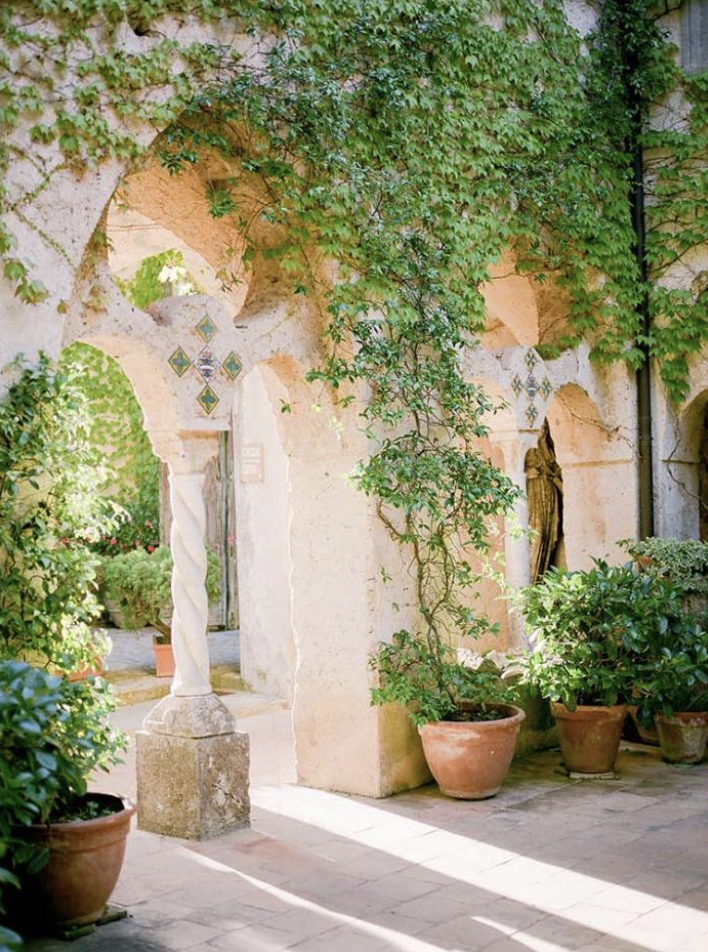
The entrance from the Via Santa Chiara passes through ancient wooden doors and into the monastery cloister — a small Arab-Sicilian-Norman courtyard with an ancient covered well at its center, its walls decorated with terracotta tiles by the Florentine sculptor Luca della Robbia, the family boar’s heads of Lord Grimthorpe’s crest carved above the arch. This immediate encounter with the historical depth of the place sets the tone for everything that follows.
Beyond the cloister is the Avenue of Immensity — Viale dell’Immenso — a long shaded promenade lined with ancient wisteria that, in May and early June when the flowers are at their peak, creates an overhead canopy of purple bloom six feet long that fills the air with fragrance and filters the morning light into something soft and painterly. Walking this avenue toward the terrace, past the 18th-century ceramic vases and bronze statues of Greek warriors, past the statue of Ceres that guards the approach to the belvedere, is the kind of anticipatory experience that makes the arrival at the terrace feel like a resolution.
The crypt — the Gothic open gallery with massive columns and arched vaults — opens onto one side of the garden with views across toward the coastal town of Maiori. Its shaded interior has been a gathering place for over a century, and its medieval stonework, filtered light, and the quality of historical presence within its walls make it one of the most atmospheric ceremony spaces at any Italian venue. For couples who want a ceremony with architectural enclosure and gothic character rather than the open panoramic drama of the terrace, the crypt provides something genuinely distinct.
Deeper in the gardens: the Temple of Bacchus in its northeastern corner, a round structure with its own small panorama tucked behind cypress trees. The statue of Eve in her cave, carved by Bolognese sculptor Adamo Tadolini, the marble glowing in the afternoon light. The Moorish Gazebo with its Islamic arches and decorative motifs. Eve’s Grotto. The Hill of Mercury with its bronze statue of the Resting Hermes. The bench beneath the oak tree with its ancient inscription, misattributed to D.H. Lawrence but actually belonging to Catullus — “Lost to a world in which I crave no part, I sit alone and commune with my heart.
Pleased with my little corner of the earth, glad that I came, not sorry to depart” — which describes the specific quality of Villa Cimbrone as accurately as any description written specifically about it.
These garden spaces are available for portrait sessions across the full wedding day, and the variety they offer — the formal geometry of the avenue, the enclosed Gothic atmosphere of the crypt, the wild wooded areas deeper in the garden, the dramatic open exposure of the terrace — means that a Villa Cimbrone wedding gallery can encompass an extraordinary range of visual environments within a single property.
The Hotel: Nineteen Rooms and the Greta Garbo Suite
Hotel Villa Cimbrone operates nineteen individually decorated rooms and suites within the historic villa building, each one expressing a distinct character through its specific combination of antique furnishings, original architectural features, and the accumulated material richness of a thousand years of habitation and renovation. No two rooms are identical. Many have original 18th-century ceiling frescoes. Many have Vietri tile floors — the distinctive majolica ceramic of the Amalfi Coast tradition, handmade and hand-painted in patterns that have been produced in the workshop towns nearby for centuries. The bedding is in local hand-dyed linens. The furnishings are antiques specific to each room’s character.
The Greta Garbo Suite is the most celebrated of the hotel’s accommodations — the room associated with the villa’s most legendary romantic episode, finished to a standard of quiet luxury appropriate to the story, with sea views that mirror what the actress herself would have looked out across in February 1938 when she arrived hoping for privacy and found instead a level of beauty that made the loss of anonymity entirely worthwhile. For brides in particular, this suite’s combination of historical resonance, extraordinary views, and quiet luxury makes it the natural choice.
Other suites have private terraces with garden or sea views, deep soaking tubs extending from beautifully tiled walls, and the specific quality of inhabited elegance that comes from rooms that have been furnished over decades with genuine care for the individual character of each space rather than the manufactured consistency of a luxury hotel brand aesthetic. The hotel accommodates approximately 60 guests at full occupancy in its rooms and suites, with additional nearby properties available for larger wedding parties.
Hotel guests have exclusive private access to the gardens outside of public hours — which means, crucially, that as a hotel guest or as a wedding couple at Villa Cimbrone, you can stand on the Terrace of Infinity at sunrise, or walk the Avenue of Immensity in the moonlight, entirely alone. This private dimension of the experience — the garden at dawn, or after the tourists have departed and the evening light comes across the water — is one of the most genuinely extraordinary privileges that any wedding venue anywhere in the world can offer.
The Culinary Program
The restaurant at Hotel Villa Cimbrone is Il Flauto di Pan — a Michelin-starred dining experience whose name references Pan’s flute and whose menu is rooted in the finest ingredients of the Campania region, prepared with the sophistication and creativity that the starred designation implies. The kitchen works with local producers of the Amalfi Coast, the mountains of the Cilento, and the volcanic agricultural land around Vesuvius — the preserved tomatoes, the buffalo mozzarella, the seafood of the Tyrrhenian coast, the citrus for which this coastline is famous, and the local wines of the Campania wine country including the celebrated Greco di Tufo and Taurasi.
For wedding banquets, the culinary team works with couples to design menus that reflect the specific character of the Campanian tradition — the flavors and the products of this specific coastline, prepared to the standard that the Michelin designation represents. The in-house sommelier guides wine selection from the extensive cellar, whose collection spans the southern Italian regions and the country’s broader wine heritage.
The Mediterraneo restaurant offers a more casual alternative for other meals across the wedding weekend. The wine cellar, with its old stone vaults and its expert sommelier guidance, is a discovery space for guests who want to understand the wines of southern Italy in the specific context of a cellar that has been accumulating bottles in the ancient underground rooms of a medieval villa. Lucille’s Balcony — the romantic indoor bar set just below the Terrace of Infinity, named in honor of Lucille Beckett, Lord Grimthorpe’s daughter — offers views of the Amalfi Coast through its windows while guests enjoy cocktails in an atmosphere of quiet historical resonance that the outdoor spaces cannot provide on cooler evenings.
Wedding Ceremonies: The Practical Picture
Villa Cimbrone hosts symbolic and Protestant ceremonies; civil ceremonies for international couples require the Italian mairie procedure, which most destination couples choose to complete at home before arriving, holding a fully ceremonial symbolic ceremony at the venue. The hotel’s event team manages the full planning coordination — from menu design and floral selection through music arrangements and vendor liaison — and the preferred supplier network they work with spans the finest wedding professionals on the Amalfi Coast.
The exclusivity of the property, combined with the intimacy of 19 rooms, means that all events are private to the hotel’s guests. No other weddings or events share the property on your day. I find that the best type of weddings here are smaller more intimate micro weddings. The venue is truly perfect for smaller groups (although, it can handle larger parties as well).
Ceremony spaces can be organized at the Terrace of Infinity, in the crypt, in the Mediterranean garden, at the panoramic terrace above the hotel, or in the Frescoes Hall indoors for the rare occasion when weather requires an interior setting. Wedding banquets and dinners can be organized in any of the villa’s garden spaces, with the specific configuration designed around the couple’s guest count — typically up to approximately 150 to 200 guests for the full event, with the intimate character of the property most fully expressed for celebrations of 80 or fewer.
Music is permitted until midnight, extending to 1:00 AM when the hotel is exclusively rented. The venue maintains specific supplier exclusivities for audio and lighting. Events are held in the summer season, with the events team operating year-round for planning conversations.
Getting to Villa Cimbrone
Ravello sits above the Amalfi Coast on a ridgeline accessible by a narrow mountain road from the coastal highway below. The nearest major international airports are Naples Capodichino, approximately 60 to 70 kilometers away, and Salerno-Costa d’Amalfi Airport, approximately 30 kilometers. For guests arriving from Rome or further afield, the train journey from Rome to Naples takes approximately 70 minutes on the high-speed rail, after which a private transfer to Ravello takes approximately 90 minutes depending on traffic conditions on the coast road.
Transfers should always be pre-arranged; the Amalfi Coast road is not a drive that benefits from improvisation, particularly in summer.
Within Ravello, Villa Cimbrone is reached on foot — approximately 10 to 15 minutes from the central piazza, Piazza Vescovado, along narrow lanes lined with lemon and fig trees that are themselves part of the experience of arriving. Luggage and mobility-limited guests can be transported by golf cart from the village parking area. The hotel maintains a helipad — making Villa Cimbrone the only Ravello venue accessible by helicopter, which for guests arriving from Naples or from private aviation can dramatically simplify the arrival logistics of a large wedding party.
For couples and guests who want the full cinematic experience of the Amalfi Coast, arriving by private boat to the harbor below and ascending to Ravello by car is the most dramatically beautiful approach to any wedding venue I have ever been driven to.

The Best Season To Get Married at Villa Cimbrone
The Amalfi Coast’s climate is Mediterranean and reliably generous from April through October, with July and August representing the absolute peak of summer heat, crowding, and cost. My honest recommendations by season (based on my experience):
May is the month I recommend above all others for Villa Cimbrone specifically (not just because spring is my favorite season). The wisteria on the Avenue of Immensity is in full purple bloom, the entire garden is at its most explosively beautiful, the coastal light is soft and clear rather than the intense white of high summer, and the temperature — warm in the afternoon, cool in the evenings — is perfectly suited to a long outdoor dinner under the garden lights. The crowds of peak summer have not yet arrived, and the quality of the day-to-day experience in Ravello is at its most authentic and most relaxed.
June is excellent — the wisteria is past its peak but the gardens are lush, the evenings are long, and the quality of the Terrace of Infinity at golden hour in June, with the sun dropping late over the western coast, creates conditions for ceremony and portrait images that I count among the finest I produce anywhere in Europe. Late June sees the beginning of the summer season’s crowd build.
September is the Amalfi Coast’s most consistently recommended month for destination weddings, and Villa Cimbrone in September — the summer heat softened, the light shifting toward the amber tones of early autumn, the sea still warm and the garden still fully in color — is as beautiful as it is at any point in the year. The Ravello Festival, which brings concerts and cultural events to the town through the summer, has typically wound down by September, leaving the village more peaceful and more privately inhabitable.
October carries the specific melancholy beauty of the Italian autumn — the light lower and warmer, the tourist season essentially concluded, the gardens shifting from green toward the first autumn hues, and the Terrace of Infinity on a clear October morning showing the deep blue water that Gore Vidal described, a sky and sea of such vivid and uniform blueness that they cannot be told apart. My first time photographing a wedding in Tuscany was end of October and it was absolutely perfect, whether wise.
Why Choose Villa Cimbrone for Your Wedding Day
I am going to say the thing plainly that the entire context of this post has been building toward: Villa Cimbrone is the most romantic wedding venue in the world. I do not say this as a superlative chosen for effect. I say it as the honest assessment of someone who has spent seventeen years in exactly the position required to make the comparison — standing with a camera at ceremony sites and portrait locations across Europe, watching couples and their guests encounter beauty and respond to it, and measuring the depth and the consistency of those responses against each other.
The Terrace of Infinity does something to people that no other wedding venue I have worked at does with the same reliability. It stops them. It quiets them. It makes them feel, however momentarily, the specific emotion of being at the edge of the world and looking at something so beautiful it is nearly incomprehensible. When a couple exchanges vows in that space, the photographs that result are not merely beautiful wedding images. They are documents of a specific and irreversible human encounter with grandeur. The photographs are truly an art piece.
The history of Villa Cimbrone — the thousand years of human habitation, Lord Grimthorpe’s romantic obsession and his extraordinary creation, the Bloomsbury Group meeting in the crypt, Greta Garbo fleeing the world and finding it following her here anyway, Gore Vidal looking out across the same view for thirty-two years and never finding a better one — gives Villa Cimbrone a depth of cultural resonance that no newly constructed venue, however beautiful, can manufacture.
And the garden — the Avenue of Immensity in wisteria, Eve in her cave, the Temple of Bacchus behind the cypresses, the marble busts watching the sea — is a portrait environment of such extraordinary variety and such consistent beauty that I have never left a Villa Cimbrone wedding day without images that I consider among my best work of any given year.
If you are planning a destination wedding in Italy and the thought of the Terrace of Infinity has taken hold of your imagination — which, if you are reading this, it probably already has — reach out through my contact page. I photograph at Villa Cimbrone with a specific and deep pleasure, and I would be honored to document your wedding within its extraordinary walls.
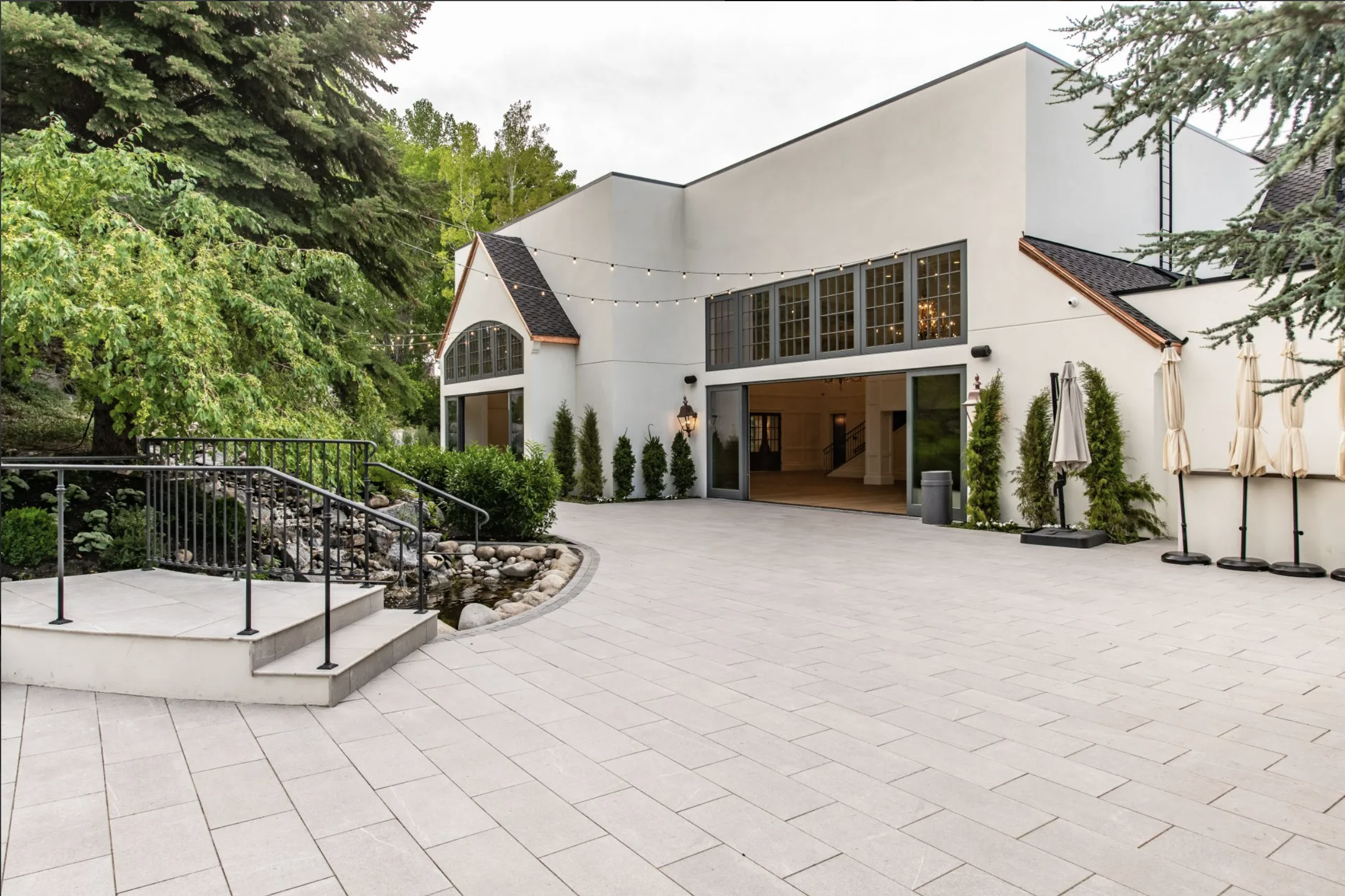
If you are looking for a Italian styled wedding venue but can’t afford a destination wedding, there are other options state side that offer the same type of vibes. I recently wrote a blog post about wedding venues in the US that feel like Italy. Vizcaya is in Florida and reminds me so much of Villa Cimbrone.







add a comment
+ COMMENTS