
9 Essential Tips for a Stylish Engagement Session: Your Complete Guide to What to Wear to Your Engagement Session
Your engagement session is one of the most exciting photography experiences you will have before your wedding day — a relaxed, unhurried opportunity to be photographed with the person you love, in a setting that means something to you, before the wedding day arrives with all of its beautiful complexity and momentum. It is the session where you get comfortable in front of the camera, where you figure out how to look at each other and laugh together without it feeling staged, and where I get to know you as a couple before I photograph the most important day of your lives.
And then comes the question that almost every couple asks me within the first week of booking: what do we wear?
It sounds simple. It is genuinely not. Deciding what to wear to your engagement session is one of the most impactful decisions you will make for the quality of the photographs, and it is one that most couples have no real framework for — because engagement session styling is its own discipline, different from what you wear to a formal event, different from what you wear to a wedding, different from what looks good in the mirror on a Tuesday morning. What works in photographs, in a specific outdoor setting, in a specific quality of light, with a specific color palette — these are questions that require some specific guidance.
After seventeen years of photographing engagement sessions across Utah, the Pacific Northwest, France, Italy, and beyond — in lavender fields and vineyards and glaciers and Paris alleyways and the red rock canyons of Moab — I have developed a very clear and very specific point of view on what works and what does not. This guide covers everything you need to know about what to wear to your engagement session, from the big-picture principles to the small specific details that make a meaningful difference in how the photographs look and feel.
Tip 1: Plan Two Outfits, Each With a Distinct Character
The single most consistently valuable piece of styling advice I give to every couple before their engagement session is this: bring two outfits. Not one. Two. And make them genuinely different from each other rather than slight variations on the same look.
The reason is both practical and photographic. Practically, two outfits give us variety in the final gallery — images that look distinct from each other, that can be used across different contexts and formats, and that tell a more complete and more interesting story of who you are as a couple than a single look can achieve. Photographically, different outfits interact with different environments and different qualities of light in different ways, and having two distinct looks gives me more tools to work with across the full session.
When I say distinct, I mean it genuinely. One more casual and one more elevated. One more relaxed — jeans, a beautiful blouse, a linen shirt — and one more romantic or formal — a flowy dress, a blazer, something that could photograph at the beginning of a magazine spread. One light and one with more depth of color. The contrast between the two outfits creates visual variety that makes the gallery feel complete rather than repetitive, and the transition between them gives the session a natural structure with a beginning and a middle and a shift.
A practical note on outfit changes in the field: I always plan the session timing so that the more casual look is photographed in the earlier part of the session, and the more elevated look is saved for the golden hour window when the light is at its most extraordinary. If you are photographing in a location that requires changing on-site, bring a wrap or a garment bag and identify a private changing spot in advance.
Tip 2: Coordinate Without Matching
One of the most common engagement session styling mistakes I see is couples who either match each other too precisely or who do not coordinate at all, and the photographs from both extremes suffer for it. Matchy-matchy — identical colors, perfectly paired outfits, the kind of coordination that looks like it was planned with a ruler — reads as stiff and overly arranged in photographs, and it loses the natural quality that makes the best engagement images feel genuine.
No coordination at all — outfits that have nothing to do with each other in color, tone, or style — creates a visual dissonance that the camera picks up and that makes the images feel slightly off in ways that are difficult to articulate but immediately felt.
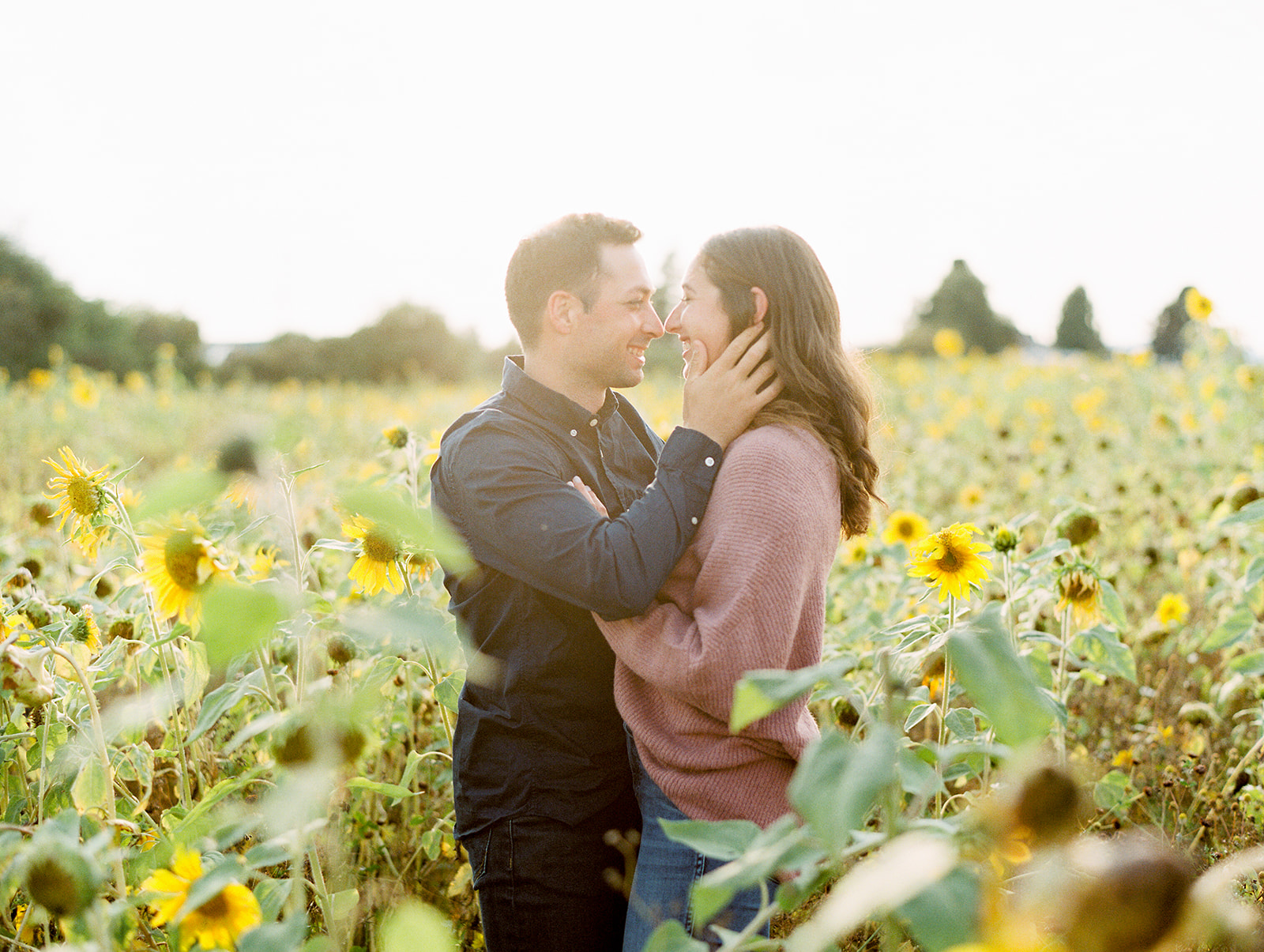
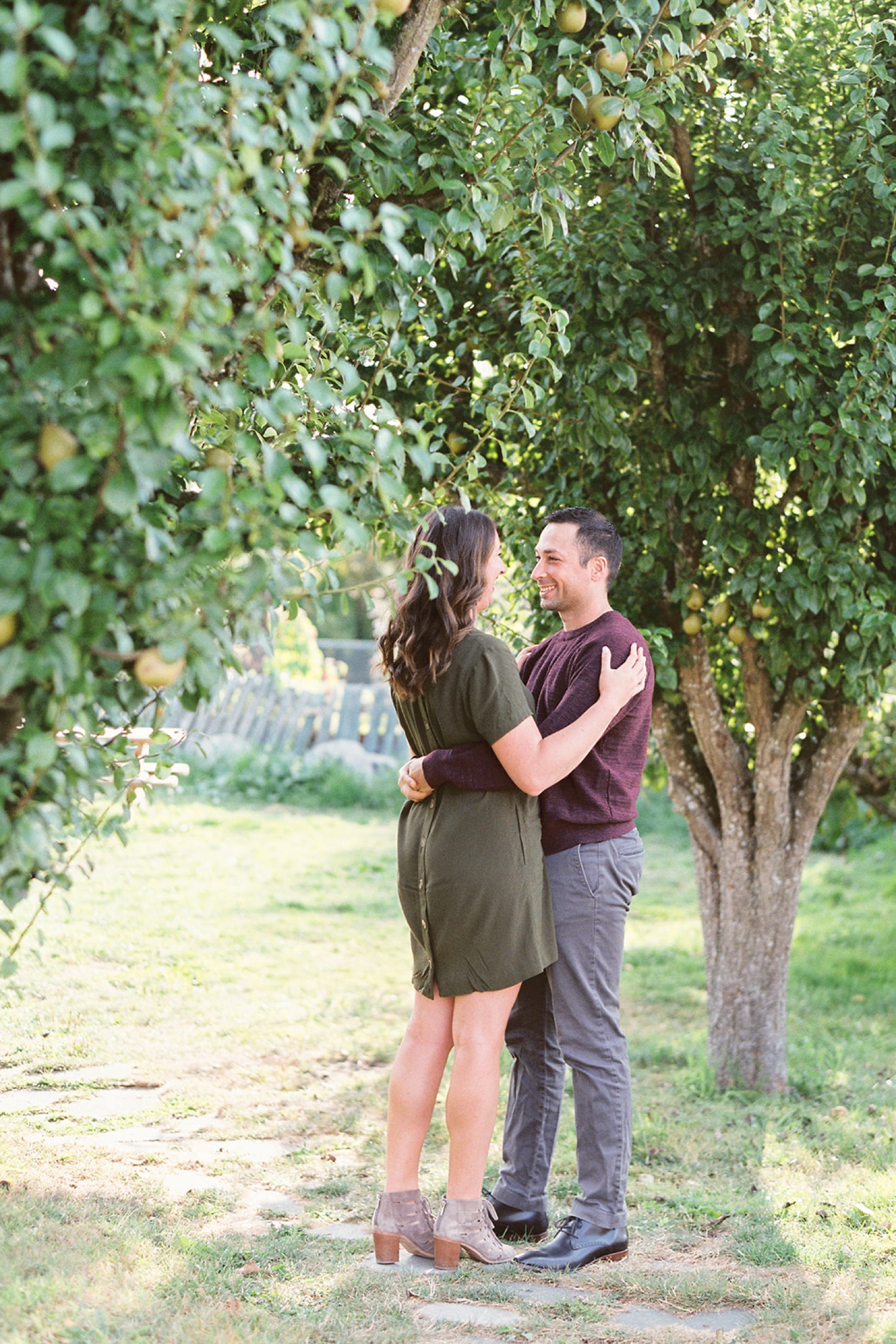
What works is coordination without matching: outfits that belong to the same visual family without being identical. The most reliable approach is to choose a color palette — two or three colors that work well together — and build each outfit from that palette independently. If she is wearing a dusty rose dress, he might wear a cream linen shirt with tan trousers and a light terracotta pocket square. If he is wearing a navy suit, she might wear a navy floral dress or a cobalt wrap dress. If both outfits are in neutral tones — ivory, cream, camel, tan — the relationship between them is established by the shared palette even if every specific piece is different.
The key question to ask when standing next to each other in your outfits is: do we look like we belong in the same photograph? Not identically dressed, but visually related. If the answer is yes, the coordination is right. If one person looks like they are attending a beach picnic and the other looks like they are going to a gallery opening, adjust.
Tip 3: Choose Colors That Love the Camera
Not all colors are created equal in photographs, and understanding which colors photograph beautifully — and which create problems — is one of the most specific and most useful pieces of advice I can give about what to wear to your engagement session.
The colors that consistently photograph with the most richness and depth in natural light are the soft, muted tones: blush, dusty rose, sage green, dusty blue, mauve, champagne, warm ivory, terracotta, rust, and the deeper jewel tones like burgundy, forest green, and navy when the setting and the season warrant them. These colors interact with natural light in ways that create warmth and depth in the images — they catch the golden hour in particular with extraordinary richness, and they work beautifully against both natural landscape and architectural backgrounds.
The colors that create challenges and don’t photograph well are the very bright saturated primary colors — a vivid red, a neon yellow, a bright orange — which can overwhelm the frame and compete with the landscape for attention in outdoor settings. Very bright white can be difficult to expose correctly in full sun without losing detail. Very dark colors — black, deep charcoal — can read as heavy and absorb light rather than reflecting it, though dark colors in golden hour light can be extraordinarily beautiful when used intentionally. Heavily patterned clothing — large graphic prints, bold stripes, complicated patterns — tends to be visually distracting and can be difficult to coordinate with a partner’s outfit.
If you have a specific color that is deeply meaningful to you or that you have been dreaming of wearing for this session — a particular shade of blue, a pattern that reflects your personality — wear it. These guidelines are starting points, not rules. But if you are genuinely uncertain and want the safest possible path to beautiful photographs, soft and muted tones in the warm color family are the most reliable choice at any season and in any light condition.
Tip 4: Dress for the Location and the Season
What to wear to your engagement session is not a context-free question — it is a question that requires knowing where the session is happening and what time of year it is, because the setting and the season are the environmental context that your outfits need to make sense within.
A flowy white sundress that looks extraordinary in a Tuscan lavender field in June looks out of place in a red rock canyon in December. A cozy knit sweater and dark jeans that photographs beautifully in an aspen forest in October looks heavy and warm in a June vineyard. A tailored blazer and trousers that reads as sophisticated in an urban Paris engagement session feels overdressed in a mountain meadow. The outfits need to belong to the world of the session — not perfectly literally (the dress does not need to match the flowers), but in their general register of formality, weight, and seasonal appropriateness.
Think about the location’s dominant colors and textures. If you are shooting in the red rock country around Moab, earthy terracottas, warm creams, and rust tones will feel harmonious and photograph with the canyon’s palette rather than competing with it. If you are shooting in a green Pacific Northwest forest, softer greens, warm neutrals, and muted tones will sink beautifully into the backdrop rather than clashing with the dominant green. If you are shooting in Paris against the pale stone of Haussmann buildings, almost any color works beautifully — the palette of Paris is so varied and so neutral that it accepts everything.
Think about the temperature and the comfort implications for the session. An engagement session typically runs one to two hours, often across outdoor terrain that requires walking. If the session is in January in Utah County and the location is at elevation, a thin silk dress is not the right choice regardless of how beautiful it might look — shivering is visible in photographs, and discomfort produces stiff, self-conscious images rather than relaxed and genuine ones. A beautiful coat, a cashmere sweater, tall boots — these can be extraordinarily photogenic and are significantly more appropriate to the conditions than fighting the cold for the sake of a look that was designed for a different climate.
For winter engagement sessions, check out this snowy engagement session for inspiration.
Tip 5: Choose Fabrics That Move and Breathe
This is a tip that surprises couples sometimes, because it is more specific and more technical than most styling advice they receive — but it is genuinely one of the most impactful choices in the entire outfit selection.
Fabrics that move — chiffon, silk, linen, gauze, lightweight cotton — create a quality of dynamism and life in photographs that stiffer fabrics do not replicate. When there is any wind, and there almost always is some level of wind in outdoor settings, a flowing fabric creates movement in the frame that makes the images feel alive rather than static. A silk midi dress blowing slightly in the breeze as the couple walks through a vineyard is one of those images that looks effortless but is actually the result of the fabric interacting beautifully with the environment. A structured synthetic dress in the same setting creates a much more static image because nothing moves.
For him: natural fiber fabrics — linen, cotton, light wool — not only photograph with more texture and depth than synthetics, but they breathe significantly better in warm outdoor conditions, which keeps him more comfortable and therefore more relaxed through the full session. A linen shirt with well-fitted trousers — the sleeves slightly rolled, the fit relaxed but not sloppy — is one of the most consistently photogenic men’s looks I work with in any session.
Avoid fabrics that are heavily wrinkle-prone if the session involves significant travel to the location — linen is beautiful but it wrinkles easily, and a beautifully pressed linen shirt that spent forty minutes folded in a bag looks genuinely different from one that was hung and properly handled. Bring a small steamer or a garment bag for anything that wrinkles under travel conditions, and give yourself time to shake out and hang your outfits when you arrive at the location.
 Your Narrative blog will appear here, click preview to see it live.
Tip 6: Fit Is More Important Than Fashion
Of all the things I have learned about what to wear to an engagement session, this is the one that I come back to most consistently: the fit of your clothes matters more than any other single factor, including the style, the color, the brand, and the price.
A beautifully fitted simple dress from a mid-range retailer will photograph more strikingly than an ill-fitting couture piece in virtually every condition. The camera is ruthlessly honest about fit — a waistband that gaps, a neckline that slips, trousers that are slightly too long, a jacket whose shoulders do not sit correctly — all of these fit issues are visible in photographs in ways that they are not always visible in a mirror, where we unconsciously compensate for what we know about how we look.
Invest in tailoring before the session if any of your chosen pieces need adjustment. A skilled tailor can take a $150 dress and make it fit as though it was made for your specific body — and the result in photographs is genuinely transformative. For him specifically: have his shirt and trousers tailored if they were purchased off the rack. The single most impactful men’s styling adjustment available at any price point is getting the fit right, and it costs significantly less than people assume.
Try your full outfit — every piece, every layer, with the specific shoes and accessories you plan to wear — at least one week before the session. Walk around in it. Sit down in it. Move your arms above your head. Confirm that it is comfortable, that nothing shifts or pulls in ways that will require constant attention during the session, and that you feel genuinely good in it. The way you feel in your clothes on the day of the session is one of the most important inputs to the quality of the photographs — confidence and comfort in what you are wearing produces a quality of ease that the camera immediately reflects.
Tip 7: Accessorize Intentionally
Accessories are the detail layer of an engagement session outfit, and they deserve as much intentional thought as the primary pieces. They are also, consistently, among the most frequently overlooked elements of the outfit — couples spend significant time selecting the dress and the suit and very little time on the jewelry, the shoes, the belt, the hat, or the other accessories that complete the look.
For her: jewelry that is meaningful tends to photograph with more emotional resonance than purely decorative pieces — the grandmother’s pearl earrings, the engagement ring emphasized by a complementary bracelet, a pendant that carries a specific story. Simple, elegant jewelry typically photographs more beautifully than elaborate or layered pieces, which can create visual complexity that draws attention away from the face. Delicate gold jewelry catches light warmly and beautifully in the golden hour — one of the most reliably beautiful accessory choices for outdoor sessions.
Shoes matter more than most couples realize, both for the aesthetics of the image and for the practical comfort of the session. If the location requires walking across uneven terrain — grass, cobblestones, gravel, sand — choose shoes that are appropriate to the surface rather than fighting the environment in heels that sink or slide. Beautiful ankle boots, strappy flat sandals, or simple white sneakers can all be genuinely photogenic choices that also allow you to move comfortably through the session.
Hats — particularly wide-brimmed hats in warm seasons — are one of those accessories that can add tremendous photographic interest but require thoughtful handling in portrait photography. The brim creates a shadow across the face that can be beautiful when managed correctly and problematic when it is not. If you love a hat and want to incorporate it, tell me in advance so I can plan the light positioning accordingly.
For him: a watch, cufflinks, or a well-chosen pocket square adds the kind of specific, photographable detail to a men’s look that elevates it from well-dressed to genuinely considered. These small pieces of intentional detail are exactly what I look for in close-up detail shots and in environmental portraits where the full outfit is visible.
Tip 8: Hair, Makeup, and Grooming
The question of how to approach hair and makeup for an engagement session is one that I encourage couples to think about seriously rather than treating as an afterthought.
For her: the most reliable general guidance is to look and feel like yourself — but a slightly elevated version of your everyday look rather than either your casual at-home self or a theatrical transformation. The couples whose engagement photographs they love most are those who look like themselves in the images, not like a character they were playing for the camera.
That said, professional hair and makeup for an engagement session is an investment that I enthusiastically recommend — a skilled makeup artist who knows how to apply makeup for photography (which involves different techniques and product choices than makeup applied for in-person occasions) will produce a result that photographs beautifully and that lasts through the full duration of the session. Bring a touch-up kit — lip color, powder, any products your specific look requires — for use between outfit changes.
For him: clean, well-groomed, with any facial hair either freshly trimmed or fully grown as intended — nothing in between, because the in-between stage of beard growth photographs particularly awkwardly. A fresh haircut approximately one week before the session — not the day before, which can sometimes look overly fresh and sharp — ensures that the hair is well-managed without looking brand new. A clean shave, if that is the preferred look, the morning of the session.
For both: hydration in the days before the session makes a meaningful and visible difference to skin quality in photographs. Sleep the night before makes an equally visible difference. These are small and obvious recommendations that are worth making explicitly because they are genuinely true.
Tip 9: Leave the Overthinking Behind on the Day
This is the tip that sounds the least like styling advice and is possibly the most important thing on this entire list.
After all the planning, the outfit selection, the coordination, the accessory choices, the hair and makeup appointments, and the preparation — on the day of the session, the most important thing you can do is put it all down and simply be present with your person.
The couples who produce the most beautiful engagement photographs are not the ones who wore the most perfectly planned outfits or who coordinated their looks with the most precise intentionality. They are the ones who arrived at the session relaxed and happy and genuinely glad to be somewhere beautiful together, and who trusted their photographer enough to let go of self-consciousness and simply experience the time. The laughter that happens when something goes unexpectedly. The moment of leaning into each other while waiting for the light to shift. The walk through the field when neither person is thinking about the camera at all.
Those are the photographs that couples print large and hang in their homes. Those are the images that I consider my best work. And they happen not because of the outfits, but because the couple was genuinely present in them.
The outfits are the foundation — and this guide has given you everything you need to build a great one. But the photographs are made from what is inside the outfits. Trust yourself, trust your partner, trust your photographer, and let the rest of it unfold.
If you are planning your engagement session and want to talk through location, timing, styling, or any other dimension of the experience — reach out through my contact page. Engagement sessions are some of my absolute favorite work, and I would love to photograph yours.
Quick Reference: What to Wear to Your Engagement Session
For couples who want the distilled version of everything above, here is the short version on what to wear to your engagement session:
Bring two outfits — one casual and one elevated, genuinely distinct from each other. Coordinate without matching — same color family, not identical pieces. Choose soft, muted tones — blush, sage, dusty blue, ivory, terracotta, burgundy. Dress for the location and the season — the outfit should belong to the world of the session. Choose fabrics that move — linen, silk, chiffon, lightweight cotton. Prioritize fit above everything — tailor anything that needs it. Accessorize intentionally — meaningful jewelry, comfortable but photogenic shoes, a great watch or pocket square. Prepare your hair and makeup professionally if possible — and bring a touch-up kit. And on the day itself — let go of the plan and be present with your person. That is where the best photographs live.
